
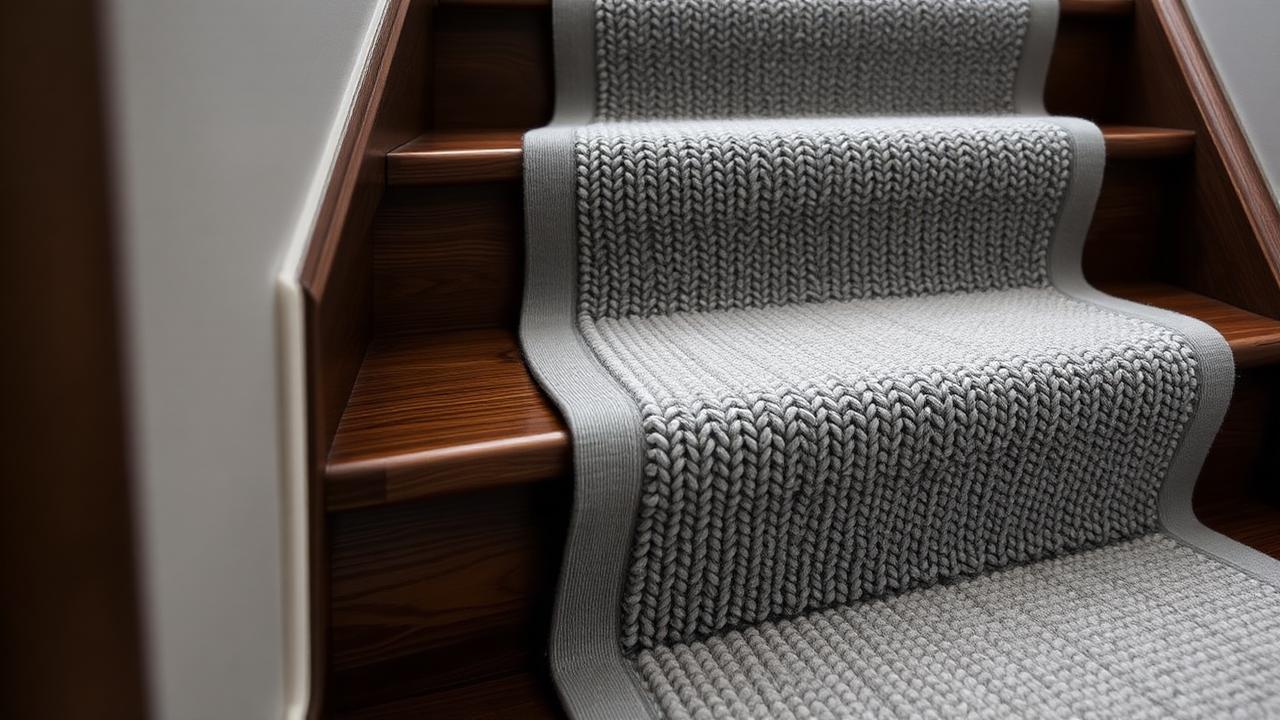
What polypropylene actually is
Polypropylene, sometimes labelled olefin on a spec sheet, is an extruded plastic fibre rather than a woven natural material. It's made by forcing molten polypropylene resin through tiny holes to form continuous filaments, which are then spun, dyed (usually solution-dyed, meaning the colour is mixed into the plastic before extrusion rather than applied afterwards) and tufted or woven into a backing. That solution-dyeing is the main reason polypropylene resists fading in sunlit hallways and stairwells better than a lot of other synthetics, and it's also why the colour goes right through the fibre rather than sitting on the surface, so light surface wear doesn't show a paler patch underneath.
The trade-off is that polypropylene doesn't recover its pile height the way wool or nylon does. Once a fibre gets crushed under repeated footfall on the nosing of a step, it tends to stay crushed, which is why I steer people away from polypropylene loop pile on the top three or four steps of a heavily used staircase and instead suggest a denser twist or a different fibre there, even if the rest of the flight is fine in polypropylene. On a low-traffic guest stair or a holiday let used a handful of weeks a year, that resilience gap barely matters.
Where polypropylene earns its keep
It shines in three situations: basements and stairs near an entrance where damp or the odd spilled drink is a real risk, rental properties where budget matters more than a ten-year lifespan, and anywhere a bold, saturated colour is wanted, since solution-dyed polypropylene holds strong reds, blues and greens more reliably than most natural fibres. It's also naturally resistant to mould and mildew because plastic doesn't feed fungal growth the way a natural fibre can if it stays damp, which matters on a stair that runs beside an exterior door.
Check the backing, not just the face fibre
A cheap polypropylene runner with a thin latex backing will stretch and shift on stairs faster than the fibre itself wears out. Ask for a jute or woven secondary backing if the runner is going anywhere with real foot traffic.
How much runner do I need?
Working in US units on a 13-step flight: 10 in tread run plus 7.5 in riser height plus a 0.75 in nosing wrap comes to 18.25 in per step. Across 13 steps that's 237.25 in (19.77 ft). Add a 12 in allowance top and bottom for turning under at the landing and finishing cleanly at the base, 24 in total, bringing the running length to 261.25 in (21.77 ft). Polypropylene is cut from a roll much like any other synthetic, so an 8% waste margin for pattern-free flat weave is reasonable, giving a final order length of roughly 23.5 ft.
In UK metric terms the same flight is 25 cm tread run, 19 cm riser, 1.9 cm nosing wrap, for 45.9 cm per step. Over 13 steps that's 596.7 cm, plus a 60 cm finishing allowance for 656.7 cm, and with an 8% waste margin you land at roughly 7.09 m. If the runner has a printed or woven pattern with a visible repeat, add another 5% on top of that to account for pattern matching at each step edge.
| Measurement | US (in/ft) | UK (cm/m) |
|---|---|---|
| Tread run | 10 in | 25 cm |
| Riser height | 7.5 in | 19 cm |
| Nosing wrap per step | 0.75 in | 1.9 cm |
| Per-step total | 18.25 in | 45.9 cm |
| 13 steps subtotal | 19.77 ft | 5.97 m |
| Plus finishing allowance | 21.77 ft | 6.57 m |
| With 8% waste margin | 23.5 ft | 7.09 m |
Know your numbers in 30 seconds
Enter your step count, tread depth and riser height — the stair runner calculator gives you the exact length to order, in metres and feet, with waste included.
Open the stair runner calculatorFitting and cutting notes specific to polypropylene
Polypropylene fibre melts rather than burns when you use a hot-knife cutter, which is actually an advantage on stairs because it seals the cut edge and stops fraying without needing binding tape on every join, unlike wool or sisal which fray if cut with a plain blade. That said, the backing itself can still fray if it's a woven jute type, so I still run a bead of seam sealant along any raw edge that will sit exposed at a stair edge or a return.

- Use a hot-knife or heat-sealing cutter on woven polypropylene to stop fibre fraying at the edges.
- Choose a denser twist pile over a loop pile for stairs used daily by a family.
- Fit a quality underlay even with a budget fibre, since underlay does more for comfort and lifespan than the face fibre alone.
- Vacuum with a beater bar set to a higher pile height setting; polypropylene loop can snag on an aggressive low setting.
- Avoid direct strong sunlight for years on end if you've chosen a very dark colour, since even solution dye can dull slightly under UV over a decade.
Cleaning and realistic lifespan
Polypropylene doesn't absorb liquid the way wool does, so spills tend to sit on the surface long enough to blot up cleanly if you catch them within a few minutes, which is genuinely useful on a stair near a kitchen or front door. Where it falls down is oil-based stains: because the fibre itself is a plastic, oily spills can bond to it in a way that plain water-based cleaners won't shift, so keep a dedicated grease-cutting carpet cleaner on hand if the stair sees any cooking traffic.
On realistic lifespan, budget polypropylene stair runners in a busy family home typically show visible wear within 4-7 years on the top and bottom three steps, where twisting and pivoting happens most. A better-quality, densely tufted polypropylene with a good backing can run 8-10 years in the same conditions. Compare that against wool, which commonly runs 15-20 years in the same spot, and you can see why polypropylene tends to suit rental turnover cycles, staging a house for sale, or stairs used only occasionally, rather than a forever home's main staircase.
If you're weighing polypropylene against other stair runners for a long-term main flight, it's worth reading around the wider range of stair runner carpet options before ordering, since the fibre choice affects not just wear but how the runner feels underfoot and how it takes a stair rod if you're using one.
Colour and pattern behaviour
Because the dye goes through the whole fibre, polypropylene holds up unusually well in bold, saturated colourways, deep teal, burgundy, forest green, that would fade visibly in a surface-dyed synthetic within a couple of years on a landing that catches afternoon sun. Where it struggles is subtlety: heathered, tonal blends that rely on slight variation between individual fibre strands can look slightly flatter and more uniform in polypropylene than the same pattern woven in wool, because the extrusion process produces a more consistent fibre than natural wool's inherent variation.
Whatever you decide, get the numbers first: the stair runner calculator doubles as a stair runner length calculator, adding nosing wrap, landings, winders, pattern repeat and waste so you order the right length the first time.
Frequently asked questions
Is polypropylene a good stair runner material?
It's a reasonable choice for budget-conscious projects, rentals, or stairs near damp entrances, since it resists moisture and holds colour well. It's not the most resilient fibre for a heavily used main staircase over 10+ years, where nylon or wool tend to outlast it.
Does polypropylene stair runner fade in sunlight?
Solution-dyed polypropylene resists fading better than many surface-dyed carpets because the colour runs through the fibre, but years of direct strong sunlight will still dull even solution-dyed colour slightly over a decade.
How long does a polypropylene stair runner last?
Budget polypropylene typically shows wear on the busiest steps within 4-7 years in a family home. Denser, better-backed polypropylene can reach 8-10 years, though wool or nylon usually last longer in the same conditions.
Can polypropylene stair runners get wet?
Yes, the fibre itself doesn't absorb water the way natural fibres do, which is why it suits basement stairs or entrances. The backing can still hold moisture though, so standing water should still be dried promptly to protect the backing and any underlay.
Is polypropylene stain resistant?
It resists water-based stains well since spills sit on the surface rather than soaking in, but oil-based stains can bond to the plastic fibre and need a dedicated grease-cutting cleaner rather than a standard carpet shampoo.
How do I cut polypropylene stair runner without fraying?
Use a hot-knife or heat-sealing cutter, which melts and seals the fibre ends in one pass. A plain blade cut will fray over time, especially on a woven rather than tufted construction.
Is polypropylene cheaper than nylon for stairs?
Generally yes, polypropylene usually costs less per metre or yard than a comparable nylon runner, though nylon typically resists crushing and matting better over years of stair traffic, so the cheaper upfront cost can mean a shorter usable life.
Can I use polypropylene on a staircase with stair rods?
Yes, polypropylene takes stair rods fine as long as the backing is substantial enough to hold the rod bracket securely; a very thin, cheap backing can work loose under a rod's tension over time.
Know your numbers in 30 seconds
Enter your step count, tread depth and riser height — the stair runner calculator gives you the exact length to order, in metres and feet, with waste included.
Size your polypropylene runner with the stair runner calculatorReady for real prices?
Get quotes from vetted stair runner suppliers and fitters near you. Free, no account, no obligation.
Every guide is written from hands-on measuring and fitting experience, checked against the calculator’s own maths, and re-reviewed whenever prices or methods change. Read our editorial standards.