

Respecting the heritage
Choosing a runner for a church involves balancing the need for modern durability with a respect for the building's heritage and aesthetic. I often recommend high-quality wool or wool-blend runners, which offer a classic look and natural fire resistance. The stair runner calculator is an invaluable tool for ensuring that the installation is planned accurately, especially in older buildings where step dimensions may vary. Providing a quiet, reverent environment is a key goal, and a well-fitted runner is a critical part of that.
How much runner do I need?
Church 13-step calculation: 10 in tread + 7.5 in riser + 0.75 in nosing wrap = 18.25 in per step. Total 237.25 in. Plus 24 in finishing allowance = 261.25 in (21.77 ft). With an 8% waste margin, aim for 23.5 ft (7.16 m).
| Measurement | US (in/ft) | UK (cm/m) |
|---|---|---|
| Tread run | 10 in | 25 cm |
| Riser height | 7.5 in | 19 cm |
| Nosing wrap per step | 0.75 in | 1.9 cm |
| Per-step total | 18.25 in | 45.9 cm |
| 13 steps subtotal | 19.77 ft | 5.97 m |
| Plus finishing allowance | 21.77 ft | 6.57 m |
| With 8% waste margin | 23.5 ft | 7.1 m |
Know your numbers in 30 seconds
Enter your step count, tread depth and riser height — the stair runner calculator gives you the exact length to order, in metres and feet, with waste included.
Open the stair runner calculatorAcoustic dampening
In a large, open space like a church, the acoustic dampening provided by a thick wool runner and a high-quality felt underlay can significantly improve the environment during services.
- Choose traditional wool or wool-blends.
- Select colours that complement the existing interior.
- Use high-quality felt underlay for acoustic benefits.
- Ensure a professional installation for a respectful finish.
- Consider a low-profile pattern for visual interest.
Practicality and longevity
While the look is traditional, the performance must be modern. High-quality wool runners are naturally resilient and easy to clean, making them an excellent choice for a space that sees regular, but often concentrated, traffic. A professional installation ensures the runner stays in place for decades to come.
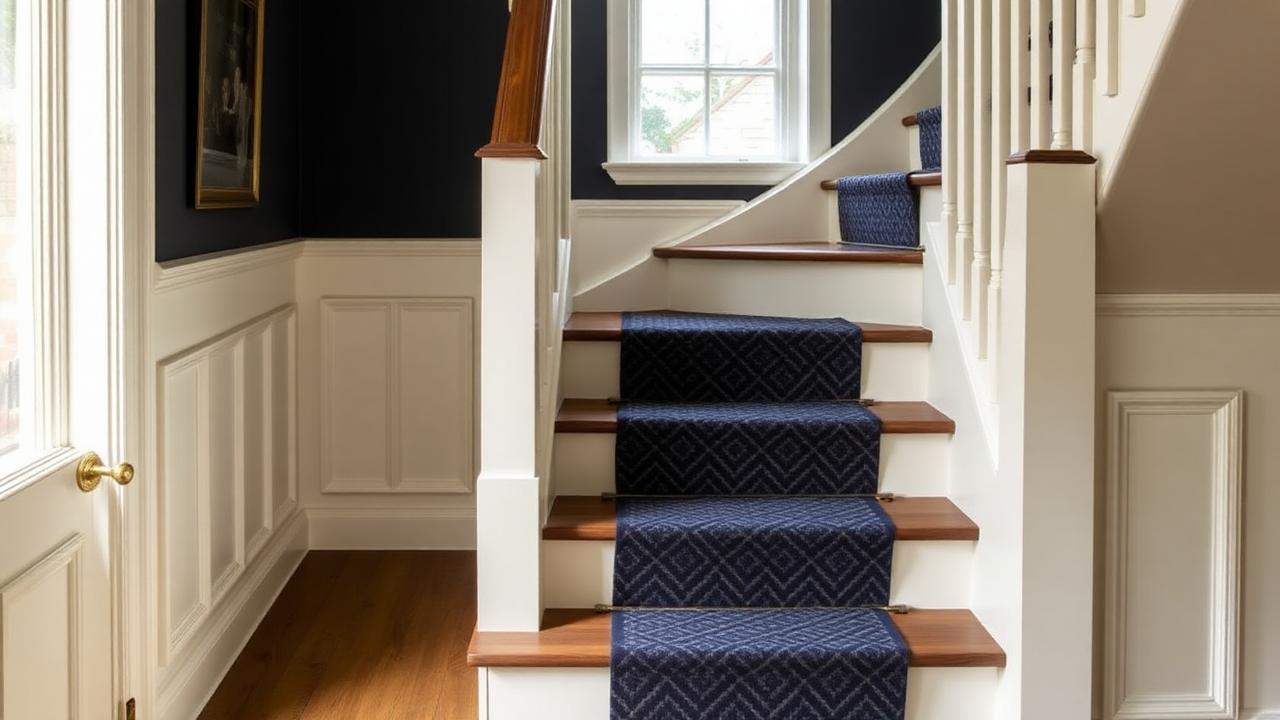
Whatever you decide, get the numbers first: the stair runner calculator doubles as a stair runner length calculator, adding nosing wrap, landings, winders, pattern repeat and waste so you order the right length the first time.
Still deciding on material, width or pattern? Our hub on stair runners compares weaves, widths, backings and fitting styles side by side, then hands the numbers straight to the calculator.
Frequently asked questions
What is the most traditional material for a church stair runner?
Wool is the classic choice for churches due to its natural appearance, durability, and fire-resistant properties.
How does a stair runner help with noise in a church?
A runner, especially when paired with a thick underlay, absorbs echoes and footfall sound, helping to maintain a quiet atmosphere during services.
Can we use a modern synthetic in a traditional church?
Yes, many modern synthetics are designed to look like traditional wool and can be a more budget-friendly or durable alternative for high-traffic areas.
How do I choose a colour for a church runner?
Look for deep, classic colours like reds, blues, or neutral tones that complement the wood and stone commonly found in churches.
Is professional installation necessary for a church?
Absolutely. Ensuring the runner is perfectly straight and securely fixed is essential for both the safety of the congregation and the visual impact of the space.
How do I maintain a church stair runner?
Regular vacuuming and prompt attention to any spills are key. A professional deep clean every year or two will help keep the wool looking its best.
Do church runners need to be fire-rated?
Yes, like all public buildings, floor coverings in churches must meet relevant fire safety regulations.
Are stair rods appropriate for a church?
Yes, high-quality brass or bronze stair rods can be a beautiful addition to a traditional church staircase, providing extra security and a classic look.
Know your numbers in 30 seconds
Enter your step count, tread depth and riser height — the stair runner calculator gives you the exact length to order, in metres and feet, with waste included.
Calculate church stair runner requirementsReady for real prices?
Get quotes from vetted stair runner suppliers and fitters near you. Free, no account, no obligation.
Every guide is written from hands-on measuring and fitting experience, checked against the calculator’s own maths, and re-reviewed whenever prices or methods change. Read our editorial standards.