

Managing the environment
Holiday lets near the beach or in the countryside face unique challenges. Sand acts like an abrasive, wearing down fibre quickly if it is trapped on the stairs. A tight-weave synthetic fibre is ideal here because it doesn't hold dirt the way a deep-pile or natural fibre might. Using a high-quality, non-slip underlay is essential for safety, and for coastal properties, consider a colour scheme that complements a relaxed aesthetic while being practical enough to hide the odd trace of mud.
How much runner do I need?
For a 13-step flight: 10 in tread run + 7.5 in riser height + 0.75 in nosing wrap = 18.25 in per step. Total for 13 steps is 237.25 in. Plus 24 in finishing allowance = 261.25 in (21.77 ft). With an 8% waste margin, you need approximately 23.5 ft (7.16 m).
| Measurement | US (in/ft) | UK (cm/m) |
|---|---|---|
| Tread run | 10 in | 25 cm |
| Riser height | 7.5 in | 19 cm |
| Nosing wrap per step | 0.75 in | 1.9 cm |
| Per-step total | 18.25 in | 45.9 cm |
| 13 steps subtotal | 19.77 ft | 5.97 m |
| Plus finishing allowance | 21.77 ft | 6.57 m |
| With 8% waste margin | 23.5 ft | 7.1 m |
Know your numbers in 30 seconds
Enter your step count, tread depth and riser height — the stair runner calculator gives you the exact length to order, in metres and feet, with waste included.
Open the stair runner calculatorPro tip for sandy areas
Place a high-quality mat at the entrance to the property to capture the bulk of the sand and mud before it ever hits the stairs. It is the single best way to prolong the life of any stair runner.
- Choose low-pile synthetic for easier cleaning.
- Ensure professional installation for safety.
- Consider a neutral or patterned design to mask debris.
- Use moisture-resistant underlay in coastal areas.
- Check the carpet fibre’s sunlight resistance if the stairs are near a large window.
Balancing comfort and practicality
You want your holiday guests to feel at home. A good stair runner provides that touch of luxury while serving a very practical purpose. By choosing the right material and ensuring a flawless installation, you create a professional finish that lasts for many seasons.
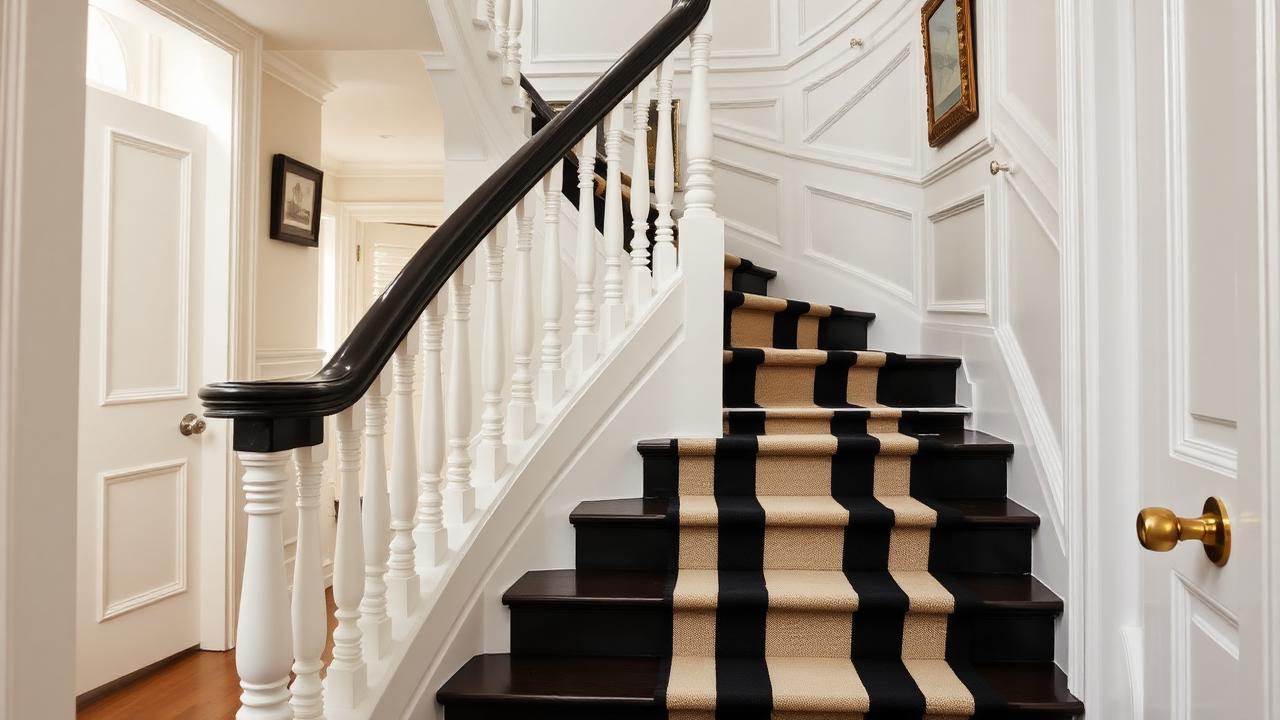
Whatever you decide, get the numbers first: the stair runner calculator doubles as a stair runner length calculator, adding nosing wrap, landings, winders, pattern repeat and waste so you order the right length the first time.
Still deciding on material, width or pattern? Our hub on stair runners compares weaves, widths, backings and fitting styles side by side, then hands the numbers straight to the calculator.
Frequently asked questions
What is the best stair runner material for coastal holiday lets?
Solution-dyed synthetic fibres like nylon or polypropylene are excellent because they are durable, easy to clean, and resistant to moisture and sun damage.
How do I protect my stair runner from sand?
The best defense is a heavy-duty entrance mat. Regularly vacuuming with a high-quality machine also helps remove abrasive sand from the fibres before it can cause wear.
Can I use natural fibres in a holiday let?
Natural fibres like sisal or jute can look great but are prone to water-marking and are harder to clean if a guest spills something, so they are generally less practical than synthetics for busy rentals.
Are patterned stair runners better for holiday lets?
Yes, patterns are great at masking small spots or traffic patterns between professional cleans, which is helpful in a high-turnover environment.
How do I ensure safety for my guests?
Professional installation is key. Use high-quality underlay, ensure the runner is securely fixed, and avoid designs that are too slippery.
What about humidity in coastal homes?
Choose materials that don't absorb moisture easily. Synthetic fibres and breathable, moisture-resistant underlays are your best options.
Do stair rods help in holiday lets?
Yes, they add an extra layer of security, keeping the runner taut and preventing shifting, while also providing a high-end look that guests appreciate.
How do I deal with heavy seasonal traffic?
Choose a higher-density carpet with a tighter twist. This construction type is specifically designed to stand up to heavy footfall and maintain its appearance over time.
Know your numbers in 30 seconds
Enter your step count, tread depth and riser height — the stair runner calculator gives you the exact length to order, in metres and feet, with waste included.
Plan your holiday let stair runner with the stair runner calculatorReady for real prices?
Get quotes from vetted stair runner suppliers and fitters near you. Free, no account, no obligation.
Every guide is written from hands-on measuring and fitting experience, checked against the calculator’s own maths, and re-reviewed whenever prices or methods change. Read our editorial standards.