
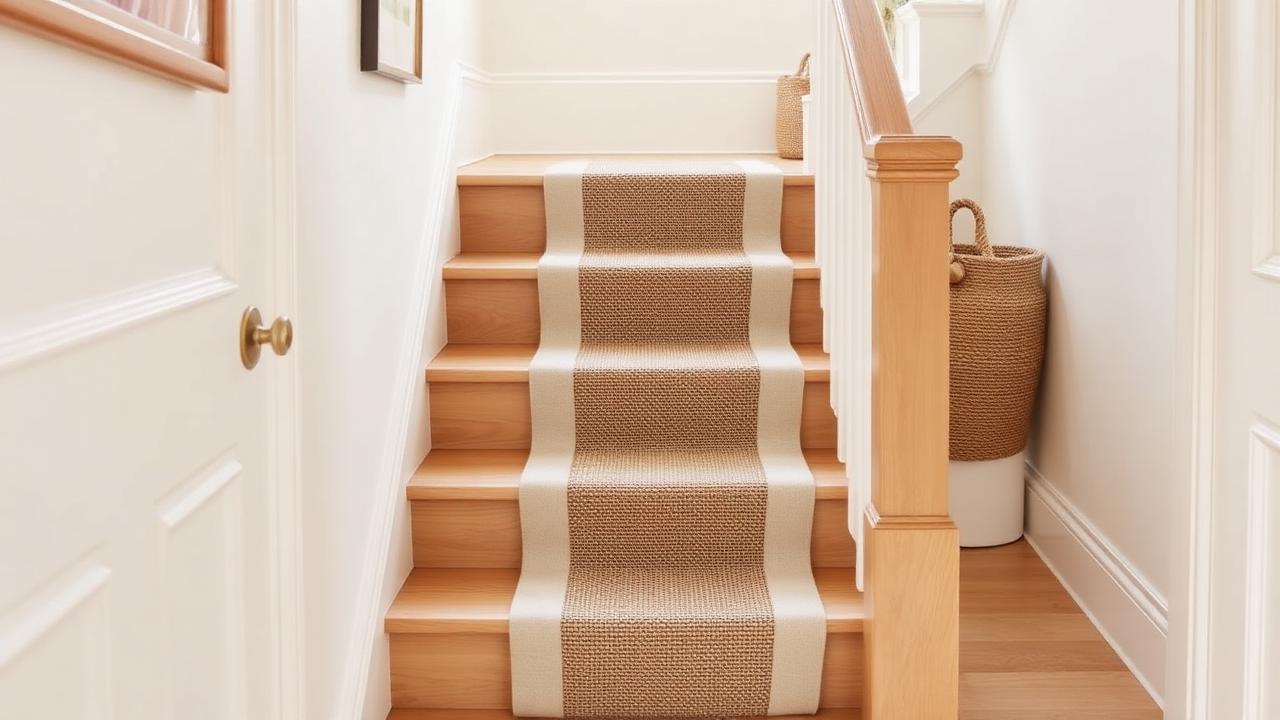
Puppies are harder on stairs than fully grown dogs
It sounds backwards, but I see more stair runner damage from young puppies than from big adult dogs in a lot of cases, and it's because of behaviour rather than size. A puppy is still working out where its paws are, so it slips and scrabbles far more than a coordinated adult dog would on the same stairs. It's also going through a chewing phase, and a loose runner edge or a stray thread near a stair rod is an obvious target. And if house training isn't finished yet, accidents on the stairs are a real possibility that a fully trained adult dog largely won't produce. All three of those factors point toward choosing something tougher and more forgiving than you might pick for a calm older dog.
My honest advice for a genuinely young puppy, under about six months, is not to commit to your final, most expensive runner choice yet. A cheaper synthetic runner, or even a temporary stair runner fitted without full cutting and fixing, gets you through the highest-risk phase without risking your good wool runner to a chewing session or an accident nobody caught in time.
Materials that survive chewing and accidents
Solution-dyed polypropylene and nylon are the most forgiving materials for a puppy household, since the colour runs through the whole fibre so stains and light scrubbing don't leave a pale patch, and both are noticeably cheaper than wool, which matters if you expect to replace or heavily clean a runner within the first year or two. If your puppy is a known chewer, avoid loop-pile weaves specifically, since a loop is exactly the kind of thing puppy teeth latch onto and pull, the same mechanical problem cats create with claws.
- Choose solution-dyed synthetic fibre for the easiest stain and odour clean-up during house training.
- Avoid loop-pile and Berber weaves if your puppy chews, since loops pull out easily.
- Pick a mid-tone, patterned or flecked colour to hide accidents and marks between cleans.
- Have edges glued or gripper-fixed rather than lightly tacked, since puppies actively worry at loose edges.
- Consider a stain-guard treatment applied at the factory or before fitting, which makes emergency clean-up far easier.
Keep cleaning products pet-safe
Whatever stain treatment or spot-cleaner you use on a puppy's runner, check it's non-toxic if ingested or licked, since puppies will investigate anything new with their mouths. Ask your supplier for a pet-safe recommended cleaner alongside the runner itself.
How much runner do I need?
For a US 13-step flight with a 10 in tread run, 7.5 in riser and a 0.75 in nosing wrap, each step needs 18.25 in of runner, giving 237.25 in, or 19.77 ft, across the full flight. Add a 24 in finishing allowance to reach 21.77 ft, then a 7% waste margin brings you to roughly 23.3 ft, so order 23-24 ft. If you're going the temporary-runner route for the first year, it's still worth measuring properly rather than guessing, since an ill-fitting temporary runner is actually more likely to bunch and become a chew target than one cut to the right length.
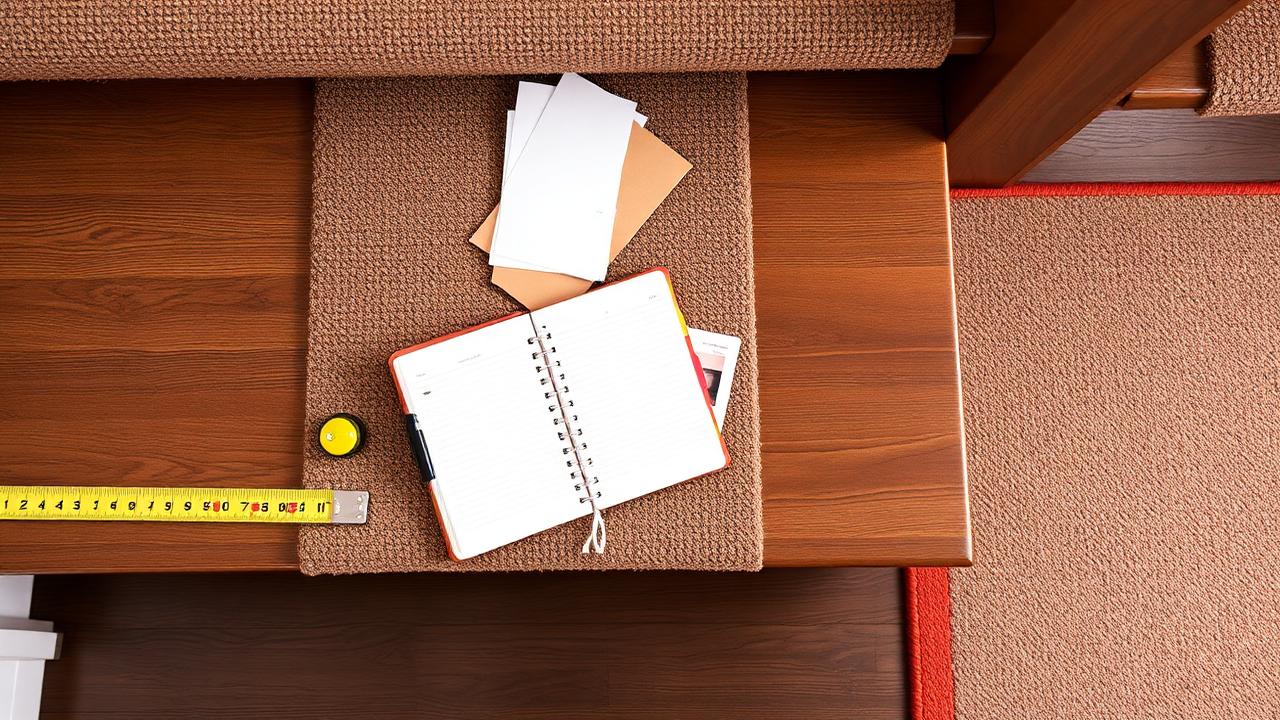
In UK metric: 25 cm tread run, 19 cm riser and 1.9 cm nosing wrap gives 45.9 cm per step and 596.7 cm across 13 steps. Add a 60 cm finishing allowance to reach 656.7 cm, then apply a 7% waste margin for a final figure of about 7.03 m. Puppies grow fast, so if you're measuring a runner width to suit a small breed now but expect a larger adult dog later, size the width for the adult dog's eventual paw spread rather than the puppy's current size.
| Measurement | US (in/ft) | UK (cm/m) |
|---|---|---|
| Per-step total | 18.25 in | 45.9 cm |
| 13 steps subtotal | 19.77 ft | 5.97 m |
| With finishing allowance | 21.77 ft | 6.57 m |
| With 7% waste margin | 23.3 ft | 7.03 m |
Know your numbers in 30 seconds
Enter your step count, tread depth and riser height — the stair runner calculator gives you the exact length to order, in metres and feet, with waste included.
Open the stair runner calculatorTiming your permanent runner purchase
Most puppies are past the worst of the chewing and accident-prone phase by 12-18 months, though this varies a lot by breed and individual temperament. That's usually the sensible point to invest in the wool or higher-end synthetic stair runner you actually want long-term, once you've got a good feel for how your particular dog behaves on stairs day to day. By then you'll also know whether they're a scrabbler who needs maximum grip, a calmer walker who's gentler on the pile, or somewhere in between, and you can choose material and weave accordingly rather than guessing early.
If you do decide to fit a proper runner earlier, treat it the same way you would for any dog household: dense, low-loop or cut-pile weave, a stain-guard treatment, and a firm underlay. Just budget mentally for the fact that a puppy is statistically more likely to cause an early stain or snag than a settled adult dog would, so don't be surprised if the first year shows more visible wear than later years will.
Whichever stage you're buying at, get accurate numbers before you order. Running your actual tread and riser measurements through a stair runner length calculator avoids under-ordering, which is a particular problem with puppies since a slightly-too-short runner leaves gaps of exposed tread that a clumsy young dog is more likely to catch a paw on than a fully grown, coordinated adult.
Whatever you decide, get the numbers first: the stair runner calculator doubles as a stair runner length calculator, adding nosing wrap, landings, winders, pattern repeat and waste so you order the right length the first time.
Still deciding on material, width or pattern? Our hub on stair runners compares weaves, widths, backings and fitting styles side by side, then hands the numbers straight to the calculator.
Frequently asked questions
What is the best stair runner for a puppy?
A solution-dyed synthetic or wool-blend runner in a cut-pile or low-loop weave, with a stain-guard treatment and securely fixed edges, best balances durability, easy clean-up and grip for a young, uncoordinated puppy still house training.
Should I wait before fitting a permanent stair runner with a new puppy?
Many owners choose to fit a cheaper synthetic or temporary runner for the first 12-18 months while a puppy is still teething and house training, then upgrade to their preferred wool or premium runner once the dog has settled into calmer, more predictable habits.
Do puppies chew stair runners?
Some do, particularly at loose edges, loops or trailing threads, which is why gripper-rod or glued edge fixing and a cut-pile rather than loop-pile weave both reduce the temptation and the damage if chewing does happen.
How do I clean puppy accidents off a stair runner?
Blot rather than rub immediately, then use a pet-safe carpet cleaner suited to the fibre type. Solution-dyed synthetic fibres generally clean up accidents more completely than wool, which is worth factoring in during the training period.
What colour stair runner hides puppy mess best?
Mid-tone, flecked or patterned colours hide everyday marks, dirt and minor accidents far better than pale solid colours, which show every mark clearly and can look tired within weeks in a puppy household.
How much runner do I need for a 13-step staircase with a puppy?
For a typical 13-step flight with 10 in (25 cm) treads and 7.5 in (19 cm) risers, plan for roughly 23-24 ft (7-7.3 m) including nosing wrap, finishing allowance and a 7% waste margin, the same baseline as for an adult dog.
Is loop-pile carpet bad for puppies?
It can be, since loose loops are an easy target for chewing and puppy claws to snag, similar to the issue loop-pile weaves have with cats. A cut-pile or tightly twisted weave is generally the safer choice while a puppy is young.
When should I get a proper permanent stair runner instead of a temporary one?
Most owners switch once the puppy has finished house training and settled its chewing habits, usually somewhere between 12 and 18 months old, though this varies by breed and individual temperament.
Know your numbers in 30 seconds
Enter your step count, tread depth and riser height — the stair runner calculator gives you the exact length to order, in metres and feet, with waste included.
Plan your runner length with the stair runner calculatorReady for real prices?
Get quotes from vetted stair runner suppliers and fitters near you. Free, no account, no obligation.
Every guide is written from hands-on measuring and fitting experience, checked against the calculator’s own maths, and re-reviewed whenever prices or methods change. Read our editorial standards.