

Staples vs adhesive at a glance
| Factor | Staples | Adhesive |
|---|---|---|
| Substrate needed | Solid timber tread and riser | Any solid, clean surface including concrete and tile |
| Hold strength | Strong, mechanical | Strong, but depends on surface prep |
| Removal risk | Low, small holes only | Higher, can pull up finish or leave residue |
| Reversibility | High, easy to re-lay or replace | Low, often a one-way fit |
| Typical cost add | Minimal, staples are cheap | $2-5 / £1.50-4 per tread for adhesive |
| Best substrates | Wood treads and risers | Concrete, tile, some engineered floors |
Adhesive types
| Adhesive type | Use case | Removal difficulty |
|---|---|---|
| Pressure-sensitive carpet tape | Nosing folds, temporary holds, over old carpet | Easy, peels off |
| Releasable carpet adhesive | Direct-glue on hard substrates, semi-permanent | Moderate, some residue |
| Permanent carpet adhesive | Full bond on concrete or commercial-style installs | Hard, often damages the substrate finish |
Know your numbers in 30 seconds
Enter your step count, tread depth and riser height — the stair runner calculator gives you the exact length to order, in metres and feet, with waste included.
Open the stair runner calculatorWhy staples are usually preferred on timber stairs
- They hold the runner without permanently bonding it to the tread finish.
- A stapled runner can be lifted, cleaned underneath, and re-laid.
- Removal leaves small holes that are easy to fill or hide under a future runner.
- They cost almost nothing compared to adhesive per tread.
When adhesive is the right call
- Concrete or tiled stairs with no timber to staple into.
- Basement or garage stairs where gripper and staples are impractical.
- Securing the nosing fold on a waterfall install where staples alone would show.
- A permanent commercial-style installation where re-laying is not expected.
Ask about removal before gluing anything permanently
Permanent adhesive can damage a stained or polished tread finish when the runner is eventually replaced. Use a releasable adhesive on any surface you want to protect for future changes.
Fumes, drying time and household disruption
Solvent-based carpet adhesives can give off noticeable fumes for several hours after application, so ventilate the stairwell well and, if anyone in the household is sensitive to strong smells, choose a low-VOC or water-based adhesive instead. Most adhesives need 12-24 hours to cure fully before the stairs take normal foot traffic, which is longer downtime than a staple fit, where the runner can be walked on immediately.
A hybrid approach in practice
Many fitters use staples as the primary fixing on timber stairs and reserve adhesive for specific trouble spots: a stubborn nosing fold that will not sit flat, a seam join that needs extra security, or a short section of hard flooring within an otherwise timber staircase. This targeted use gets the holding power of adhesive without committing the whole runner to a permanent bond. This also limits future removal cost, since the bulk of the runner lifts away cleanly and only the small glued sections need careful attention. Keep a note of exactly where any adhesive was used, since this is the detail future removal work most often gets wrong when nobody remembers which sections were glued.
Safety and building-code notes
Stairs are one of the most common places for a fall in the home, so anything touching stair runner glue vs staples: which to use should be checked against basic safety practice as well as good looks. Codes vary by jurisdiction but the underlying principles are consistent everywhere carpet meets a staircase.
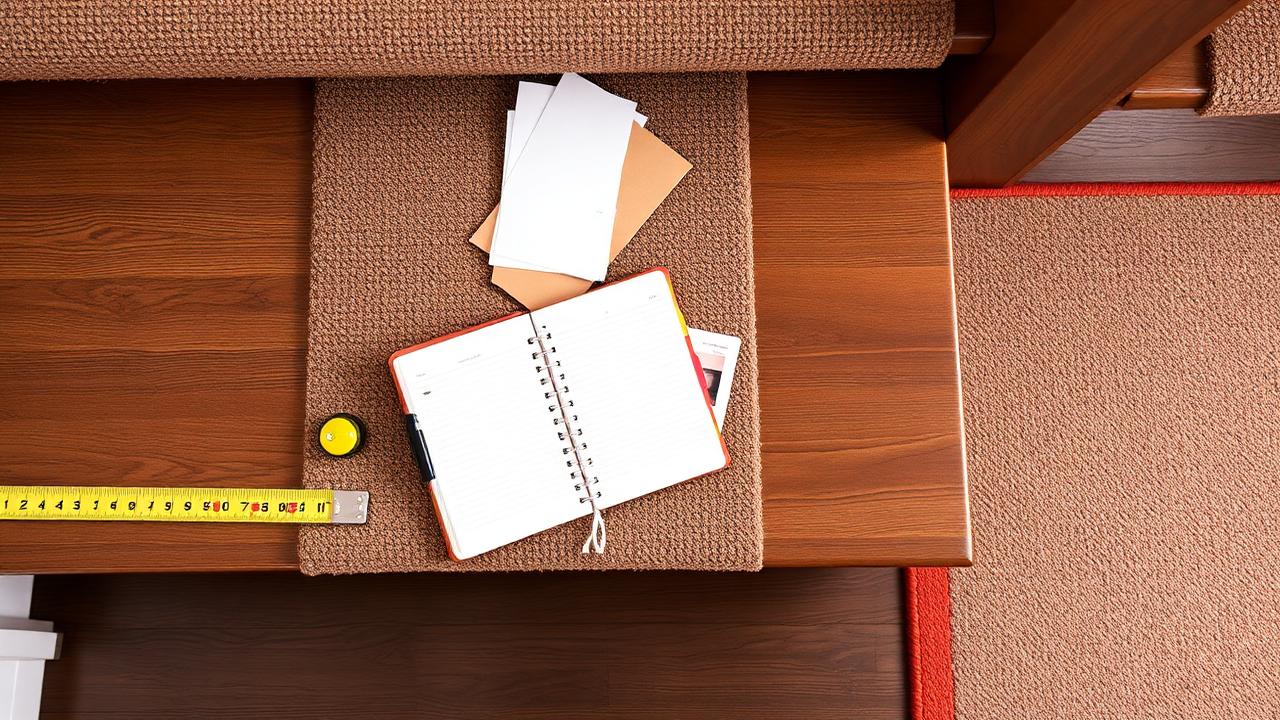
- Keep nosing build-up modest; a lip much over 3/8 in (10 mm) between the runner and a bare edge becomes a trip hazard.
- Use a slip-resistant backing or pad, particularly on the top and bottom steps where speed is highest.
- Secure every edge fully; a loose corner or lifted seam is the single most common cause of a stair fall on carpeted stairs.
- In rented or multi-occupancy buildings, check local fire and flooring regulations before installing natural fibre runners.
Tools and materials, with typical prices
Before starting anything connected to stair runner glue vs staples: which to use, it helps to know what the job actually costs in tools and consumables, not just carpet. Most of this list is a one-off purchase that will be reused on future stair or rug projects, so it is worth buying reasonable quality rather than the cheapest option.
- Tape measure and chalk line: $15-30 (£12-24), for marking and checking dimensions.
- Utility knife and spare blades: $10-20 (£8-16), for clean cuts through backing.
- Staple gun or tackless strip and knee kicker: $40-150 (£30-120) depending on method.
- Underlay/pad, per step: $3-6 (£2.50-5), skip only where the fibre specifies no pad.
- Seam tape or adhesive for joins: $8-15 (£6-12) per roll or tube.
Long-term maintenance differences
Stair runner glue vs staples also affects ongoing maintenance, not just the initial fit. A stapled runner can be lifted section by section for a deep clean underneath or to rotate high-wear treads with lower-wear ones from further down the flight, a trick some installers use to extend a runner's visible life. A glued runner cannot be rotated or lifted without risking damage to the backing or the adhesive bond, so any deep clean has to happen in place, which limits how thoroughly the underside and pad can be inspected or refreshed over the years.
Documenting your choice for future reference
Whichever way you land on stair runner glue vs staples, write down the method used, the products involved, and the date of installation, then keep that note with your household paperwork. A future owner, tenant or even your own memory years later will thank you when it is time to repair, replace or simply understand how the existing runner was fixed down.
Which fibres pair best with which fixing
| Fibre | Preferred fixing | Reason |
|---|---|---|
| Wool and wool-blend | Staples with gripper | Fibre tensions cleanly, staples hidden in crease |
| Sisal and jute | Staples, avoid adhesive | Natural fibres shift with humidity; glue can crack |
| Vinyl-backed synthetic | Adhesive on hard surfaces | Bonds well to tile, concrete or stone |
| Delicate antique runners | Neither — use rods or clips | Avoids any permanent damage to a valuable piece |
Asking a quote to specify the fixing method
When getting quotes from fitters, ask each one to state explicitly whether they plan to staple, glue, or use a hybrid approach, and why, given your specific substrate. A fitter who has actually inspected your stairs and can explain their fixing choice in plain terms is a better sign than one who quotes a generic price without addressing the question at all, since the right method genuinely varies by substrate and fibre.
Whatever you decide, get the numbers first: the stair runner calculator doubles as a stair runner length calculator, adding nosing wrap, landings, winders, pattern repeat and waste so you order the right length the first time.
Still deciding on material, width or pattern? Our hub on stair runners compares weaves, widths, backings and fitting styles side by side, then hands the numbers straight to the calculator.
Frequently asked questions
Is it better to glue or staple a stair runner?
Staples are generally preferred on timber stairs since they hold securely and can be removed without damaging the tread. Adhesive is mainly used on concrete, tile or other hard substrates without timber to staple into.
Does adhesive damage stairs when a runner is removed?
Permanent adhesive can pull up the tread finish or leave residue behind. Using a releasable carpet adhesive avoids most of this risk if you may want to change the runner later.
Can I use both glue and staples on the same stair runner?
Yes, this is common: staples for the main fixing on timber treads, with a small amount of adhesive or tape reinforcing the nosing fold or a seam.
What adhesive is used for stair runners on concrete stairs?
A carpet adhesive rated for the substrate, either releasable for easier future removal or permanent for a long-term commercial-style fit, applied after the concrete surface is cleaned and primed if needed.
What is the biggest mistake people make with this?
Rushing the measuring or prep stage. Most poor outcomes with stair runner glue vs staples: which to use trace back to a single measurement taken at the wrong point, or a substrate check skipped to save a few minutes, both far cheaper to fix before the runner is cut than after.
Know your numbers in 30 seconds
Enter your step count, tread depth and riser height — the stair runner calculator gives you the exact length to order, in metres and feet, with waste included.
Plan my stair runnerReady for real prices?
Get quotes from vetted stair runner suppliers and fitters near you. Free, no account, no obligation.
Every guide is written from hands-on measuring and fitting experience, checked against the calculator’s own maths, and re-reviewed whenever prices or methods change. Read our editorial standards.