

Thinner than you'd think, and for good reason
Most people buying carpet for the first time assume thicker padding is automatically better, because that's broadly true on a flat floor where a plush 10-12mm pad genuinely feels nicer underfoot and lasts well in a bedroom or lounge. Stairs are a different mechanical problem. Every tread has a hard front edge, the nosing, where the runner needs to wrap tightly and stay put, and a flat back section where the foot doesn't land as heavily. Thick padding compresses far more at the nosing, where weight concentrates, than along the flat of the tread, and that difference in compression creates a visible dip within the first year of daily use.
I've measured this on flights I've refitted after a few years: padding rated at 10mm new had compressed to under 3mm right at the nosing while the flat section behind it still measured 7-8mm, a difference you could feel with your hand let alone see once the runner pile had thinned to match. A 6-9mm pad compresses far more evenly across the whole tread because there's simply less material to squash unevenly in the first place.
Matching thickness to fibre type
Wool and wool-blend runners are naturally denser and hold their own shape better than synthetic pile, so they can sit happily on the thinner end of the range, around 6mm, without feeling hard underfoot. A synthetic nylon or polypropylene runner benefits from padding closer to 8-9mm since the fibre itself offers less natural cushioning, and a slightly thicker pad compensates without tipping into the range that causes nosing compression problems. Sisal and jute runners, being naturally stiffer and flatter fibres, generally don't need much padding at all, and some fitters skip it entirely on jute, relying instead on the fibre's own rigidity, though I'd still recommend a thin 5-6mm pad for comfort and to reduce noise underfoot.
If in doubt, go thinner rather than thicker
A pad that's slightly too thin loses you a little softness underfoot but causes no structural problems. A pad that's too thick will compress unevenly at the nosing and create a visible dip in the runner within a year or two, which is far more expensive to fix.
How much runner do I need?
Padding is bought and cut to match your runner length, so it's worth working that out precisely first. On a 13-step US flight with a 10 in tread run, 7.5 in riser height and a 0.75 in nosing wrap, each step needs 18.25 in of runner, giving 237.25 in (19.77 ft) across the flight. Add a 24 in finishing allowance top and bottom for 261.25 in (21.77 ft), then a 7% waste margin lands you at roughly 23.3 ft of runner and enough padding pieces to cover 13-14 treads.
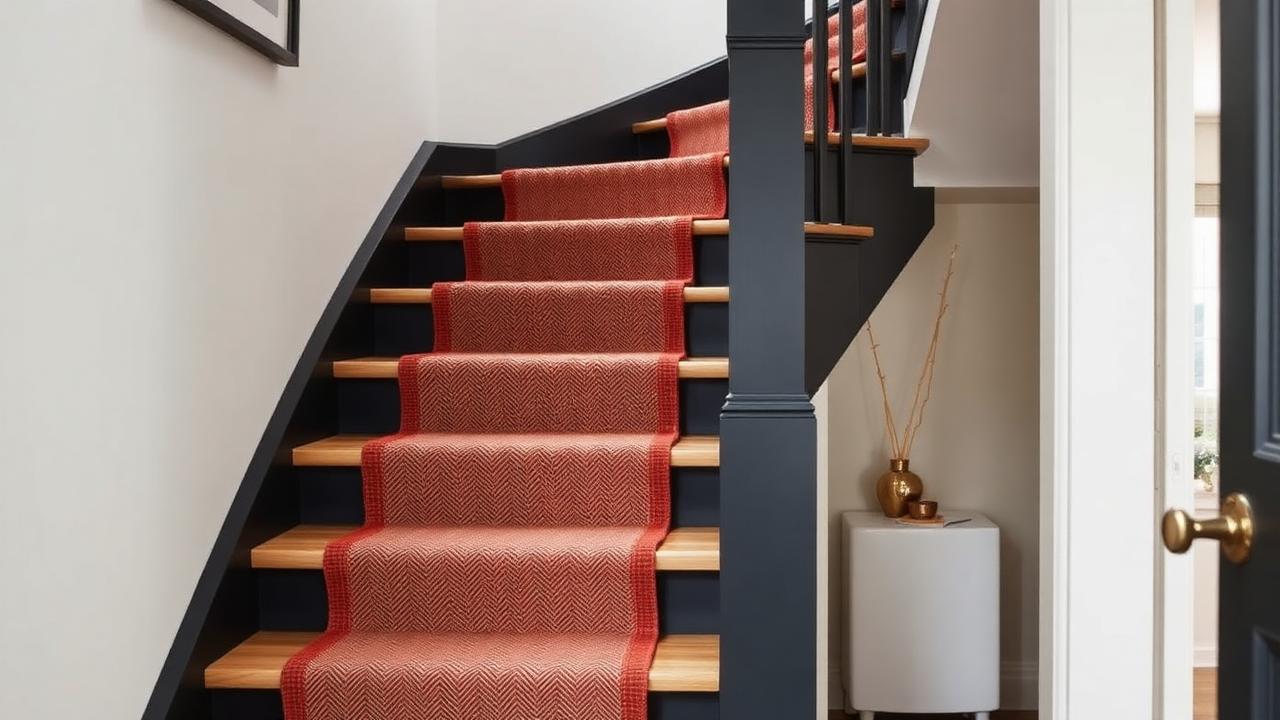
In UK metric terms, the same flight is 25 cm tread run, 19 cm riser height and 1.9 cm nosing wrap, giving 45.9 cm per step and 596.7 cm across 13 steps. Add a 60 cm finishing allowance for 656.7 cm total, then apply a 7% waste margin to reach roughly 7.03 m of runner, with padding cut into individual tread-sized pieces to match.
| Fibre type | Recommended pad thickness |
|---|---|
| Wool / wool-blend | 6-7 mm |
| Synthetic (nylon, polypropylene) | 8-9 mm |
| Sisal | 5-6 mm or none |
| Jute | 5-6 mm or none |
Know your numbers in 30 seconds
Enter your step count, tread depth and riser height — the stair runner calculator gives you the exact length to order, in metres and feet, with waste included.
Open the stair runner calculatorWhat happens if you get thickness wrong
- Too thick: the runner sits proud and slightly loose over the nosing, and the pad compresses unevenly, creating a visible dip within a year or two.
- Too thin: the runner feels harder underfoot and the pile wears slightly faster than it would with adequate cushioning, though this is a much slower, less visible problem.
- Mismatched thickness between steps: uneven pad thickness across a flight, from mixing offcuts of different products, creates a bumpy, uneven feel when walking the stairs and can show as a wavy line along the runner's edge.
- No padding at all: the runner grinds directly against the wood, wearing through far faster at the nosing than anywhere else on the tread.
Padding thickness and stair rods
If you're fitting with decorative stair rods rather than gripper strips, padding thickness has a second consequence: too thick a pad lifts the runner higher off the tread at the riser junction, which can make the rod sit awkwardly or fail to hold the runner as tightly against the riser as it should. Stick to the 6-9mm range and a rod-fitted runner will sit crisp and tight against each riser rather than looking slightly puffy or loose.
Before ordering padding, run your tread and riser numbers through a stair runner calculator to confirm the runner length first, since padding quantity follows directly from step count. Getting both right in one order, rather than guessing padding quantity separately, avoids an awkward gap where the last step or two on the flight ends up with a mismatched offcut pad because the original delivery ran one piece short.
Whatever you decide, get the numbers first: the stair runner calculator doubles as a stair runner length calculator, adding nosing wrap, landings, winders, pattern repeat and waste so you order the right length the first time.
Still deciding on material, width or pattern? Our hub on stair runners compares weaves, widths, backings and fitting styles side by side, then hands the numbers straight to the calculator.
Frequently asked questions
What is the ideal padding thickness for a stair runner?
6mm to 9mm (roughly 1/4 to 3/8 in) is ideal for most stair runners. This range cushions the tread without compressing unevenly at the nosing, which is what causes a visible dip to form in thicker padding within a year or two of daily use.
Why can't I use the same thick padding I have under my living room carpet?
Flat-floor padding is often 10-12mm or more, which feels great underfoot on a flat surface but compresses unevenly on a stair nosing where weight concentrates on a narrow front edge. That uneven compression creates a dip that telegraphs through the runner.
Does a wool stair runner need thicker padding than a synthetic one?
No, the opposite. Wool and wool-blend runners are naturally denser and can sit on thinner padding, around 6-7mm, while synthetic runners benefit from slightly thicker padding, around 8-9mm, to compensate for having less natural cushioning in the fibre itself.
Do sisal and jute stair runners need padding?
They need less than wool or synthetic runners. A thin 5-6mm pad still helps with comfort and reduces noise, but some fitters skip padding entirely on jute because the fibre itself is naturally stiff and doesn't compress the same way.
What happens if stair runner padding is too thick?
It compresses unevenly at the nosing where foot traffic concentrates, creating a dip that shows through the pile within a year or two. It can also make the runner sit slightly proud and loose over the tread edge rather than fitting tightly.
Can I mix different padding thicknesses on the same staircase?
It's best avoided. Mismatched pad thickness between steps creates an uneven, wavy feel underfoot and can show as an inconsistent line along the runner's edge. Use one consistent thickness and material across the whole flight.
How much padding do I need for a 13-step staircase?
You'll need enough individual pads to cover 13-14 treads, each roughly sized to the tread itself. Padding is bought to match your calculated runner length, so measure the flight first before ordering pads.
Does padding thickness affect how well stair rods hold the runner?
Yes. Padding that's too thick lifts the runner further off the tread at the riser junction, which can stop a rod gripping the runner as tightly against the riser. Staying within the 6-9mm range keeps a rod-fitted runner sitting tight and crisp.
Know your numbers in 30 seconds
Enter your step count, tread depth and riser height — the stair runner calculator gives you the exact length to order, in metres and feet, with waste included.
Get your exact runner length with the stair runner length calculator before ordering paddingReady for real prices?
Get quotes from vetted stair runner suppliers and fitters near you. Free, no account, no obligation.
Every guide is written from hands-on measuring and fitting experience, checked against the calculator’s own maths, and re-reviewed whenever prices or methods change. Read our editorial standards.