
How much runner do I need for this job?
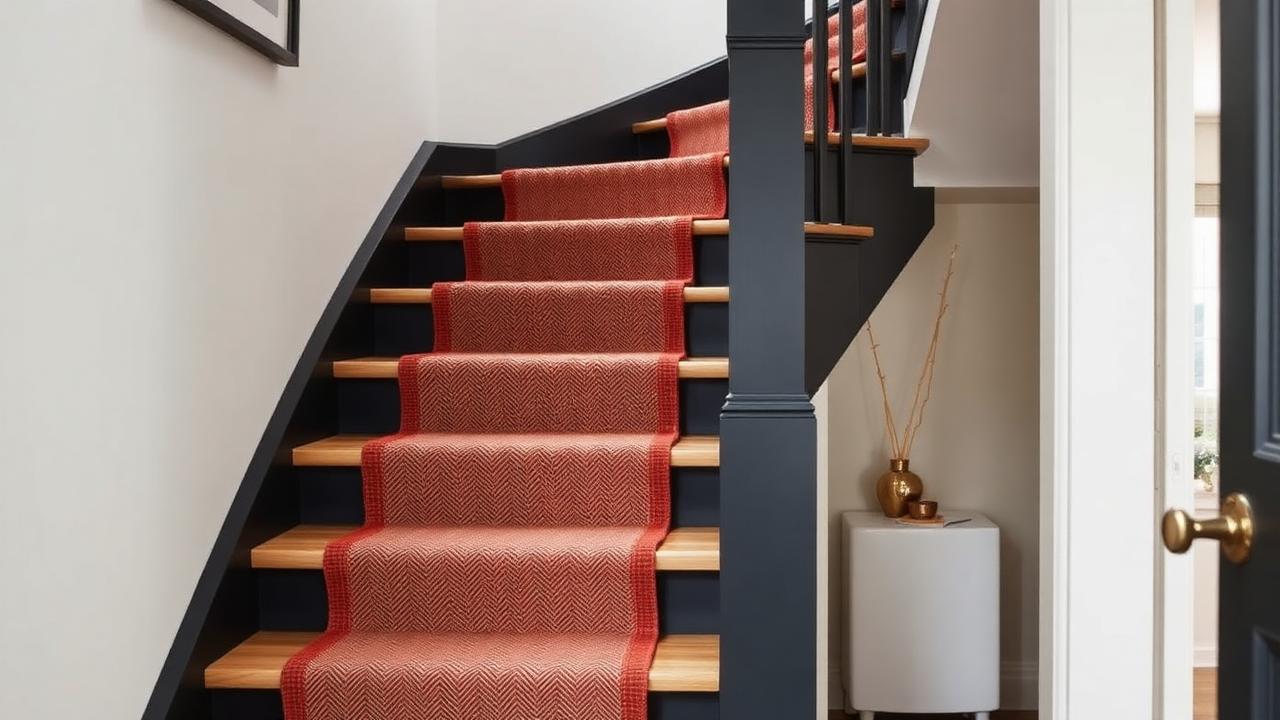
Before you tackle any care task, it helps to know how much material you are actually working with. For a standard 13-step flight with 10 in (25 cm) treads, 7.5 in (19 cm) risers, and a 0.75 in (1.9 cm) nosing wrap, each step consumes 18.25 in (45.9 cm) of runner. Multiplied across 13 steps that is 19.77 ft (5.97 m), and once you add the 24 in (60 cm) finishing allowance at top and bottom you reach 21.77 ft (6.57 m). A 10% waste margin for cutting and pattern matching brings the total order to roughly 24 ft (7.3 m).
These numbers matter for maintenance too: knowing the exact yardage helps you order matching offcuts for repairs, budget for cleaning by the linear foot or metre, and plan any partial replacement without guesswork. The stair runner length calculator handles all of this automatically once you enter your own tread, riser, and step count, so you are never left estimating on a ladder with a tape measure.
| Measurement | US (in/ft) | UK (cm/m) |
|---|---|---|
| Tread depth | 10 in | 25 cm |
| Riser height | 7.5 in | 19 cm |
| Nosing wrap | 0.75 in | 1.9 cm |
| Total per step | 18.25 in | 45.9 cm |
| 13 steps subtotal | 19.77 ft | 5.97 m |
| Plus allowances | 21.77 ft | 6.57 m |
| With 10% waste | 24 ft | 7.22 m |
Know your numbers in 30 seconds
Enter your step count, tread depth and riser height — the stair runner calculator gives you the exact length to order, in metres and feet, with waste included.
Open the stair runner calculatorUnderstanding pile crush versus general wear
Pile crush is a specific, localized form of pile flattening, usually caused by a fixed point of pressure rather than general foot traffic. On a stair runner, this most often happens where a heavy stair rod bracket presses into the pile at the base of each riser, where a piece of furniture has sat on a landing edge, or where a runner has been folded and stored before installation. The good news is that pile crush, unlike years of gradual wear-related flattening, is often the easiest type of damage to reverse because the fibres have simply been compressed rather than mechanically broken down over time.
Step-by-step repair method
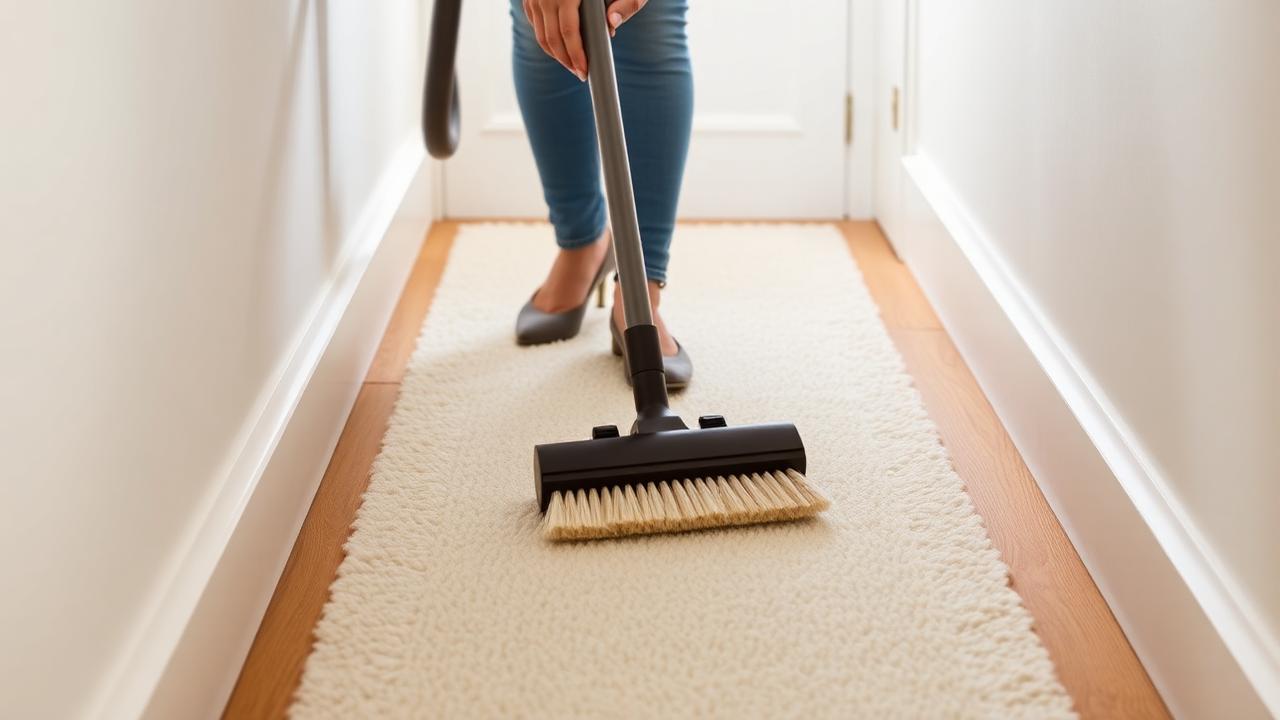
Start by vacuuming the crushed area thoroughly to remove any embedded grit, since debris trapped at the base of the pile will physically prevent the fibres from standing back up. Next, fill a spray bottle with clean water (a few drops of white vinegar can help with stubborn wool crush) and lightly mist the dented area until it is damp but not saturated. Avoid soaking the backing, since excess moisture risks shrinkage, mould, or delamination on stair carpet that sits over timber.
With the area dampened, use the edge of a blunt spoon, a specialist carpet pile brush, or even an ice cube run gently over the dent to work moisture into the crushed fibres while lightly agitating them upright. For deeper dents, apply a low, indirect heat source, such as a hairdryer on a cool or low setting held several inches away, while brushing the pile against the grain with a stiff-bristled brush. The combination of moisture, gentle heat, and mechanical lifting mimics the steam-and-lift technique used for general flattening but is more targeted and usually faster to see results on a single dent.
The ice cube trick for wool
A popular trade trick for isolated wool dents is to place an ice cube directly on the compressed spot and let it melt slowly over 20 to 30 minutes. As the ice melts, the water gradually penetrates the fibre core without over-saturating the surrounding area, and the wool’s natural crimp begins to relax back toward its original shape. Once the ice has fully melted, blot any excess moisture with a clean towel and brush the pile upright, then allow it to air dry completely before anyone walks on the step.
When crush is permanent
If, after repeated attempts, the fibres remain flat or you notice they have become brittle, discoloured, or are breaking off at the tip, the damage has likely gone beyond simple compression into actual fibre degradation. This is more common with polypropylene, which can develop a permanent set once bent past a certain threshold, and with any fibre that has been crushed under sustained heavy weight for months or years, such as beneath an old stair-mounted furniture lift bracket or a long-forgotten potted plant on a half-landing.
In these permanent cases, your realistic options are a localized patch repair using a matched offcut (ideal if you kept spare material from the original installation), a full re-carpeting of the affected tread only if your runner was installed in individual sections, or a complete replacement of the run if the damage is on a continuous piece and patching would be visually obvious.
Keep an offcut for exactly this reason
Whenever you have a stair runner professionally fitted, always ask the installer to leave you a spare offcut of at least a few square feet. It is invaluable for future patch repairs and lets you match dye lot and pile direction exactly.
Whatever you decide, get the numbers first: the stair runner calculator doubles as a stair runner length calculator, adding nosing wrap, landings, winders, pattern repeat and waste so you order the right length the first time.
Still deciding on material, width or pattern? Our hub on stair runners compares weaves, widths, backings and fitting styles side by side, then hands the numbers straight to the calculator.
Frequently asked questions
Can I use an iron to fix a crushed spot?
Only the steam function held several inches away from the pile, never direct contact, and always test on an inconspicuous area first to check for heat sensitivity.
Does the ice cube method work on synthetic runners?
It has some effect on nylon but is far less effective on polypropylene, which does not have the same natural fibre memory as wool.
How long does a dent repair take to dry?
Typically 2-4 hours depending on room humidity and how much moisture was used; always let it dry fully before foot traffic resumes.
Will pile crush come back in the same spot?
If the original cause, such as a furniture leg or rod bracket, is reapplied to the same spot, the crush will likely return over time.
Is it worth patching a small dent instead of replacing the whole runner?
Absolutely, patching a small, well-matched section is far more cost-effective than a full replacement and is invisible if done well.
Can a professional cleaner fix pile crush?
Yes, many professional carpet cleaners offer pile-lifting as part of a deep clean and have specialist tools that achieve better results than DIY methods.
Does furniture always cause permanent crush?
Not always, especially on wool, but the longer the weight sits in one place, the harder the dent is to reverse, so move furniture periodically if possible.
What household items can double as pile-lifting tools?
A stiff hairbrush, a spoon edge, or even a fork run gently through the pile can all help lift crushed fibres in a pinch.
Know your numbers in 30 seconds
Enter your step count, tread depth and riser height — the stair runner calculator gives you the exact length to order, in metres and feet, with waste included.
Plan your runner with the stair runner calculatorReady for real prices?
Get quotes from vetted stair runner suppliers and fitters near you. Free, no account, no obligation.
Every guide is written from hands-on measuring and fitting experience, checked against the calculator’s own maths, and re-reviewed whenever prices or methods change. Read our editorial standards.