
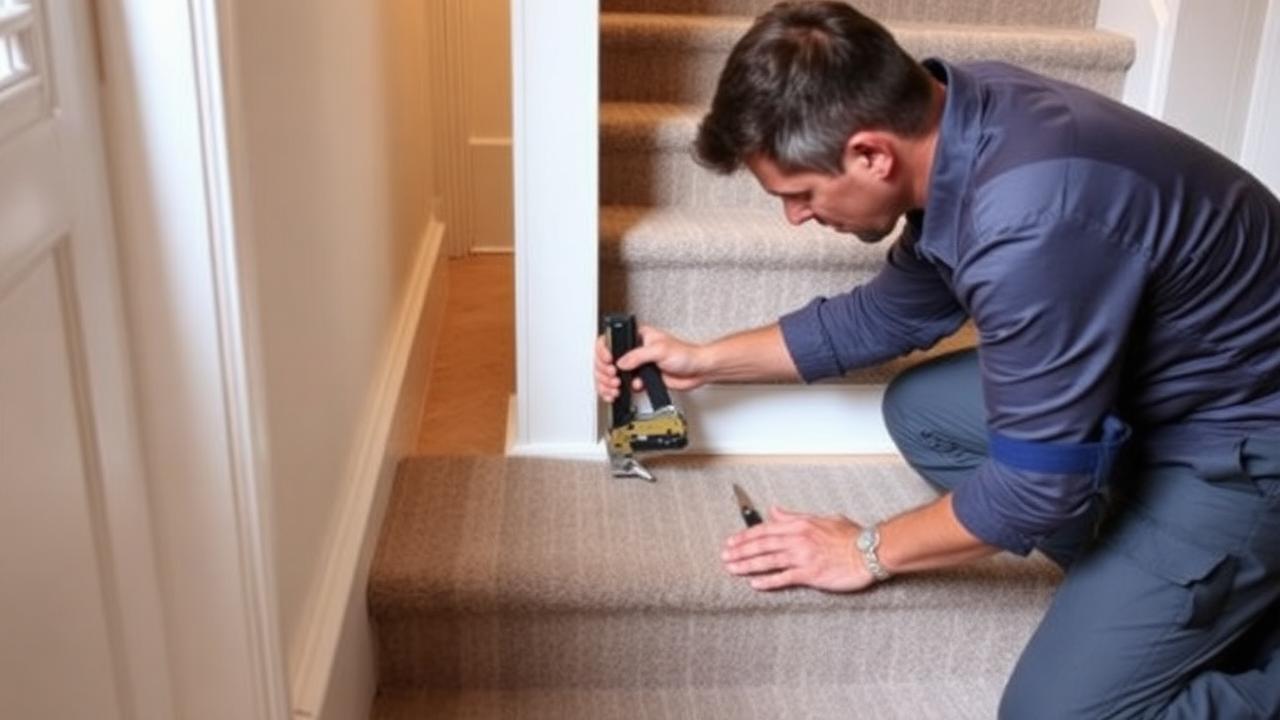
The safety checklist
I recommend running through this list every couple of months. It takes less than 10 minutes and can prevent a lot of problems.
- Check for any signs of the runner loosening at the nosing edges.
- Listen for any squeaks in the treads—this can indicate loose carpet or loose treads.
- Check for any fraying or unravelling on the runner edges.
- Make sure your stair rods (if you have them) are still secure.
- Ensure your runner is still firmly attached at the top and bottom of the flight.
- Check that the underlay isn't shifting—you should feel no movement in the runner.
- Make sure the staircase lighting is bright and effective.
- Test your handrail—make sure it is perfectly solid and secure.
How much runner do I need?
For a 13-step flight: 10 in tread run + 7.5 in riser + 0.75 in nosing wrap = 18.25 in per step. Total = 237.25 in (5.97 m). Plus 24 in finishing allowance = 261.25 in (6.57 m). With an 8% waste margin, you need approximately 23.5 ft (7.1 m).
| Measurement | US (in/ft) | UK (cm/m) |
|---|---|---|
| Tread run | 10 in | 25 cm |
| Riser height | 7.5 in | 19 cm |
| Nosing wrap | 0.75 in | 1.9 cm |
| Total per step | 18.25 in | 45.9 cm |
| 13-step subtotal | 19.77 ft | 5.97 m |
| Finishing allowance | 21.77 ft | 6.57 m |
| With 8% waste | 23.5 ft | 7.1 m |
Know your numbers in 30 seconds
Enter your step count, tread depth and riser height — the stair runner calculator gives you the exact length to order, in metres and feet, with waste included.
Open the stair runner calculatorWhen to call a pro
If your checklist reveals any major issues—significant loosening, persistent fraying, or any signs that the underlay is failing—don't try to fix it yourself. Get a professional fitter to take a look. They have the right tools, knowledge, and experience to get your stairs back into safe, top-notch condition quickly.

Whatever you decide, get the numbers first: the stair runner calculator doubles as a stair runner length calculator, adding nosing wrap, landings, winders, pattern repeat and waste so you order the right length the first time.
Still deciding on material, width or pattern? Our hub on stair runners compares weaves, widths, backings and fitting styles side by side, then hands the numbers straight to the calculator.
Frequently asked questions
How often should I use the checklist?
At least every few months is a good rule of thumb. More often if you have a busy household.
What should I look for first?
Check for any loosening at the nosing edges—this is the most common place for problems to start.
Is a squeak a safety concern?
A squeak can be a sign of a loose tread or a loose carpet. Both should be checked to be sure.
Can a runner be 'too old'?
If it's showing signs of significant wear, fraying, or has stretched so much that it's no longer safe, it's time to replace it.
Do I need special tools?
No, just a quick inspection is usually enough. If you find a problem, you might need a professional with the right tools.
What if I notice a loose rod?
Tighten it immediately. A loose rod can be a significant trip hazard.
Can I use the checklist on a new runner?
Yes, it's a good way to get familiar with how your runner should feel, so you'll be the first to notice if something starts to change.
Should I be concerned about small gaps?
Small, intentional gaps at the sides are fine, but any gaps that have appeared recently are a sign that something is shifting and needs attention.
Know your numbers in 30 seconds
Enter your step count, tread depth and riser height — the stair runner calculator gives you the exact length to order, in metres and feet, with waste included.
Plan your runner with the stair runner calculatorReady for real prices?
Get quotes from vetted stair runner suppliers and fitters near you. Free, no account, no obligation.
Every guide is written from hands-on measuring and fitting experience, checked against the calculator’s own maths, and re-reviewed whenever prices or methods change. Read our editorial standards.