
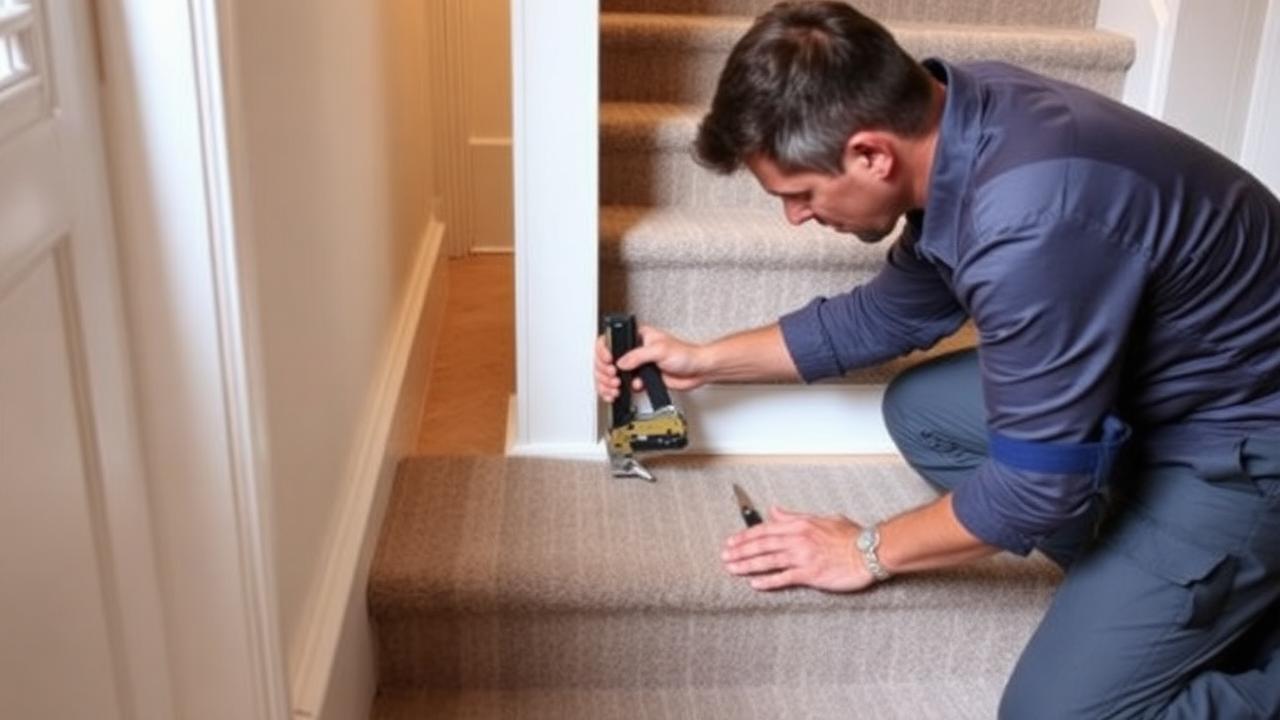
The anatomy of a trip-free runner
The most common trip hazards I see are loose runner loops, edges that have begun to fray, and runners that have stretched and created ripples on the treads. All of these can be prevented. It starts with the right material—a dense, low-pile, tightly woven carpet—and continues with an installation that locks the carpet into place.
Using the right gripper rods is essential. The grippers should be the correct size for your carpet thickness, and they should be positioned perfectly at the back of each tread. A properly placed gripper ensures the carpet doesn't move when you step on it.
How much runner do I need?
For a 13-step flight: 10 in tread run + 7.5 in riser + 0.75 in nosing wrap = 18.25 in per step. Total = 237.25 in (5.97 m). Plus 24 in finishing allowance = 261.25 in (6.57 m). With an 8% waste margin, you need approximately 23.5 ft (7.1 m).
| Measurement | US (in/ft) | UK (cm/m) |
|---|---|---|
| Tread run | 10 in | 25 cm |
| Riser height | 7.5 in | 19 cm |
| Nosing wrap | 0.75 in | 1.9 cm |
| Total per step | 18.25 in | 45.9 cm |
| 13-step subtotal | 19.77 ft | 5.97 m |
| Finishing allowance | 21.77 ft | 6.57 m |
| With 8% waste | 23.5 ft | 7.1 m |
Know your numbers in 30 seconds
Enter your step count, tread depth and riser height — the stair runner calculator gives you the exact length to order, in metres and feet, with waste included.
Open the stair runner calculatorCommon trip hazards to watch for
If your runner is showing signs of any of these, it's time to address them:

- Loose or unravelling edges—a common catch point.
- Rippling on the treads—sign of a loose install or failing underlay.
- Wear on the nosing edges—this indicates the runner is no longer properly supported.
- Runner ends that are not securely fastened.
- Carpets that have stretched and moved, exposing bare floor.
The power of professional maintenance
Even the best install will need a check-up every year or two. A professional fitter can quickly re-tighten a runner that has started to stretch, secure any loose grippers, and check for any potential trip points before they become a real problem. Don't wait until someone trips to inspect your stairs.
Whatever you decide, get the numbers first: the stair runner calculator doubles as a stair runner length calculator, adding nosing wrap, landings, winders, pattern repeat and waste so you order the right length the first time.
Still deciding on material, width or pattern? Our hub on stair runners compares weaves, widths, backings and fitting styles side by side, then hands the numbers straight to the calculator.
Frequently asked questions
What is the main cause of stair runner trips?
The most common causes are loose, bunched, or frayed runner edges, as well as carpets that have stretched and no longer sit flat on the treads.
How can I prevent my runner from rippling?
Choose a dense, high-quality material, use a thin, firm underlay, and have it professionally installed to ensure it is perfectly taut.
Does the underlay matter for safety?
Yes, it is crucial. An underlay that is too thick or too soft will allow the runner to move, creating trip hazards. You need a firm, stable underlay.
How often should I inspect my runner?
At least every few months, check for any movement, loose edges, or signs of wear. If you notice any, get it addressed immediately.
Can I fix a loose runner myself?
Only if you have the proper tools and training. For most people, calling a professional fitter is the only way to ensure the runner is safe and correctly tightened.
What should I look for in a professional fitter?
Look for experience with stair runners specifically. Ask them about their installation methods and check if they have experience with the type of carpet you have chosen.
Is a runner safer than bare wood?
Yes, if it is professionally installed. A runner provides a consistent, non-slip surface, which bare wood can lack, especially when worn.
What should I do if my runner is fraying?
Have the damaged section repaired or replaced immediately. Frayed edges are a classic trip hazard that will only get worse with time.
Know your numbers in 30 seconds
Enter your step count, tread depth and riser height — the stair runner calculator gives you the exact length to order, in metres and feet, with waste included.
Plan your runner with the stair runner calculatorReady for real prices?
Get quotes from vetted stair runner suppliers and fitters near you. Free, no account, no obligation.
Every guide is written from hands-on measuring and fitting experience, checked against the calculator’s own maths, and re-reviewed whenever prices or methods change. Read our editorial standards.