
The fundamental difference in purpose
Anti-slip strips and stair runners are often grouped together as safety solutions, but they serve very different primary functions. Anti-slip strips are functional tools designed solely to increase friction on the nosing of a step. They are usually made of a grit-like abrasive material (similar to sandpaper) or a textured rubber. Their goal is to prevent the foot from sliding off the edge of the stair. They are a utility product, often found in commercial settings or on outdoor steps where aesthetics are secondary to preventing accidents.
A stair runner, on the other hand, is a design element that happens to provide excellent safety. It covers the entire central path of the staircase, providing grip for the whole foot, not just the toe. Beyond safety, it adds warmth, sound insulation, and a decorative layer to the home. In my experience as a fitter, homeowners who choose strips usually do so because they love the look of their bare wood but are terrified of the slip risk. Those who choose runners want the full package: safety, silence, and style. The stair runner carpet is a lifestyle choice, while strips are a problem-solving choice.
Aesthetic impact: Minimalist vs Grand
If you have spent thousands on high-quality oak or walnut stairs, the last thing you might want to do is cover them up. Anti-slip strips come in transparent or colour-matched versions that are designed to be as unobtrusive as possible. When installed correctly, they are barely visible from a distance, allowing the natural grain of the wood to take centre stage. However, even the best 'invisible' strips can sometimes look like plastic tape stuck to the stairs, which can detract from a high-end finish.
A stair runner makes a statement. It is a piece of upholstery for your architecture. Whether you choose a bold herringbone, a classic floral, or a modern plain grey, the runner becomes the focal point of the hallway. It can make a cold, echoing space feel intimate and welcoming. For many of my UK clients, a runner is the 'finishing touch' that makes a house feel like a home. It’s a trade-off: do you want to show off the wood, or do you want to enhance the space with fabric? If you choose the latter, using a stair runner calculator is the first step in your design journey.
Safety: Friction vs Cushioning
In terms of preventing a slip from starting, both options are effective. Anti-slip strips provide a very high level of grip right at the point where most slips occur—the nosing. However, they are thin. If you do trip or lose your balance, the strips offer zero protection against the impact of the fall. You are still falling onto hard, unforgiving wood or stone. The edges of the stairs remain sharp and dangerous.
A stair runner provides a double layer of safety. First, the texture of the carpet provides excellent friction for the entire foot, making a slip less likely in the first place. Second, if a fall does occur, the carpet and underlay act as a shock absorber. This cushioning can be the difference between a nasty bruise and a broken bone, particularly for elderly residents or young children. From a professional fitter's perspective, I always recommend a runner for families because it addresses the consequences of a fall, not just the prevention of one. The whole-flight coverage is simply a more comprehensive safety net.
How much runner do I need?
If you decide that strips aren't enough and you want the full protection of a runner, you need to measure accurately. Unlike strips, which you just buy by the pack, a runner needs to be one continuous piece or carefully joined. Here is how we calculate the length for a typical home staircase in both the US and UK.

| Component | UK (cm) | US (in) |
|---|---|---|
| Step Tread Depth | 25 cm | 10 in |
| Step Riser Height | 19 cm | 7.5 in |
| Nosing Wrap (per step) | 2 cm | 0.75 in |
| Total Length Per Step | 46 cm | 18.25 in |
| Subtotal for 13 Steps | 5.98 m | 237.25 in |
| Top/Bottom Wrap Allowance | 60 cm | 24 in |
| Total Ordered Length | 6.58 m | 21.77 ft |
| Total with 10% Waste | 7.24 m | 23.95 ft |
Know your numbers in 30 seconds
Enter your step count, tread depth and riser height — the stair runner calculator gives you the exact length to order, in metres and feet, with waste included.
Open the stair runner calculatorInstallation and Maintenance
Installing anti-slip strips is a quick DIY project. You clean the surface, peel off the backing, and stick them down. The biggest challenge is ensuring they are perfectly straight and that the wood is completely free of oils or waxes that might prevent adhesion. Over time, these strips can collect dirt around the edges, and the adhesive may eventually fail, requiring them to be peeled off and replaced. This can sometimes leave a sticky residue that is difficult to clean without damaging the wood's finish.
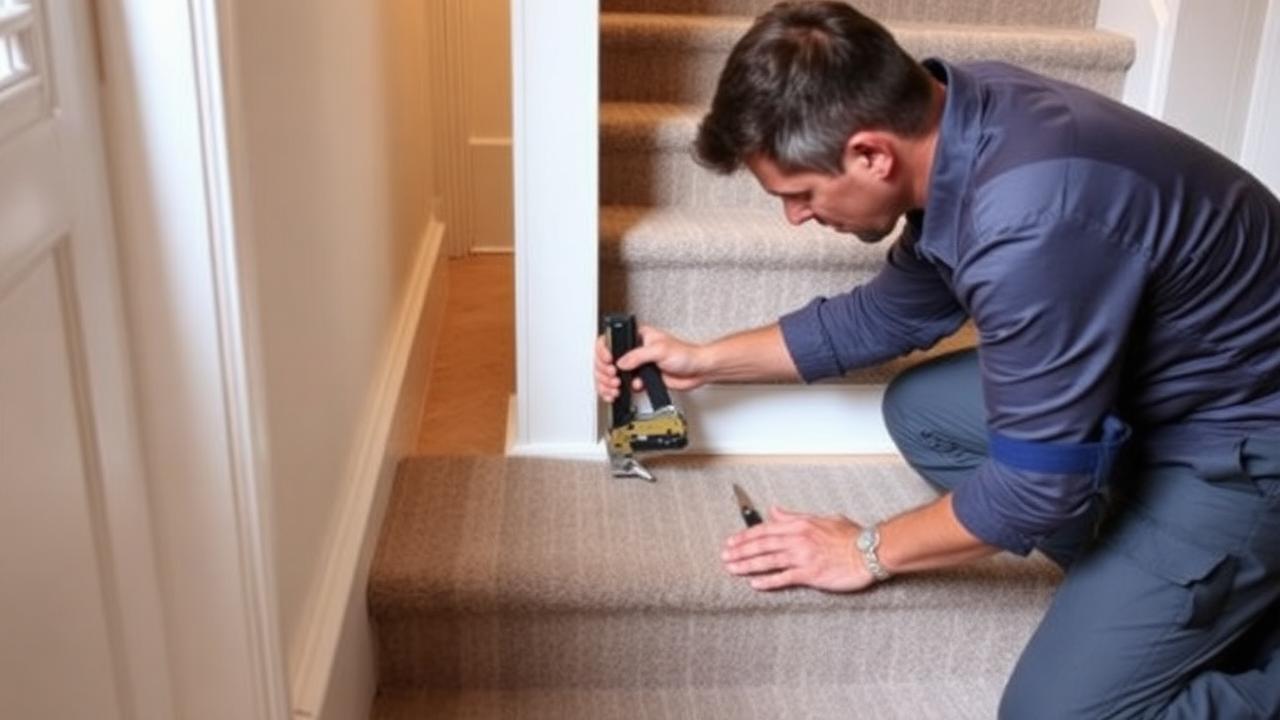
A stair runner requires a professional installation involving grippers, staples, and underlay. It’s a permanent addition that shouldn't move. Maintenance involves regular vacuuming and the occasional professional deep clean. While a runner is a bigger commitment, it is also much more durable. A good wool runner will look great for 15 years, whereas anti-slip strips often start to look tatty or peel away within 12 to 24 months in a busy household. I often tell my clients: strips are a bandage, a runner is a cure.
Acoustic Benefit
Remember that anti-slip strips do nothing to quiet a staircase. If you have noisy timber stairs, a runner is the only solution that will effectively dampen the sound of footsteps and stop the 'drumming' effect in your hallway.
Cost Comparison
Cost is where anti-slip strips win hands down in the short term. A roll of high-quality transparent anti-slip tape or a pack of pre-cut rubber strips will cost you between £20 and £50 ($25 - $65). It is a very cheap way to make a dangerous staircase safer immediately. For a rental property or a temporary living situation, it is often the most sensible choice.
A stair runner is a significant investment. Between the carpet, the underlay, the grippers, and the labour, you are likely looking at a starting price of £400 ($500) and it can easily go up to £1,500 ($1,900) for high-end materials. However, you are investing in the fabric of the house. A runner is a long-term improvement that adds comfort and value. If you can afford the initial outlay, the benefits of a runner far outweigh the cost savings of simple strips.
- Anti-slip strips are a budget-friendly, quick safety fix.
- Stair runners provide full-foot grip and fall cushioning.
- Strips preserve the visual look of bare wood.
- Runners significantly reduce noise and echoing.
- Installation of runners is permanent and professional.
- Strips may require frequent replacement and can leave residue.
- A full runner adds warmth and luxury to the hallway.
- Always check the 'R' rating (slip resistance) of any stair carpet.
Conclusion: Which should you choose?
If your primary goal is to stop a slip on a budget while keeping your wooden stairs visible, high-quality anti-slip strips are a perfectly valid solution. They are excellent for outdoor steps, basement stairs, or as a temporary measure. However, if you are looking to improve your home’s interior, reduce noise, and provide the highest level of safety for your family, a stair runner is the superior choice. It transforms the staircase from a purely functional structure into a comfortable, beautiful, and safe part of your living space. Use our stair runner length calculator to start planning your installation today.
Frequently asked questions
Are clear anti-slip strips really invisible?
They are very discreet, especially from a distance, but they are not 100% invisible. They have a slight texture that can reflect light, and if not installed perfectly, the edges may become visible as they collect dust over time.
Do anti-slip strips damage wooden stairs?
The adhesive is generally safe for most finishes, but if left for years, it can be difficult to remove. In some cases, the area under the strip may not age or fade at the same rate as the exposed wood, leading to light patches if the strips are removed.
How long do anti-slip strips last?
In a high-traffic home, they usually last between 1 and 3 years before the edges start to lift or the abrasive surface wears down. They are a maintenance item that will eventually need replacement.
Can I put a stair runner over anti-slip strips?
You should remove the strips first. The grippers and underlay for a runner need a clean, flat surface to be installed correctly. Leaving the strips underneath could cause the underlay to sit unevenly or interfere with the adhesive of the new installation.
Is a stair runner harder to clean than bare wood with strips?
Yes, a runner requires vacuuming and periodic deep cleaning. Bare wood is easier to mop or wipe down, but the strips themselves can be tricky to clean as their textured surface tends to catch mop fibres and dirt.
What is the best material for a non-slip stair runner?
Wool is excellent because it has natural grip and resilience. Sisal and other natural fibres provide very high friction but can be slippery if they get wet or if the fibres become smoothed down over many years of heavy use.
Do I need underlay for a stair runner?
Yes, always. Underlay provides the cushioning that makes the runner safe and comfortable. It also protects the carpet backing from the hard wood of the stairs, extending the life of the runner significantly.
Which is better for dogs: strips or a runner?
A runner is almost always better for dogs. They struggle with the lack of traction on bare wood, and a runner provides a secure, gripped path for them. Strips only provide grip on the edges, which doesn't help a dog's paws on the main part of the tread.
Know your numbers in 30 seconds
Enter your step count, tread depth and riser height — the stair runner calculator gives you the exact length to order, in metres and feet, with waste included.
Calculate your carpet needs with our stair runner length calculatorReady for real prices?
Get quotes from vetted stair runner suppliers and fitters near you. Free, no account, no obligation.
Every guide is written from hands-on measuring and fitting experience, checked against the calculator’s own maths, and re-reviewed whenever prices or methods change. Read our editorial standards.