

The aesthetic difference: Seamless vs Segmented
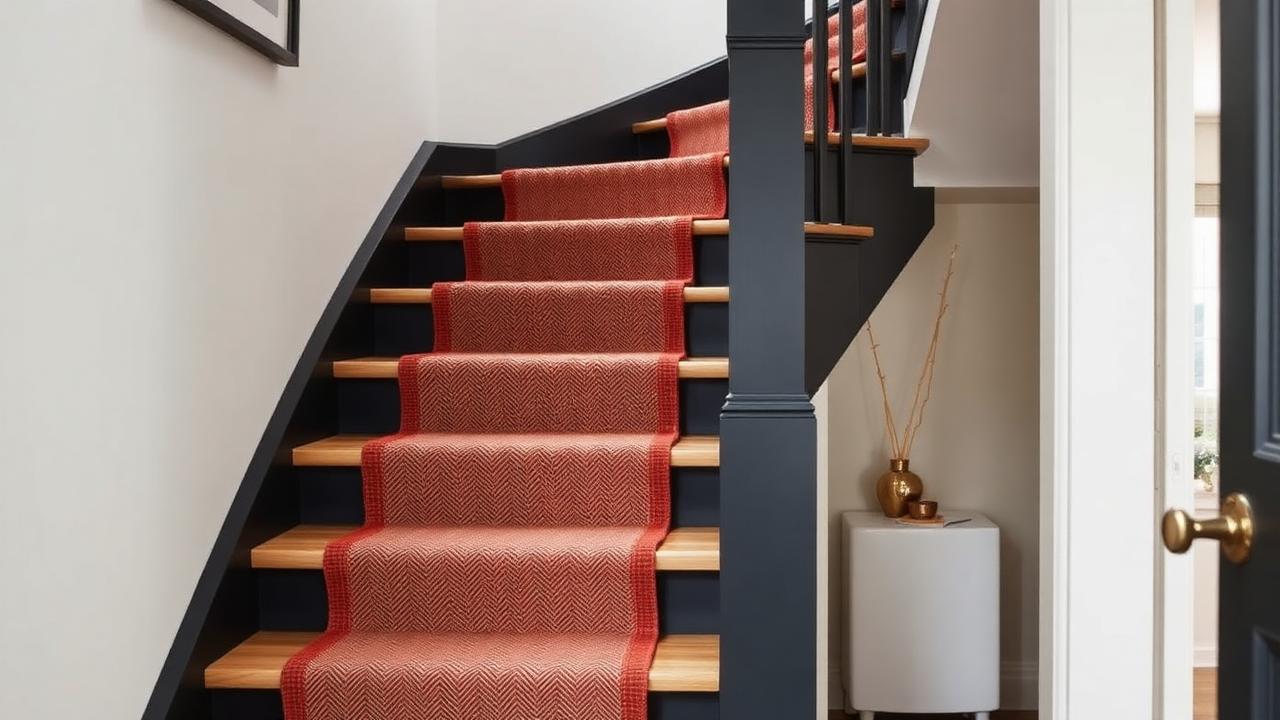
When you install a continuous stair runner, you are creating a visual flow that leads the eye from the bottom of the flight to the top without interruption. This seamless appearance is what most people associate with high-end interior design. A runner carpet can be custom-cut to the exact width of your stairs, leaving a consistent border of timber on either side. In my experience as a fitter, this creates a sense of luxury and intentionality that individual rugs struggle to match. The way the carpet wraps over the nosing and dives into the crotch of each step is a hallmark of quality craftsmanship.
In contrast, a runner rug set often consists of individual pieces that are placed on each tread. While this can be a very quick DIY fix, it lacks the rhythmic flow of a single piece of carpet. You often see gaps where the riser meets the tread, or the pieces might not perfectly align if the stairs aren't perfectly uniform. However, rug sets can be a great way to introduce texture and pattern in a more ‘casual’ way. For a rustic farmhouse look or a bohemian-style home, the slightly mismatched or modular look of individual rugs might actually be preferred. But if you are aiming for a classic Victorian or a sleek modern finish, the stair runner length calculator will help you order the single long piece you need for that professional touch.
Installation complexity and DIY potential
Installing a full stair runner is not a task for the faint-hearted. It requires specialized tools like a knee kicker, carpet bolster, and a heavy-duty staple gun. The process involves installing grippers (tack strips) on every step, stretching the carpet to eliminate ripples, and ensuring the pile direction is consistent. If you have winders (steps that turn a corner), the complexity increases exponentially, as you have to manage pattern matching and folding the excess carpet neatly. This is why most homeowners opt for professional fitting when choosing a full runner.
Runner rug sets are designed for the DIY market. Many come with adhesive backings or are designed to be used with simple rug pads. You essentially ‘peel and stick’ or place them on the treads. There is no stretching involved, no grippers, and no specialized tools. This makes them a very attractive option for renters who cannot make permanent changes to the property or for homeowners on a tight budget. However, the ease of installation comes with a trade-off: they are much more prone to shifting and peeling over time. As a fitter, I’ve seen many DIY rug sets that have become trip hazards because the adhesive failed or the rug edges started to curl. A well-fitted stair runner carpet, secured with staples and grippers, will stay put for decades.
Safety and durability considerations
Safety should be your primary concern when choosing floor coverings for stairs. A continuous stair runner is inherently safer because it is anchored at multiple points on every single step. It covers the nosing—the most common place for a slip to occur—and provides a consistent surface from top to bottom. The underlay used with runners also provides extra cushioning, which can be a lifesaver in the event of a fall. In my years on the job, I have never seen a properly installed runner slide off a step, whereas I’ve seen plenty of rug set pieces that have migrated over time.
Rug sets, particularly those that only cover the tread and not the riser, leave the nosing of the stair exposed. If the rug is not perfectly flat or if the adhesive isn't strong enough, the edge of the rug can catch a toe, leading to a trip. Furthermore, because rug sets are often lighter and thinner than full runner carpet, they tend to wear out much faster. The edges can fray, and the lack of a proper underlay means the wood beneath isn't as well-protected from the impact of footsteps. If you have a high-traffic home with kids and pets, a full runner is almost always the safer and more durable investment.
How much runner do I need?
Calculating the material for a continuous runner is a different beast than counting the number of rugs in a set. To get a professional finish, you need to account for the tread depth, the riser height, and the extra material needed to wrap around the nosing. Let’s look at a standard UK and US example for a 13-step flight to see how the numbers stack up. This ensures you don't run short halfway up the stairs.
| Part of the Stair | Metric (cm) | Imperial (in) |
|---|---|---|
| Tread Depth | 25 cm | 10 in |
| Riser Height | 19 cm | 7.5 in |
| Nosing Wrap | 2 cm | 0.75 in |
| Single Step Total | 46 cm | 18.25 in |
| 13 Steps Subtotal | 598 cm | 237.25 in |
| Installation Allowance | 60 cm | 24 in |
| Total Needed | 6.58 m | 21.77 ft |
| Total with 10% Waste | 7.24 m | 23.95 ft |
Know your numbers in 30 seconds
Enter your step count, tread depth and riser height — the stair runner calculator gives you the exact length to order, in metres and feet, with waste included.
Open the stair runner calculatorCost comparison: Initial vs Long-term
At first glance, a runner rug set is significantly cheaper. You can pick up a set of treads for as little as £50 to £100 ($60 - $120), whereas a mid-range wool stair runner for the same flight might cost £300 to £500 ($380 - $630) for the material alone, plus another £150 to £300 for professional fitting. For many, this makes the rug set an easy win for the short term. It’s a ‘good enough’ solution that refreshes the look of the hallway for a fraction of the price.
However, the long-term value often sits with the full runner. A high-quality wool or nylon runner can last 15 to 20 years if cared for properly. A cheap rug set might need replacing every 2 to 3 years as the adhesive fails or the material wears thin. Over a decade, you could easily spend more on multiple sets of rugs and the time spent re-applying them than you would on a single, high-quality runner installation. Additionally, a professionally fitted runner adds genuine value to your home’s interior, whereas a rug set is usually seen as a temporary fixture. When I’m advising clients, I always suggest that if they plan to stay in the home for more than five years, the investment in a proper stair runner pays for itself in durability and daily enjoyment.
Fitter's Insight
If you are using individual rugs, please check the backing material. Some cheap rubber backings can actually react with the finish on your wooden stairs, leaving permanent stains or 'ghosting' that is impossible to remove without sanding the wood down.
Maintenance and cleaning
Maintenance requirements differ slightly between the two options. A continuous runner can be vacuumed just like any other carpeted area. Because it is fixed firmly, you can use a powerful upright vacuum without worrying about the carpet moving. However, cleaning deep-seated stains can be more difficult because you cannot take the runner to a dry cleaner; you must use a carpet cleaning machine or hire a professional.
Individual rugs in a set are often small enough to be taken outside and shaken, and some are even machine washable. This makes them a very practical choice for homes with messy pets or in areas where mud is frequently tracked in. If one rug in the set gets permanently stained, you only have to replace that one piece, rather than the entire flight. This modularity is a huge plus for high-mess environments. Just be aware that if the rugs are washed frequently, they may shrink at different rates, leading to an uneven look across your staircase.
- Continuous runners offer a superior, high-end aesthetic.
- Rug sets are ideal for renters or those on a very tight budget.
- Full runners require professional installation for the best results.
- Safety is higher with a fixed runner that covers the nosing.
- Rug sets allow for easier cleaning of individual pieces.
- A full runner protects the entire surface of the stairs from wear.
- Use a stair runner calculator to ensure you buy enough continuous length.
- Check for VOCs and chemical reactions in rug backings.
Acoustics and comfort underfoot
One of the most immediate benefits of a stair runner is the noise reduction. The combination of thick carpet and a quality underlay acts as a massive sound absorber, silencing the 'thump-thump' of footsteps that can echo through a house. In older UK terrace houses or US timber-frame homes, this can make a world of difference to the peace and quiet of the downstairs rooms. A full runner covers the risers as well as the treads, which further helps to dampen the vibration of the entire staircase structure.
Rug sets provide some sound dampening on the treads, but because they usually leave the risers and the sides of the treads exposed, the noise reduction is significantly less. The wood still rings out when struck, and there is no padding to absorb the impact. In terms of comfort, nothing beats the soft, springy feel of a wool runner over a 9mm underlay. It makes the daily journey up and down the stairs a pleasure rather than just a necessity. If you prioritize a quiet, comfortable home, the continuous runner is the clear winner every time.
Whatever you decide, get the numbers first: the stair runner calculator doubles as a stair runner length calculator, adding nosing wrap, landings, winders, pattern repeat and waste so you order the right length the first time.
Frequently asked questions
Are stair rug sets safe for children?
They can be safe if they are secured very well with high-quality adhesive or anti-slip pads. However, a continuous stair runner is generally safer as it is stapled and gripped into place, eliminating the risk of individual pieces sliding or curling at the edges.
Can I install a stair runner myself?
It is possible, but it requires specialized tools and a high degree of precision. For straight stairs, a confident DIYer might manage, but for stairs with turns or winders, professional installation is highly recommended to ensure a safe and neat finish.
How do I stop individual stair rugs from moving?
You should use a high-quality double-sided carpet tape specifically designed for stairs, or a non-slip rug pad cut to size. Regularly check the adhesive to ensure it hasn't dried out or become less effective over time.
Which is better for resale value: a runner or rugs?
A professionally installed stair runner is almost always better for resale value. It is seen as a permanent, high-quality upgrade to the home, whereas individual rugs are viewed as temporary accessories that the new owner will likely remove.
Can I wash stair rug sets in the machine?
Some are machine washable, but many are not. You must check the manufacturer's label. Even if they are washable, frequent washing can damage the backing and cause the rugs to shrink or lose their shape.
Do stair runners damage the wood underneath?
Installing a runner involves staples and grippers, which will leave small holes in the wood. However, these can be filled and the wood refinished if the runner is removed. The runner also protects the wood from daily wear and tear.
What is the best width for a stair runner?
A common standard is to leave about 2 to 4 inches (5 to 10 cm) of wood showing on either side of the runner. This creates a balanced look that highlights the beauty of the timber while providing a wide enough path for safety.
How long does a stair runner installation take?
For a standard straight flight of stairs, a professional fitter can usually complete the job in 2 to 4 hours. A DIY installation of a rug set might take less than an hour, but the preparation of the wood is key.
Know your numbers in 30 seconds
Enter your step count, tread depth and riser height — the stair runner calculator gives you the exact length to order, in metres and feet, with waste included.
Use our stair runner calculator to find your exact lengthReady for real prices?
Get quotes from vetted stair runner suppliers and fitters near you. Free, no account, no obligation.
Every guide is written from hands-on measuring and fitting experience, checked against the calculator’s own maths, and re-reviewed whenever prices or methods change. Read our editorial standards.