
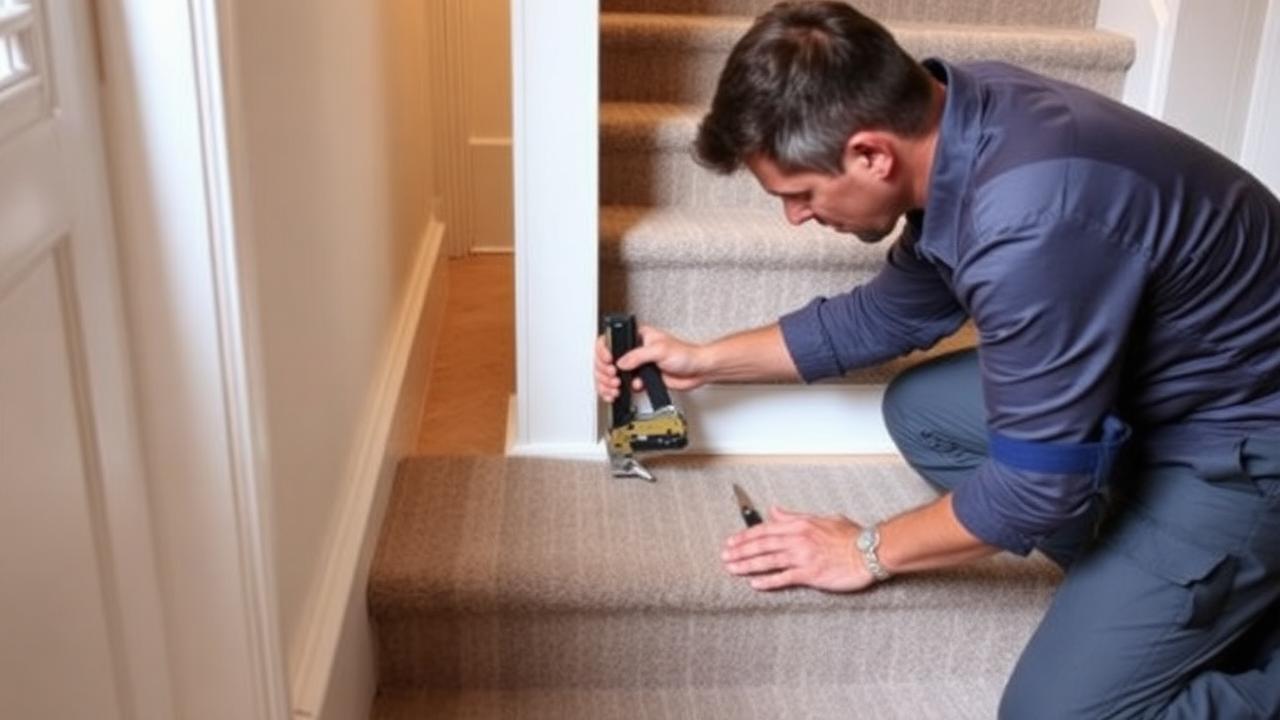
When each option makes sense
Stair cladding is usually the right call when the staircase itself is structurally sound but cosmetically past saving - think chipped MDF treads, an outdated 1980s carpet-only staircase you want to expose as timber, or a builder's-grade staircase that was never finished nicely in the first place. Cladding kits typically clip or glue new veneered or solid timber pieces over the existing treads and risers, transforming the whole look without the expense of replacing the staircase entirely. It's a popular choice when homeowners want to move from a fully carpeted stair to an exposed-wood-with-runner look, or simply want the base timber underneath a runner to look presentable at the edges.
A stair runner, on the other hand, is the right call when the staircase structure and treads are already in reasonable shape and what you actually want is comfort, noise reduction, grip, and a decorative centre strip. If your treads are solid but a bit scuffed, a runner will hide a multitude of sins along the centre while the newly cladded or refinished edges either side stay on show. In many renovation projects, the two are actually used together: cladding refreshes the timber, and a runner is then fitted down the centre to finish the look.
Cost and disruption compared
Stair cladding is a bigger job. Even a straightforward clip-together kit for a 13-step staircase typically costs between £400 and £1,200 in the UK depending on timber species and finish, and professional fitting labour can add another £300-£600 on top if the treads need levelling or the stringers need adjusting. In the US, expect $600-$2,000 for materials plus installation on a comparable flight. The process also generates a fair amount of dust and mess, and the staircase is often unusable, or at least awkward to use, for one to three days.
A stair runner is generally cheaper and far less disruptive. Materials and professional fitting for a straight 13-step flight typically land between £300 and £800 in the UK, or $400-$1,200 in the US, and the job is usually completed in a single day with minimal mess beyond some carpet offcuts. If your budget or timeline is tight, a runner delivers a dramatic visual improvement for a fraction of the cost and hassle of a full cladding project.
| Factor | Stair Cladding | Stair Runner |
|---|---|---|
| Typical UK cost (13 steps) | £700-£1,800 | £300-£800 |
| Typical US cost (13 steps) | $900-$2,600 | $400-$1,200 |
| Installation time | 1-3 days | Half a day to a full day |
| Disruption level | High - dust, staircase unusable | Low - minimal mess |
| Changes staircase structure? | Yes, permanently | No, fully reversible |
| Adds noise/slip protection? | Not on its own | Yes, significantly |
Measuring for a runner over a cladded staircase
If you clad your staircase and then plan to add a runner down the centre, measure after the cladding work is finished, not before, because new treads and risers can shift the exact dimensions slightly compared to the original structure. Use the same formula as any standard runner project: tread depth plus riser height per step, add a small nosing allowance, multiply by the number of steps, then add extra for top and bottom finishing.

| Measurement Component | UK Metric (cm) | US Imperial (in) |
|---|---|---|
| Tread depth (post-cladding) | 25 cm | 10 in |
| Riser height (post-cladding) | 19 cm | 7.5 in |
| Nosing wrap allowance | 2 cm | 0.75 in |
| Per-step total | 46 cm | 18.25 in |
| 13 steps total | 598 cm | 237.25 in |
| Top/bottom finishing | 60 cm | 24 in |
| Total length required | 6.58 m | 21.77 ft |
| With 10% waste margin | 7.24 m | 23.95 ft |
Know your numbers in 30 seconds
Enter your step count, tread depth and riser height — the stair runner calculator gives you the exact length to order, in metres and feet, with waste included.
Open the stair runner calculatorLook and feel of the finished staircase
Cladding transforms the entire visual character of a staircase. You might go from a dated, painted or carpeted-over structure to a warm, exposed oak or walnut finish that becomes a genuine feature of the hallway. It's a permanent architectural upgrade, and many cladding kits include matching spindles and handrail caps so the whole balustrade gets refreshed at the same time. This makes cladding attractive to homeowners doing a wider renovation, particularly in open-plan hallways where the staircase is highly visible from the living space.
A stair runner changes the character of the staircase in a different, complementary way - it introduces colour, pattern and texture without altering the underlying structure at all. This is why runners remain popular even on beautifully cladded or original period staircases: the exposed timber either side of the runner shows off the joinery, while the runner itself softens the centre for everyday use. If you love the idea of exposed wood but worry about slipping or noise, a runner over cladding gives you both benefits at once.
Fitter's Tip
If you're planning both projects, always clad first and fit the runner second. Attempting to clad around an existing runner is fiddly and risks damaging the carpet, whereas fitting a runner onto freshly cladded, level treads is straightforward and gives the cleanest possible finish.
- Cladding renews the staircase structure itself; a runner only dresses it.
- Cladding is more expensive and disruptive than fitting a runner.
- A runner is fully reversible; cladding is a permanent change.
- Combining cladding with a runner is a popular renovation approach.
- Always clad before fitting a runner, never the other way round.
- A stair runner length calculator helps you order carpet accurately post-cladding.
- Cladding kits often include matching spindle and handrail refreshes.
- Runners add grip and noise reduction that cladding alone cannot provide.
Which delivers better value?
If your staircase structure is genuinely tired, damaged, or was never finished to a good standard, cladding addresses the root problem and adds long-term value to the property, particularly if buyers will see exposed timber as a premium feature. But if the structure underneath is fine and what's bothering you is comfort, noise, or a dated carpet colour, a stair runner delivers a far bigger visual and functional improvement per pound or dollar spent. Most fitters will tell you to fix the bones of the staircase first with cladding if needed, then finish with a runner - that sequence gives you the best of both durability and everyday comfort.
Getting quotes for either project
When comparing quotes, make sure cladding estimates include the cost of any structural adjustments needed for uneven treads, and make sure runner quotes clearly state whether underlay, grippers and stair rods are included or charged separately. It's common for a low headline price on either project to balloon once these extras are added, so ask for an itemised breakdown before committing to either a cladding company or a carpet fitter.
Whatever you decide, get the numbers first: the stair runner calculator doubles as a stair runner length calculator, adding nosing wrap, landings, winders, pattern repeat and waste so you order the right length the first time.
Still deciding on material, width or pattern? Our hub on stair runners compares weaves, widths, backings and fitting styles side by side, then hands the numbers straight to the calculator.
Frequently asked questions
Can I fit a stair runner directly onto cladded treads?
Yes, once the cladding has cured and is fully secured, you can fit grippers and a runner directly onto the new treads just as you would on original timber. Just make sure the cladding installer has left the surface flat and free of protruding fixings.
Is stair cladding cheaper than replacing the whole staircase?
Generally yes. Cladding kits refresh the visible surfaces of the staircase for a fraction of the cost of a full structural replacement, since the underlying stringers and support structure remain untouched.
Does stair cladding add noise to the staircase?
It can, since hard timber or laminate surfaces don't absorb sound the way carpet does. Adding a stair runner down the centre after cladding is a common way to reduce footstep noise while keeping the cladded edges on display.
How long does a stair cladding project take?
For a straight 13-step flight, expect one to three days depending on whether the existing treads need levelling or repair work before the new cladding can be fitted.
Can stair cladding be removed later if I change my mind?
It's possible but not straightforward, since cladding is usually glued or screwed permanently in place. Removing it can damage the underlying treads, so it's best treated as a long-term commitment rather than a temporary fix.
Do I need a professional to fit stair cladding?
Most homeowners hire a professional joiner or staircase specialist, particularly because treads and risers are rarely perfectly uniform and each piece often needs individual trimming to fit snugly.
Will a runner hide poor-quality cladding work?
Only partially. A runner covers the centre of the treads but leaves the outer edges, risers and nosing visible, so any gaps or poor finishing in the cladding will still be noticeable either side of the carpet.
What's the best runner width to use over cladded stairs?
Most homes use a runner between 60cm and 80cm (24-32 inches) wide, leaving an even border of the new cladded timber visible on both sides, typically 10-15cm depending on the total stair width.
Know your numbers in 30 seconds
Enter your step count, tread depth and riser height — the stair runner calculator gives you the exact length to order, in metres and feet, with waste included.
Calculate your runner length before you decide with our stair runner calculatorReady for real prices?
Get quotes from vetted stair runner suppliers and fitters near you. Free, no account, no obligation.
Every guide is written from hands-on measuring and fitting experience, checked against the calculator’s own maths, and re-reviewed whenever prices or methods change. Read our editorial standards.