
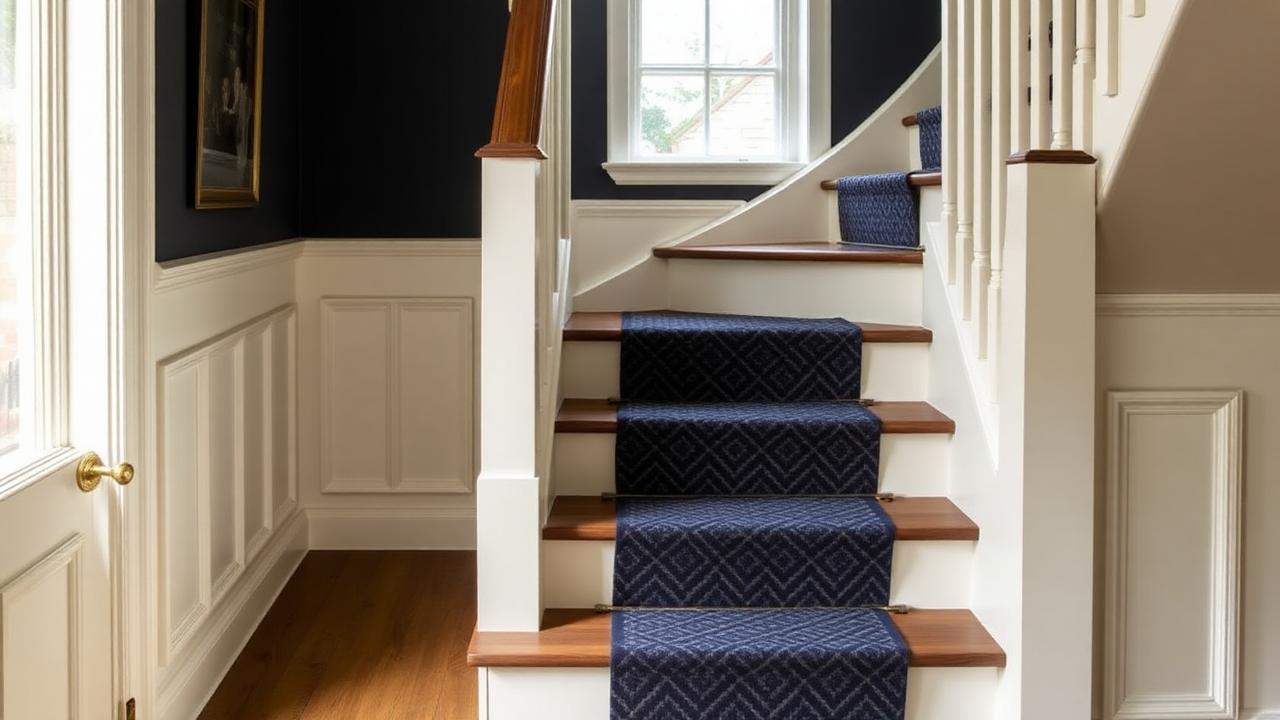
Two different products under one name
| Type | What it is | Sizing situation | Durability |
|---|---|---|---|
| Genuine antique/estate runner | An old hand-knotted, woven or machine-made runner sourced secondhand | Fixed length and width from its original use — rarely matches a new staircase exactly | Varies hugely with age and prior wear; inspect carefully |
| New overdyed/distressed-look runner | New construction dyed or finished to look aged and faded | Made to order or sold in modern standard sizes | Predictable — behaves like any new carpet of its construction |
If the appeal is the look of age and patina without the sourcing and sizing headache, a new overdyed runner gets you most of the aesthetic with modern, predictable sizing. If the appeal is a genuinely unique, one-of-a-kind piece with real history, an antique runner is the only way to get that, but you take on the sizing and condition risk that comes with it.
Sourcing a genuine vintage runner
- Estate sales and auctions often include runners removed from period homes, sometimes still in usable stair lengths.
- Specialist antique rug dealers can source hand-knotted runners and will usually disclose condition and repairs honestly if asked directly.
- Online antique marketplaces offer the widest selection but make condition assessment from photos alone risky — ask for close-up shots of the pile, edges and back.
- Salvage yards occasionally have runners removed during renovations, sold as-is with no guarantees.
Assessing condition before buying
| Check | What to look for | Why it matters |
|---|---|---|
| Pile wear pattern | Even wear versus a worn track down the centre | A worn centre track shows it was already used on stairs — may not survive another installation |
| Edge and end condition | Fraying, previous binding, moth damage | Determines whether re-binding or repair is needed before fitting |
| Backing flexibility | Stiff, cracked or crumbling backing | A brittle backing will crack when folded over a new nosing |
| Odour and fiber smell | Mustiness, mildew | Can indicate damp storage and hidden fiber damage |
| Colourfastness | Ask about any prior cleaning or dyeing | Old dyes can bleed if wet-cleaned or professionally washed |
Have a valuable antique assessed before cutting it
If a runner has genuine age or provenance, get it evaluated by a rug specialist before altering its length or width. Cutting or re-binding an antique piece can significantly affect its value, and a specialist can advise whether stair use is even advisable for that specific piece.
Sizing a vintage runner to a modern flight
This is where most vintage-runner projects succeed or fail. Measure your staircase properly first — step count, tread depth, riser height and clear width — and use a stair runner length calculator and a stair runner width calculator to get your real targets. Then compare the vintage piece's actual dimensions honestly against those numbers, not against a hopeful estimate.
| Situation | Realistic option |
|---|---|
| Vintage runner is longer than needed | Fold and use as a stair-plus-landing or stair-plus-hallway piece; avoid cutting a valuable antique if possible |
| Vintage runner is shorter than needed | Use it on the lower or upper portion only, or pair with a plain matching runner for the remainder |
| Vintage runner is narrower than the stair | This actually suits many antique styles — a narrower runner with generous exposed stringer is a classic look |
| Vintage runner is wider than the stair | Professional re-sizing by a rug specialist is possible but changes the piece permanently |
New overdyed runners: predictable sizing, similar look
If sourcing and sizing an antique feels too uncertain, new overdyed and distressed-finish runners replicate the faded, saturated-then-muted colour look of an old runner using standard modern manufacturing, which means they come in normal fixed lengths or can be cut to order like any new carpet or flatweave. You lose the individual history of a real antique but gain predictable sizing, known construction, and typically a warranty — a reasonable trade-off for most stair projects.

Fitting considerations specific to old material
An antique runner's backing and edge finishing were made for a different era's fitting methods, often tacked rather than gripper-fitted, and old jute or cotton backings can be more fragile than modern equivalents. Have an experienced fitter inspect the piece before installation and recommend whether it needs a new backing reinforcement, additional underlay support, or gentler fixing methods than a standard modern gripper-and-tack installation.
US and UK sourcing notes
Both the US and UK have active antique and vintage rug markets, with UK sourcing often skewing toward Persian, Turkish and European estate pieces and US sourcing including a broader mix including American hooked and rag runners alongside imported antiques. Measurements on older pieces, especially imported ones, may be in different units than expected (metric on European pieces, imperial on American ones) — always re-measure the physical piece yourself rather than trusting a listed size.
How much runner do I need if I am ordering new instead?
If sourcing doesn't turn up a piece that fits and you decide on a new overdyed or vintage-look runner cut to order, the underlying length calculation is the same as any new stair runner carpet. Take a 13-step US flight with a 10 in tread run and 7.5 in riser height: each step needs roughly 17.5 in of runner including the nosing wrap, giving a base of about 227.5 in (19 ft) across 13 steps, plus a 5-10% waste margin for a plain or subtly aged-look pattern, landing around 20 ft to order. In UK metric terms, a 25 cm going and 19 cm riser gives about 44.5 cm per step, roughly 5.8 m for 13 steps before waste, and around 6.1-6.4 m with the waste margin applied.
A stair runner calculator runs this arithmetic instantly from your step count, tread depth and riser height, whether you are ordering new overdyed broadloom or sizing a genuinely old piece against your stairs. The one difference worth remembering with a vintage-look pattern is that some overdyed ranges have a deliberately irregular, faded repeat, which behaves more like a non-directional plain than a strict pattern match, so the lower end of the waste allowance is usually enough.
| Flight | Base length (US/UK) | With 5-10% waste (US/UK) |
|---|---|---|
| 9 steps | ≈13.1 ft / 4.0 m | ≈13.8-14.4 ft / 4.2-4.4 m |
| 13 steps | ≈19 ft / 5.8 m | ≈20-20.9 ft / 6.1-6.4 m |
| 16 steps | ≈23.3 ft / 7.1 m | ≈24.5-25.6 ft / 7.5-7.8 m |
Know your numbers in 30 seconds
Enter your step count, tread depth and riser height — the stair runner calculator gives you the exact length to order, in metres and feet, with waste included.
Open the stair runner calculatorFrequently asked questions
Will a vintage stair runner fit my staircase exactly?
Rarely — it was made for a different flight originally, so measure both the runner and your staircase carefully and expect to adapt the fit (fold, pair with another piece, or accept a narrower width) rather than finding an exact match.
How do I check if an antique runner is strong enough to reuse on stairs?
Inspect pile wear pattern, edge condition, backing flexibility and any odour or colourfastness issues before buying, and have a valuable piece assessed by a rug specialist before cutting or fitting it.
Is a new overdyed runner a good alternative to a genuine vintage one?
Yes, if predictable sizing and known construction matter more than individual history — overdyed and distressed-finish runners give a similar aged look with standard modern sizing options.
Can I cut an antique runner to fit my stairs?
You can, but it may reduce its value and requires proper re-binding by a specialist — get the piece evaluated first if it has genuine age or provenance.
How do I know what length runner my staircase actually needs?
Use a stair runner length calculator with your step count, tread depth and riser height to get an exact figure, then compare it honestly against the vintage piece's real measured length.
Is a narrower vintage runner a problem on a wide staircase?
Not necessarily — a narrower runner with generously exposed stringer either side is a classic period look and often suits antique and vintage-style runners well, rather than being a flaw to correct.
Know your numbers in 30 seconds
Enter your step count, tread depth and riser height — the stair runner calculator gives you the exact length to order, in metres and feet, with waste included.
Check if my vintage piece will fitReady for real prices?
Get quotes from vetted stair runner suppliers and fitters near you. Free, no account, no obligation.
Every guide is written from hands-on measuring and fitting experience, checked against the calculator’s own maths, and re-reviewed whenever prices or methods change. Read our editorial standards.