
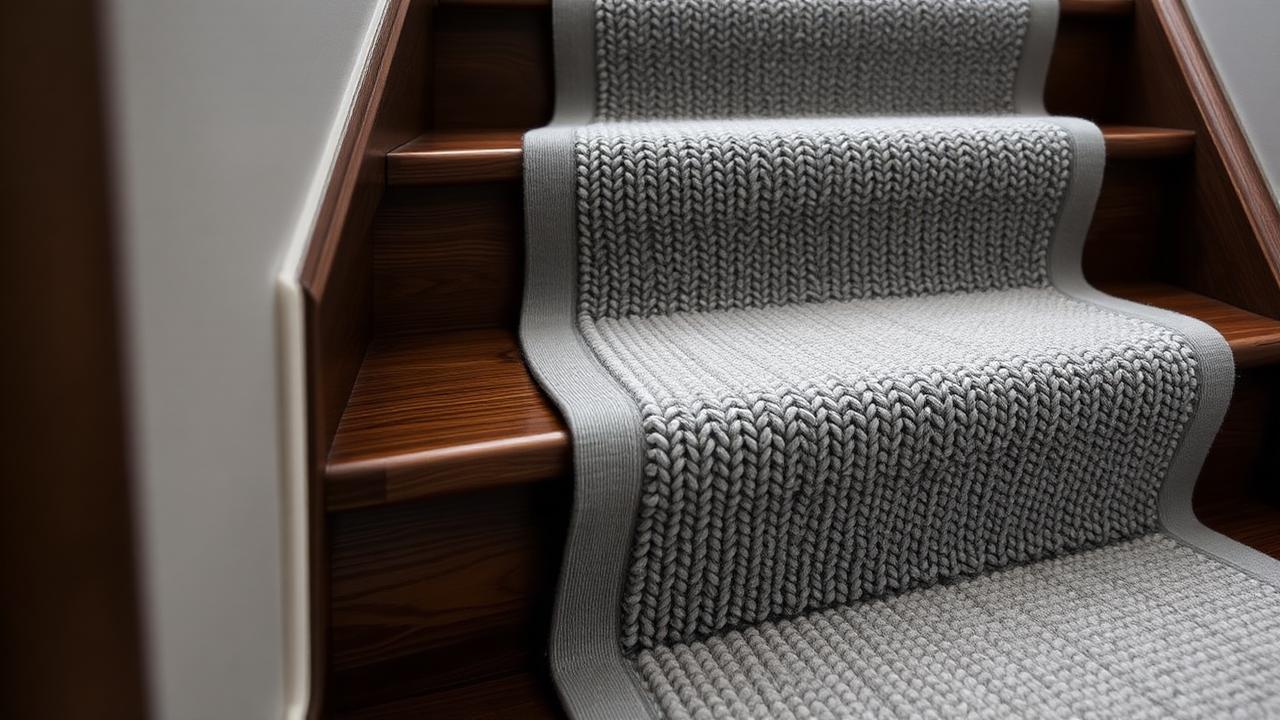
What makes a construction 'berber'
Berber is a loop pile construction rather than a fibre type; it can be made in wool, wool-nylon blend, or pure nylon or polypropylene. The signature look is a flecked, oatmeal or two-tone colourway with visible loops, originally inspired by undyed Berber wool rugs from North Africa.
Spec sheet
| Property | Typical value |
|---|---|
| Construction | Level loop pile |
| Common fibres | Wool, 80/20 wool-nylon, nylon, polypropylene |
| Loop density | High, closely packed loops |
| Pile height | 4–7mm |
| Abrasion rating | Very good to excellent |
| Roll widths | 66cm, 68cm, 4m broadloom |
| Price per linear ft (US) | $16–$55 depending on fibre |
Why loop pile suits stairs
- The tight, level loops resist crushing at the nosing better than most cut pile at the same face weight.
- Flecked colourways hide dust, hair and light soiling between vacuuming.
- Berber shows footprints and vacuum tracks far less than a plush cut pile.
- Loop pile is firmer underfoot, which some people find gives more secure footing on stairs.
Know your numbers in 30 seconds
Enter your step count, tread depth and riser height — the stair runner calculator gives you the exact length to order, in metres and feet, with waste included.
Open the stair runner calculatorWatch for snags with pets
Loop pile berber can snag on dog and cat claws, pulling a loop and creating a visible pull line. A tighter, denser loop reduces this risk; ask for the loop density spec if pets use the stairs.
Nylon vs wool berber
Nylon berber costs less and resists staining better out of the box, making it popular for rental properties and high-traffic commercial stairs. Wool berber costs more but has a richer, warmer look and better long-term crush recovery, and is the more common choice for a premium residential stair runner.
Wear rating and warranty comparison
Berber's tight, low, uniform loop construction gives it one of the better wear-warranty profiles among looped carpets, typically 15 to 20 years for a wool or wool-nylon berber and 10 to 12 years for a pure nylon or olefin berber, because the low loop height resists crushing far better than a taller cut pile at the same price point.
| Berber type | Typical wear warranty | Best for |
|---|---|---|
| Wool/wool-nylon berber | 15-20 years | Main stairs, period homes |
| Nylon berber | 10-12 years | High-traffic family stairs |
| Olefin/polypropylene berber | 5-8 years | Budget or secondary stairs |
Installation implications
Berber's tight, low loops make it slightly harder to work around a tight winder or curved stair than a softer cut pile, because the loops do not flex sideways as easily and can visibly distort if the fitter forces a sharp turn. Fitters should always test-fit berber around any curved section before final stapling, and a slightly wider seam allowance is recommended at pattern joins so any loop distortion at the join can be trimmed away rather than left visible.

- Loops can snag on staple guns fitted with too coarse a staple gauge; use fine-gauge staples designed for looped carpet.
- Avoid double-stick tape installation methods on berber; the tight loop backing does not always grip tape as reliably as cut pile.
- On winders, expect a slightly higher waste allowance than for a soft cut pile of the same width.
Cost ranges by fibre and where berber sits
| Berber type | Price per linear ft (US) | Price per linear m (UK) |
|---|---|---|
| Olefin/polypropylene berber | $16-$24 | £22-£34 |
| Nylon berber | $22-$36 | £30-£50 |
| Wool/wool-nylon berber | $35-$55 | £48-£78 |
Trade tips for a longer-lasting berber install
- Ask the fitter to use a fine-gauge staple or tackless strip designed for loop pile to avoid snagging loops during fitting.
- Choose a flecked rather than solid colourway if the stairs get heavy daily traffic, since flecks hide soiling far longer between cleans.
- Have any pulled loop repaired immediately rather than trimmed; a professional can usually re-tuft a single loop invisibly if caught early.
Berber colour and pattern options
Traditional berber comes in flecked oatmeal, grey or taupe tones inspired by undyed wool, but modern ranges extend to solid colours, subtle two-tone weaves, and even bold flecked brights for a more contemporary staircase. A flecked colourway remains the practical choice for busy stairs since it disguises soiling and vacuum lines far more effectively than a solid, plain loop pile in the same construction.
Berber on winders and curved stairs
Because berber's tight loops resist lateral flexing more than a soft cut pile, curved or winder staircases need extra care during fitting, and some fitters recommend switching to a lower-loft cut pile or a flatweave specifically on the winder section of an otherwise berber staircase, blending the materials at a natural break point such as a half-landing.
| Stair section | Berber suitability | Alternative if needed |
|---|---|---|
| Straight flight | Excellent | N/A |
| Gentle curve | Good with careful fitting | N/A |
| Tight winder | Fair, may distort | Cut pile or flatweave on winder only |
Repairing a pulled loop
A single pulled loop in a berber runner, common with pet claws or a dragged heel, can usually be trimmed level with small sharp scissors as a temporary fix, but the proper repair is re-tufting, where a carpet technician pulls the damaged loop through to the backing and secures a fresh length of matching yarn in its place. Caught early, a re-tuft is close to invisible; left to unravel further along the row, the repair becomes far more noticeable.
Whatever you decide, get the numbers first: the stair runner calculator doubles as a stair runner length calculator, adding nosing wrap, landings, winders, pattern repeat and waste so you order the right length the first time.
Still deciding on material, width or pattern? Our hub on stair runners compares weaves, widths, backings and fitting styles side by side, then hands the numbers straight to the calculator.
Frequently asked questions
Does berber work on a curved or winder staircase?
It can, but tight loops flex less easily than soft cut pile around a sharp winder, so some fitters recommend a lower-profile cut pile or flatweave specifically on the winder section, blending materials at a landing break.
What colours does berber typically come in?
Traditional berber uses flecked oatmeal, grey or taupe tones, though modern ranges also offer solid colours and bolder flecked patterns for a more contemporary stair scheme.
Does berber suit a period or a modern home better?
Wool berber in a flecked oatmeal tone suits period homes with painted spindles particularly well, while a tighter, plainer nylon or wool-nylon berber in a cooler tone reads more contemporary. The loop construction itself works in either style.
Is berber good for stairs?
Yes, its tight loop construction resists nosing crush well and hides everyday dirt and footprints better than plush cut pile, making it a practical choice for busy staircases.
Does berber pull or snag easily?
Loose loop berber can snag on pet claws or sharp heels. Choose a tight, dense loop construction to minimise the risk, especially on pet households.
Is berber the same as loop pile?
Berber is a specific style of level loop pile, usually flecked or two-toned, but the terms are often used interchangeably in carpet retail.
Is wool or nylon berber better value for stairs?
Nylon berber is cheaper and highly stain resistant, good for busy or rental stairs. Wool berber costs more but offers better crush recovery and a warmer feel over the long term.
Does berber pull or snag easily on stairs?
Quality wool or nylon berber resists snagging well because the loops are tightly woven and low, but pet claws or catching a loop on a vacuum brush roll can pull a thread. Choose a tight, low-loop construction and avoid rotating brush vacuum heads on berber stairs to minimise this risk.
Know your numbers in 30 seconds
Enter your step count, tread depth and riser height — the stair runner calculator gives you the exact length to order, in metres and feet, with waste included.
Cost my berber runnerReady for real prices?
Get quotes from vetted stair runner suppliers and fitters near you. Free, no account, no obligation.
Every guide is written from hands-on measuring and fitting experience, checked against the calculator’s own maths, and re-reviewed whenever prices or methods change. Read our editorial standards.