
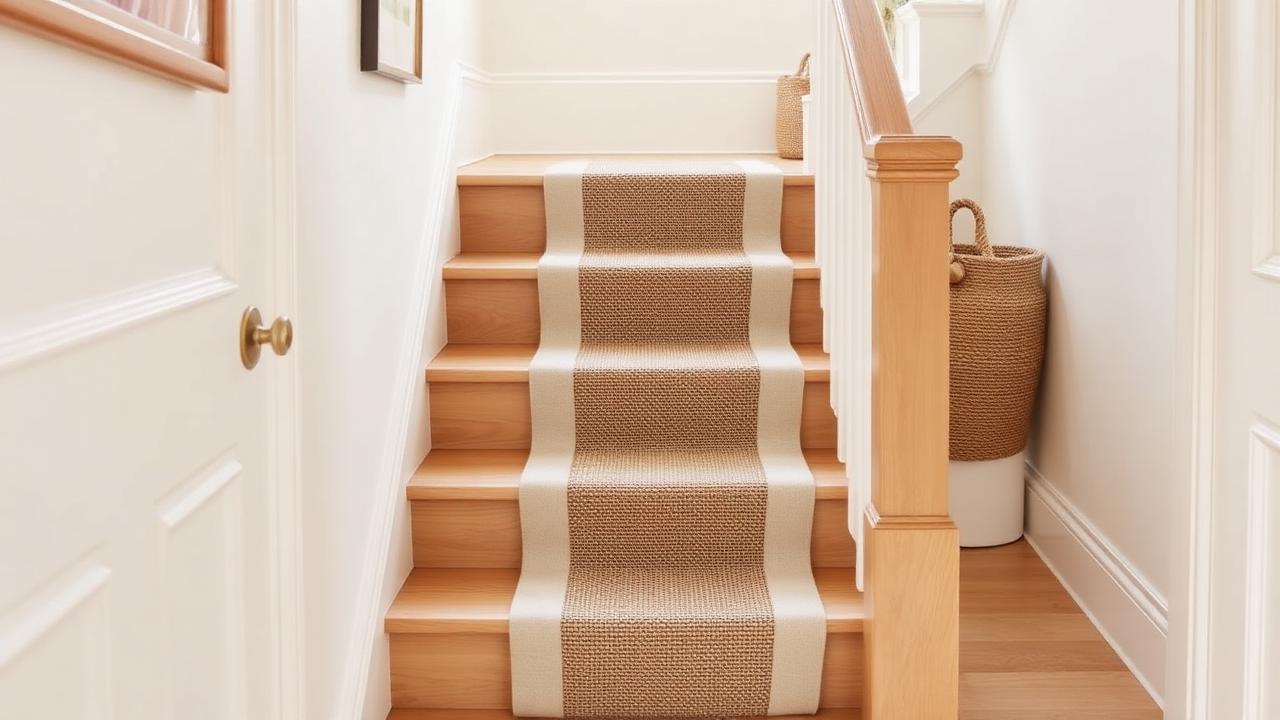
What makes a runner 'woven' rather than tufted
In a woven runner, the pile yarn is inserted into the backing structure on a loom at the same time the backing itself is being formed, so pile and backing are one continuous, interlocked structure from the moment the fabric comes off the loom. In a tufted runner, a separate backing fabric is made first, then pile yarn is stitched through it with a tufting machine (much like an industrial sewing process), and a secondary backing and latex coating are added afterwards to lock the stitches in place. The practical consequence is durability at the edges and over decades: a woven structure has nothing to delaminate, while a tufted structure's pile is only ever as secure as its latex bond, which does eventually degrade.
Axminster versus Wilton
Axminster weaving allows each tuft of pile to be an individual colour, inserted from a spool for that specific position in the pattern, which is why Axminster is the construction behind elaborate multi-colour florals, medallions and traditional patterned runners with a dozen or more colours in a single design. Wilton weaving instead threads continuous strands of yarn through the backing in a repeating structure, which limits the practical colour count (traditionally around five to six colours per design) but produces a slightly denser, harder-wearing pile and is the traditional choice for finer repeating geometric patterns, herringbones and closely-spaced stripes.
| Construction | Colour capability | Typical pattern style | Relative durability | Relative cost |
|---|---|---|---|---|
| Axminster | Effectively unlimited colours per row | Elaborate florals, medallions, borders | Very good | High |
| Wilton | Around 5-6 colours per design | Fine geometrics, herringbone, stripes | Excellent | High |
| Flatweave (woven, no pile) | Moderate, often 2-4 tones | Herringbone, diamond, chevron flat patterns | Very good, resists crushing | Mid |
| Tufted | Effectively unlimited via printing or dyeing | Any printed or dyed design | Good, backing-dependent | Low to mid |
Flatweave: woven without pile height
Flatweave runners are also woven rather than tufted, but they have no raised pile at all — the pattern is formed entirely by the interlacing of coloured yarns at the surface, similar in principle to a kilim or dhurrie rug. This makes flatweave runners extremely resistant to crushing on stair nosings, since there is no pile height to flatten in the first place, and it gives them a flatter, more casual, often more contemporary look than a pile carpet. Herringbone and diamond-pattern wool flatweaves are particularly popular for stair runners because the weave structure itself creates the pattern, so it never wears away or reveals backing the way a printed pattern eventually can.
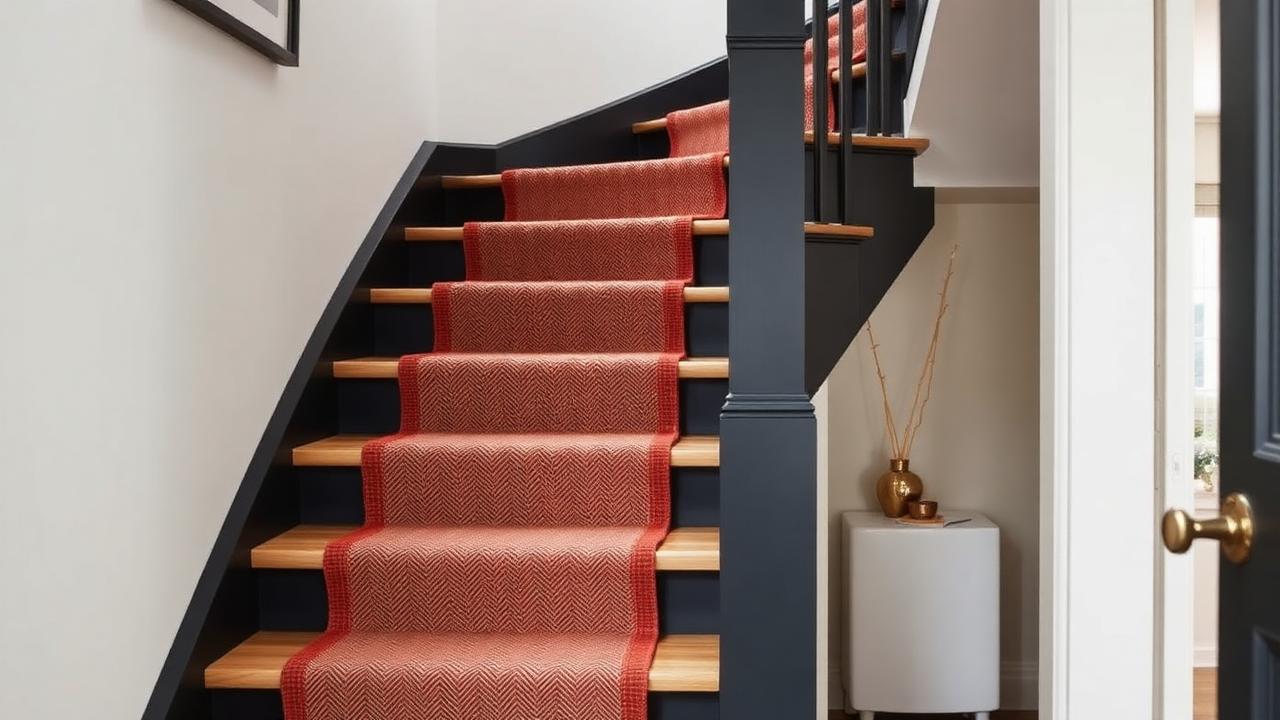
Edge fraying: the main weakness of woven runners
Because a woven runner's edge is a cut edge of the loomed fabric rather than a machine-bound edge added afterwards, it can fray if left unfinished, particularly on flatweaves where the weft yarns run right to the edge with nothing else holding them. Reputable suppliers bind, serge or fold-and-stitch every woven runner edge before delivery specifically to prevent this, and it is worth confirming this is included, since site-finishing an edge after delivery is slower and rarely as neat as a factory finish. A well-bound woven edge should not need any attention for the life of the runner; an unfinished or poorly bound edge can begin to fray within the first year of foot traffic brushing past it on every descent.
Always specify the edge finish when ordering
Ask explicitly whether binding, serging or a fold-and-stitch finish is included in the quoted price, and in what colour. On a patterned Axminster or Wilton, a mismatched or missing binding is one of the most common causes of buyer disappointment on delivery.
Cost per metre and per yard
| Construction | UK price per metre (GBP) | US price per yard (USD) |
|---|---|---|
| Wilton wool, patterned | £60-£130 | $75-$160 |
| Axminster wool, patterned | £65-£140 | $80-$175 |
| Wool flatweave herringbone | £45-£90 | $55-$110 |
| Tufted wool or wool-blend | £35-£75 | $45-$95 |
| Tufted synthetic | £20-£45 | $25-$55 |
Woven runners cost roughly 40-80% more than a comparable tufted runner in the same fibre, which reflects both the slower loom production speed and the higher minimum order lengths many mills require. That premium buys a longer working life, a more precise pattern with no risk of print misregistration, and generally a better resale or heritage value in a period property, so it is usually justified on a principal staircase intended to last, and harder to justify on a secondary or rental staircase where a tufted runner will do the job adequately for less money.
Custom widths and made-to-measure options
Woven looms produce fabric at fixed widths determined by the loom itself, commonly 27in, 36in, 70in or 80in (roughly 68cm, 91cm, 178cm or 200cm) depending on the mill, and a runner is then cut lengthways from that fabric width and bound at the cut edges. This means a woven runner can usually be supplied in any width up to the loom width, which covers the vast majority of domestic staircases, but very wide custom widths beyond the loom's maximum are not physically possible without an additional seam, unlike a tufted broadloom carpet which can sometimes be seamed more discreetly. Always confirm the loom width available for your chosen pattern before ordering a non-standard width, and expect a lead time of 4-10 weeks for custom-width or made-to-order woven runners against 1-2 weeks for a stock tufted range.
- Standard woven widths: 27in, 32in, 36in, up to 70-80in loom width (68-200cm).
- Confirm loom width before specifying anything wider than about 36in (91cm).
- Custom woven orders typically take 4-10 weeks; stock tufted ranges ship in 1-2 weeks.
- Always request a swatch before committing to a large woven order, since dye lots can vary slightly between production runs.
Choosing between woven and tufted for your staircase
Choose a woven Axminster or Wilton if the staircase is a genuine design feature, if you want an intricate multi-colour pattern, or if you are fitting a period or high-value property where the runner is expected to last decades. Choose a flatweave if you want a woven runner's durability and edge quality with a flatter, more contemporary look and a lower price than pile Wilton or Axminster. Choose a tufted runner if budget is the primary constraint, if you want a wide range of printed pattern options, or if the staircase is secondary rather than a showpiece. Whichever you choose, confirm the exact length required with the stair runner calculator before ordering, since woven minimum order lengths and lead times make a reorder for a short fall considerably more expensive and slower than with stock tufted ranges.
Know your numbers in 30 seconds
Enter your step count, tread depth and riser height — the stair runner calculator gives you the exact length to order, in metres and feet, with waste included.
Open the stair runner calculatorWhatever you decide, get the numbers first: the stair runner calculator doubles as a stair runner length calculator, adding nosing wrap, landings, winders, pattern repeat and waste so you order the right length the first time.
Frequently asked questions
What is the difference between a woven and a tufted stair runner?
A woven runner has its pile and backing constructed together on a loom as a single interlocked structure, while a tufted runner has pile stitched into a separately made backing and secured afterwards with a latex coating. Woven runners generally last longer and resist delamination better, but cost more.
Is Axminster or Wilton better for a stair runner?
Axminster suits elaborate, multi-colour patterns like florals and medallions, while Wilton produces a slightly denser, harder-wearing pile better suited to fine geometrics, herringbones and stripes. Both are durable woven constructions; the choice mostly comes down to the pattern style you want.
Do woven stair runners fray at the edges?
They can if left unfinished, since the edge is a cut edge of loomed fabric. Reputable suppliers bind, serge or fold-and-stitch every edge before delivery specifically to prevent this, so always confirm the edge finish is included when ordering a woven runner.
How much more does a woven runner cost than a tufted one?
Expect to pay roughly 40-80% more for a woven Wilton or Axminster runner than a comparable tufted runner in the same fibre, reflecting slower loom production and higher minimum order lengths. A wool flatweave sits in between, costing more than tufted but less than pile Wilton or Axminster.
Can a woven stair runner be made to a custom width?
Yes, up to the maximum width of the loom used for that pattern, commonly up to 70-80in (178-200cm). Widths beyond the loom maximum require an additional seam, so confirm the available loom width for your chosen design before specifying anything wider than about 36in (91cm).
How long does it take to order a custom woven stair runner?
Typically 4-10 weeks for a made-to-order or custom-width woven runner, compared with 1-2 weeks for a stock tufted range. Order well ahead of any fitting deadline, and confirm binding and edge-finish lead times separately, since these are sometimes handled by a different workshop from the mill itself.
Know your numbers in 30 seconds
Enter your step count, tread depth and riser height — the stair runner calculator gives you the exact length to order, in metres and feet, with waste included.
Work out my runner lengthReady for real prices?
Get quotes from vetted stair runner suppliers and fitters near you. Free, no account, no obligation.
Every guide is written from hands-on measuring and fitting experience, checked against the calculator’s own maths, and re-reviewed whenever prices or methods change. Read our editorial standards.