
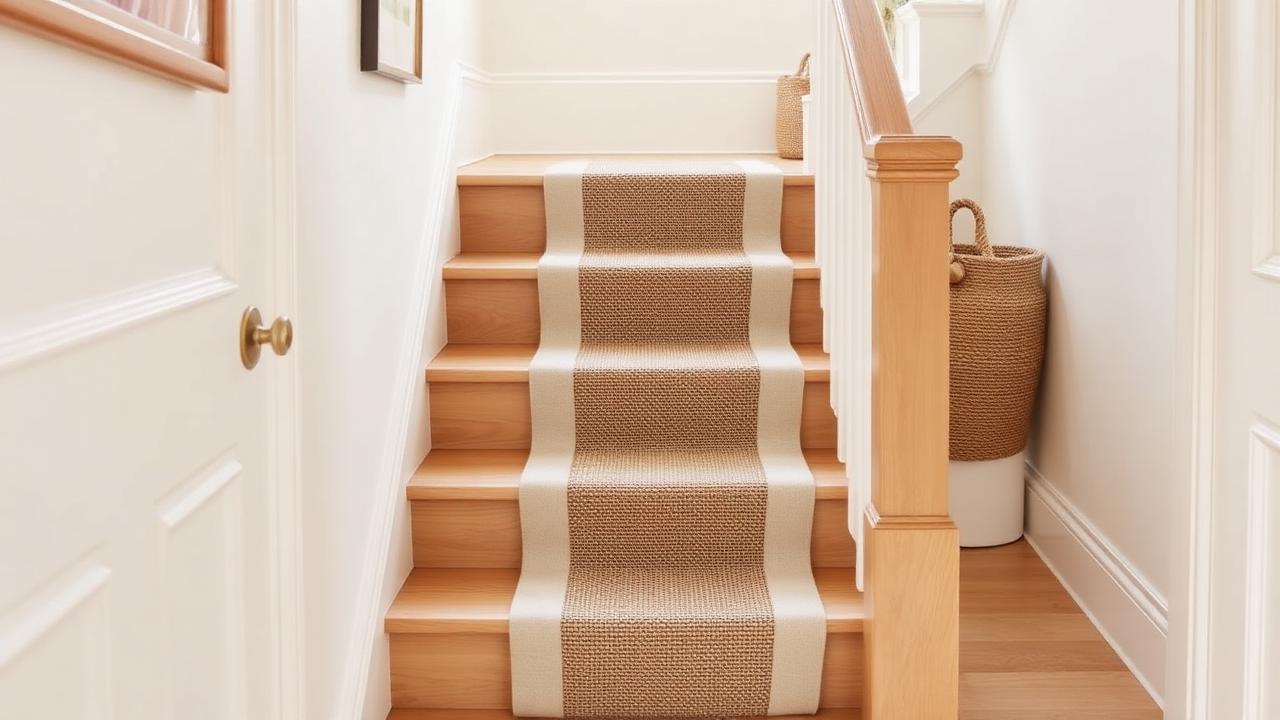
Why stairs wear out carpet faster than any other floor
A stair tread and its nosing take a completely different kind of abuse from a flat floor. Every footfall on a nosing combines pressure, shear and a pivoting twisting action as the foot rolls off the step, and that pivoting action is what breaks fibre tips and crushes pile far faster than the same foot simply walking across a level rug. Independent flooring trade guidance has long put stair wear at roughly two to three times the rate of an equivalent flat area under the same household traffic, which is why a runner rated for 'medium domestic' use on a landing can fail within a couple of years if the same specification is used on the connecting flight of stairs.
Because of this, durability specifications matter more on a staircase than almost anywhere else in the home, and it is worth spending a genuinely disproportionate share of a flooring budget on the stairs themselves rather than spreading an even specification across stairs, landing and hallway.
The variables that actually determine durability
Fibre type gets most of the attention, but twist level and pile density decide durability just as much, and often more. Twist level describes how tightly the individual yarn strands are spun together before tufting or weaving; a high-twist yarn (commonly described as a 'twist' or 'saxony twist' pile) resists untwisting and fraying under the pivoting load of a stair nosing far better than a low-twist, straight or loosely looped yarn of the identical fibre. Pile density measures how many tufts sit per unit area; a dense, tightly packed pile spreads load across more fibre tips and resists crushing, while a sparse pile concentrates wear onto fewer tufts that flatten quickly.
| Property | What it measures | Why it matters on stairs |
|---|---|---|
| Twist level | How tightly yarn strands are spun | High twist resists the pivoting shear load at every nosing |
| Pile density (face weight) | Weight of pile fibre per square metre/yard, often in oz/sq yd or g/sq m | Denser pile spreads footfall load across more fibre, resists crushing |
| Pile height | Height of the tufted or woven loop/cut fibre | Lower, denser piles generally outlast tall, loose piles on stairs |
| Backing construction | How the pile is anchored (woven, tufted, bonded) | Woven constructions resist delamination and edge fraying longest |
Fibre-by-fibre durability ranking
Ranked from most to least durable for stair use specifically, assuming a comparable quality of twist and density within each fibre type: solution-dyed nylon and premium wool-sisal blends lead the field, followed by tightly twisted 100% wool, then triexta and high-grade polypropylene (often branded as 'stainmaster'-type ranges), with standard polypropylene, polyester and pure sisal or coir trailing behind for a stair application specifically (natural fibres like sisal and coir are strong in tension but brittle under the twisting load of a nosing, and can crack or shed at the fold if used pure rather than blended).
| Fibre | Relative stair durability | Typical lifespan on a busy stair | Notes |
|---|---|---|---|
| Nylon (solution-dyed) | Excellent | 12-20 years | Best abrasion and crush resistance of any common fibre |
| Wool-sisal blend (80/20 or 60/40) | Excellent | 12-18 years | Wool softness with sisal's structural resilience |
| 100% wool, high twist | Very good | 10-15 years | Needs a tight twist; a loose wool pile wears faster than expected |
| Triexta | Very good | 10-15 years | Resists staining as well as crushing |
| Polypropylene, high-grade twist | Good | 8-12 years | Good value, resists moisture and fading well |
| Polyester | Fair | 5-9 years | Soft and affordable but crushes under sustained heavy traffic |
| Pure sisal / coir, unblended | Fair to poor on stairs | 5-8 years | Excellent on flat floors, brittle at the nosing crease on stairs |
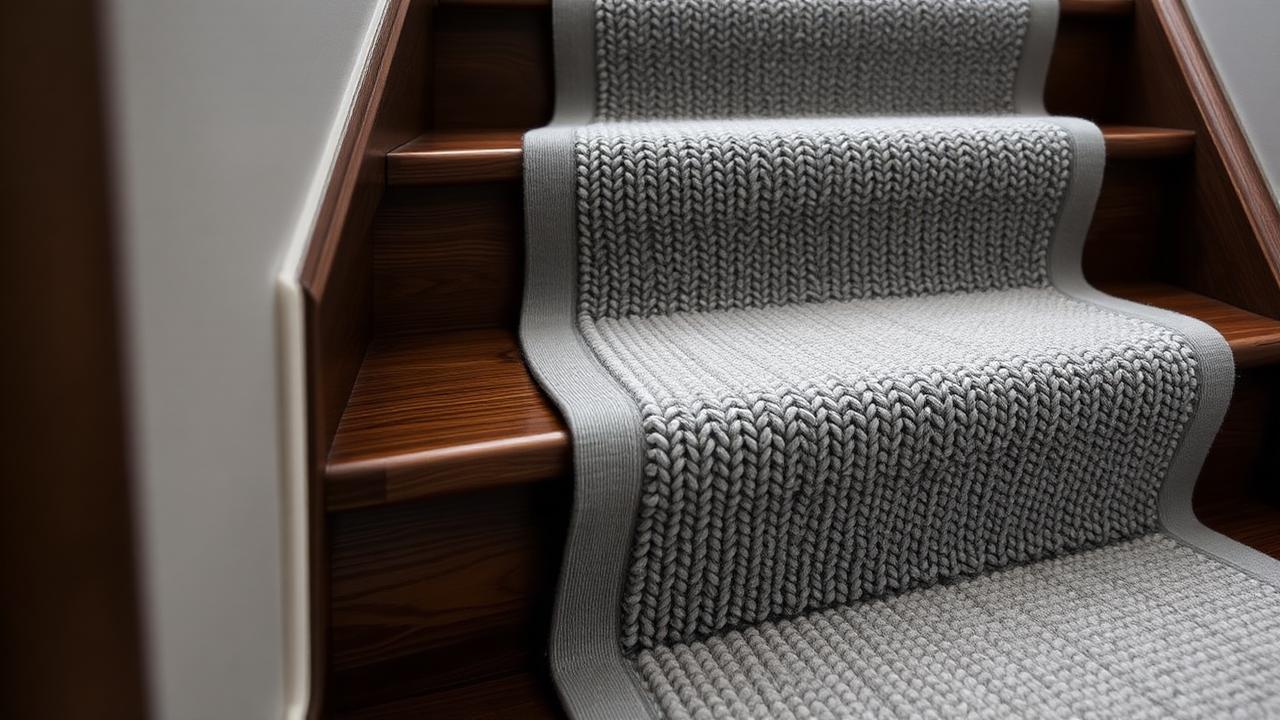
Wool-sisal: the classic durable choice
Wool-sisal blend runners, typically 80% wool to 20% sisal or 60% wool to 40% sisal, are the traditional heavy-traffic staircase specification in both the UK and US higher-end residential market, and for good reason. Sisal fibre adds tensile strength and a flatter, more structured weave that resists crushing at the nosing, while the wool content keeps the surface soft enough to be comfortable underfoot and gives it wool's natural stain and soil resistance. A well-made wool-sisal runner on 8-11mm underlay routinely handles 15+ years of daily family use, including pets, on a main staircase.
Underlay is part of the durability spec, not an add-on
Even the most durable pile wears out roughly twice as fast when fitted directly onto bare timber instead of onto 8-11mm PU foam or crumb rubber underlay. The underlay absorbs the crushing impact at the nosing that would otherwise be taken entirely by the pile fibre tips.
UK and US durability ratings to check before buying
In the UK, carpets are commonly labelled against the EN 1307 classification system, which rates a product from Class 21 (light domestic) up to Class 33 (heavy commercial). For a domestic staircase, look for a minimum of Class 32, and Class 33 for a busy family hallway-and-stairs run or a rental property. In the US, the equivalent is usually expressed through the carpet's face weight (oz/sq yd) and density rating rather than a single class number, with 40-50 oz/sq yd and a density above roughly 3,000-3,500 generally regarded as suitable for heavy residential traffic on stairs; ask the retailer for the manufacturer's specific traffic rating sheet, since branding terms vary widely between US manufacturers.
- UK: check for EN 1307 Class 32 minimum, Class 33 for the heaviest household traffic.
- US: check face weight (40oz/sq yd or higher for stairs) and density rating from the manufacturer's spec sheet.
- Ask specifically whether the rating was tested for stair use, since some ratings only cover flat-floor traffic.
- A written wear warranty of 10+ years is a reasonable proxy for genuine stair-grade durability in either market.
Construction matters as much as fibre
A woven construction — Wilton or Axminster — locks pile and backing together as a single structure during weaving, which resists delamination and edge fraying over decades and is why antique Axminster stair runners are still found in good condition in period houses a century later. Tufted construction, where pile is stitched into a pre-made backing and secured with a secondary latex coating, is faster to produce and considerably cheaper, and modern tufted stair-grade ranges can still deliver 10+ years of life, but the backing bond is the weak point and is what eventually fails, usually showing as the pile pulling loose in tufts rather than wearing flat.
What actually shortens a durable runner's life prematurely
- Skipping underlay, which roughly halves the working life of any pile.
- Fitting without gripper strip, so the runner shifts slightly under every footfall and abrades the backing.
- Leaving grit and sand ground into the pile between vacuums, which acts like sandpaper on the fibre.
- Direct strong sunlight on a landing or bottom step, which weakens and fades synthetic and wool fibres alike over years.
- Ignoring an early loose thread or snag, which unravels a woven pile far faster once it starts.
Balancing durability against budget and looks
The most durable specification is not always the right choice for every staircase — a lightly used guest staircase in a second home does not need the same Class 33 wool-sisal specification as the main family stair used by children and dogs multiple times a day. Match the specification to the actual traffic, and put the highest-durability money specifically into the stairs rather than spreading the same budget evenly across stairs, landing and hallway, since the stairs are what will fail first regardless of what else is fitted around them. Once you have chosen a fibre and construction, confirm exactly how much runner the flight needs using the stair runner length calculator so you can compare like-for-like prices per metre across the durability tiers above.
Before ordering, put your real step count and tread sizes into the stair runner calculator on the homepage; the stair runner length calculator turns them into a length in metres or feet with waste included, which is the figure your supplier needs.
Know your numbers in 30 seconds
Enter your step count, tread depth and riser height — the stair runner calculator gives you the exact length to order, in metres and feet, with waste included.
Open the stair runner calculatorFrequently asked questions
What is the most durable material for a stair runner?
Solution-dyed nylon and high-quality wool-sisal blends are the most durable choices for stair use, typically lasting 12-20 years under heavy family traffic. Twist level and pile density matter as much as fibre type, so a low-quality nylon can still underperform a well-made wool-sisal blend.
Does wool or nylon last longer on stairs?
High-quality solution-dyed nylon generally outlasts wool by a few years in raw abrasion resistance, but a tightly twisted wool or wool-sisal blend comes close while offering better natural stain resistance and a more traditional appearance, which is why wool-sisal remains the preferred choice for higher-end staircases.
What EN 1307 class should a stair runner be?
Look for a minimum of Class 32 (heavy domestic) for a typical family staircase, and Class 33 (heaviest domestic and light commercial) for a very busy hallway-and-stairs run, a rental property, or a household with several children or large pets.
Does higher pile height mean a more durable runner?
No — a lower, denser pile generally outperforms a tall, loose pile on stairs, because dense fibre spreads the crushing and pivoting load of footfall across more tufts. Pile height is mostly an aesthetic choice; density and twist level are the properties that actually predict durability.
How much does a durable stair runner cost compared with a standard one?
A stair-grade Class 32-33 wool-sisal or solution-dyed nylon runner typically costs £45-£90 per metre ($55-$110 per yard) against £25-£40 per metre ($30-$50 per yard) for a standard-grade synthetic runner, but it usually lasts twice as long, which generally makes it the better value over a 10-15 year ownership period.
Is underlay part of a stair runner's durability?
Yes, significantly. Fitting even the most durable pile directly onto bare timber roughly halves its working life compared with fitting it over 8-11mm PU foam or crumb rubber underlay, because the underlay absorbs much of the crushing impact that would otherwise fall entirely on the pile fibre at each nosing.
Know your numbers in 30 seconds
Enter your step count, tread depth and riser height — the stair runner calculator gives you the exact length to order, in metres and feet, with waste included.
Work out my runner lengthReady for real prices?
Get quotes from vetted stair runner suppliers and fitters near you. Free, no account, no obligation.
Every guide is written from hands-on measuring and fitting experience, checked against the calculator’s own maths, and re-reviewed whenever prices or methods change. Read our editorial standards.