
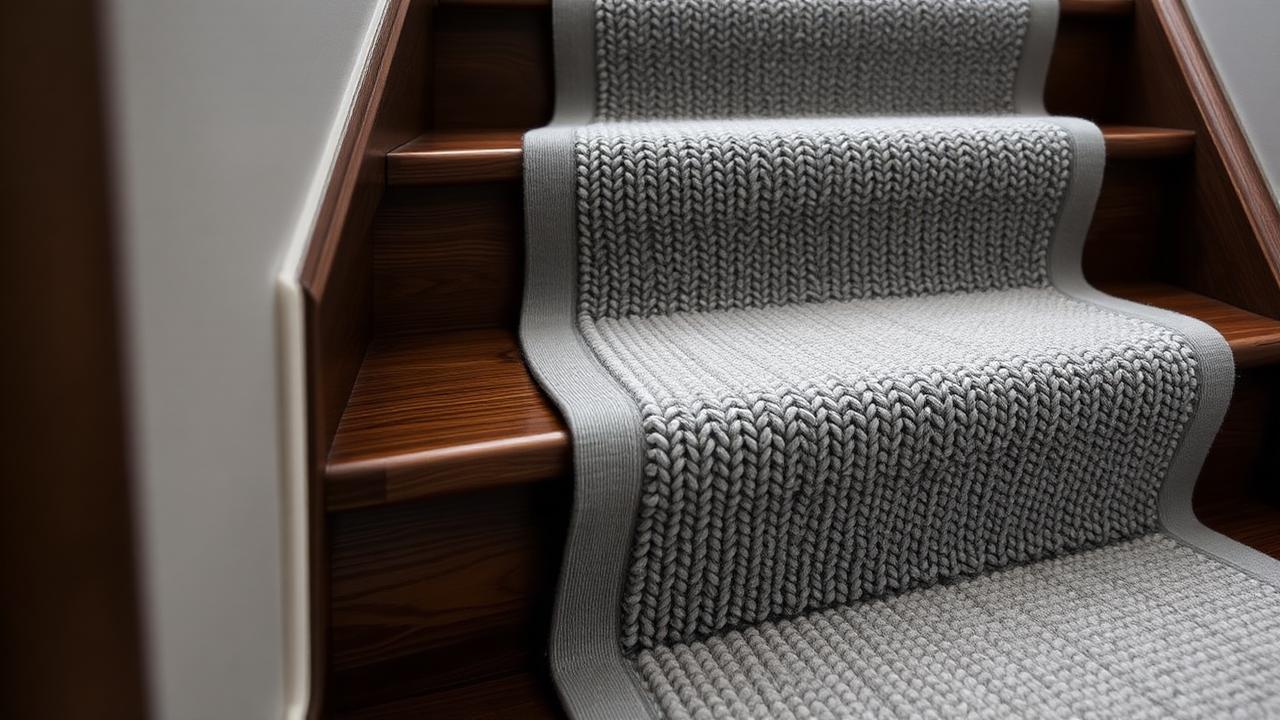
What bamboo silk actually is
Despite the name, bamboo silk isn't silk from silkworms, it's a semi-synthetic fibre processed from bamboo plant cellulose using a similar chemical process to how viscose rayon is made from wood pulp. The appeal is the finish: a soft, subtle sheen and a smooth hand-feel that reads as more luxurious than most straightforward wool or synthetic weaves, at a lower cost than genuine silk. On stairs, you'll almost always see it woven into a blend, most commonly with wool, rather than used as a pure fibre, because pure bamboo silk shares many of the same weaknesses as viscose when it comes to crushing and water sensitivity.
A well-made wool and bamboo silk blend, commonly somewhere around 80-90% wool and 10-20% bamboo silk, gives you the durability and resilience of wool as the structural backbone, with the bamboo silk fibres woven through to add sheen and a slightly cooler, smoother touch underfoot. That's the combination I'd point most people toward if they like the bamboo silk look but need a stair runner that will actually hold up on a used staircase for a decade or more.
Checking the blend before you buy
The single most important question to ask a retailer is the exact blend percentage, since a runner marketed simply as "bamboo silk" without a stated wool or nylon content could be closer to pure viscose-type fibre than a genuine durable blend. Ask for the fibre content label in writing, and if it's above roughly 30% bamboo silk with the remainder in a weaker fibre rather than a resilient one like wool or nylon, treat it as a decorative, low-traffic choice rather than a hard-wearing everyday stair runner.
Test the sheen against your lighting
Bamboo silk's sheen shifts noticeably under different light angles and can look almost silvery under downlights but flatter under daylight. View a sample on the actual stairwell at different times of day before committing to a full order.
How much runner do I need?
For a 13-step US flight with a 10 in tread run and 7.5 in riser height, the nosing wrap allowance of 0.75 in per step gives 18.25 in per step, or 237.25 in (19.77 ft) across the run. Add 24 in total for top and bottom finishing to reach 261.25 in (21.77 ft). Because bamboo silk blends show cutting marks and shading variation more visibly than a plain wool or synthetic, I'd apply a slightly higher 10% waste margin rather than the usual 7-8%, bringing the order to roughly 24 ft.

In UK metric terms, a 25 cm tread, 19 cm riser and 1.9 cm nosing wrap gives 45.9 cm per step, or 596.7 cm across 13 steps. Add 60 cm for finishing to reach 656.7 cm, then apply the 10% waste margin to land at roughly 7.22 m. If the weave has any visible pattern or a directional sheen that needs matching down the flight, add a further 3-5% on top of that figure.
| Measurement | US (in/ft) | UK (cm/m) |
|---|---|---|
| Tread run | 10 in | 25 cm |
| Riser height | 7.5 in | 19 cm |
| Nosing wrap per step | 0.75 in | 1.9 cm |
| Per-step total | 18.25 in | 45.9 cm |
| 13 steps subtotal | 19.77 ft | 5.97 m |
| Plus finishing allowance | 21.77 ft | 6.57 m |
| With 10% waste margin | 24 ft | 7.22 m |
Know your numbers in 30 seconds
Enter your step count, tread depth and riser height — the stair runner calculator gives you the exact length to order, in metres and feet, with waste included.
Open the stair runner calculatorCare and realistic durability
A wool-dominant bamboo silk blend behaves largely like wool day to day, resisting soiling reasonably well and taking a professional clean without the acute water-sensitivity of pure viscose, though I'd still recommend blotting any spill promptly rather than testing how forgiving the blend actually is. Vacuum with suction rather than an aggressive rotating beater bar, since the finer bamboo silk fibres can fuzz or pill under repeated brush contact in a way sturdier wool alone doesn't.
On lifespan, a good wool-heavy bamboo silk blend on a moderately used staircase typically performs closer to a mid-grade wool runner, commonly 10-15 years before significant wear shows on the busiest steps, considerably better than pure viscose's 1-3 years in the same conditions. A pure or high-percentage bamboo silk runner, by contrast, should be treated as decorative and reserved for stairs with genuinely light use, much like pure viscose.
- Choose a wool-dominant blend (80%+ wool) if the stair sees daily use.
- Reserve high-percentage bamboo silk for low-traffic or occasional-use stairs.
- Vacuum with suction only, avoiding an aggressive rotating brush on the sheen fibres.
- Blot spills immediately and avoid rubbing to prevent fibre distortion and dye migration.
- Keep it out of direct, prolonged sunlight to preserve the sheen and prevent yellowing over years.
Comparing bamboo silk to real silk and to viscose
Genuine silk stair runners exist but are rare and expensive, and share many of bamboo silk's practical weaknesses, water sensitivity and crushing, at a considerably higher price point, which is largely why bamboo silk exists as a market alternative: a similar look at a fraction of the cost. Compared with plain viscose, bamboo silk is processed from a different plant source but goes through a broadly similar chemical process, so treat any bamboo silk product as functionally similar to viscose unless it's clearly stated as a durable blend with a resilient fibre like wool making up the majority share.
If you're still deciding between bamboo silk and other options for a stair runner, it's worth reading more broadly about stair runners generally and how different fibres perform specifically on stair nosings rather than on flat flooring, since stairs are a genuinely harder test for any fibre than a living room ever will be.
Whatever you decide, get the numbers first: the stair runner calculator doubles as a stair runner length calculator, adding nosing wrap, landings, winders, pattern repeat and waste so you order the right length the first time.
Frequently asked questions
Is bamboo silk the same as real silk?
No, bamboo silk is a semi-synthetic rayon-type fibre made from bamboo cellulose, processed similarly to viscose. It mimics some of silk's sheen and softness at a much lower cost, but isn't animal silk fibre.
Is bamboo silk durable enough for stairs?
Pure bamboo silk shares viscose's weaknesses around crushing and water sensitivity, so it suits low-traffic stairs best. A wool-dominant bamboo silk blend is considerably more durable and suits a regularly used staircase.
What percentage of bamboo silk should a durable blend have?
Look for blends with roughly 80-90% wool or another resilient fibre and only 10-20% bamboo silk. Anything with a much higher bamboo silk share behaves more like pure viscose in terms of wear and water sensitivity.
Does bamboo silk stair runner stain easily?
Yes, similarly to viscose, bamboo silk fibre is sensitive to moisture and can water-spot or stain if a spill isn't blotted promptly, especially in a low-blend-percentage or pure bamboo silk product.
How do I clean a bamboo silk stair runner?
Vacuum gently with suction only, avoid an aggressive rotating brush, and blot any spills immediately without rubbing. For deeper cleaning, use a professional experienced with delicate or blended natural fibres rather than a standard home extraction machine.
Is bamboo silk cheaper than real silk?
Yes, considerably. Bamboo silk offers a broadly similar visual sheen and softness to real silk at a fraction of the price, which is the main reason it's used as a stair runner material at all.
How long does a bamboo silk blend stair runner last?
A wool-dominant blend on a moderately used stair typically lasts 10-15 years, similar to mid-grade wool. A high-percentage bamboo silk runner with little resilient fibre in the blend should be treated as more short-lived and decorative.
Can bamboo silk stair runners be used in sunny hallways?
Prolonged direct sunlight can yellow bamboo silk fibre and dull its sheen over years, so a shaded or curtained stairwell suits it better than one that gets strong daily direct sun through a glazed door or window.
Know your numbers in 30 seconds
Enter your step count, tread depth and riser height — the stair runner calculator gives you the exact length to order, in metres and feet, with waste included.
Confirm your exact length using the stair runner calculatorReady for real prices?
Get quotes from vetted stair runner suppliers and fitters near you. Free, no account, no obligation.
Every guide is written from hands-on measuring and fitting experience, checked against the calculator’s own maths, and re-reviewed whenever prices or methods change. Read our editorial standards.