
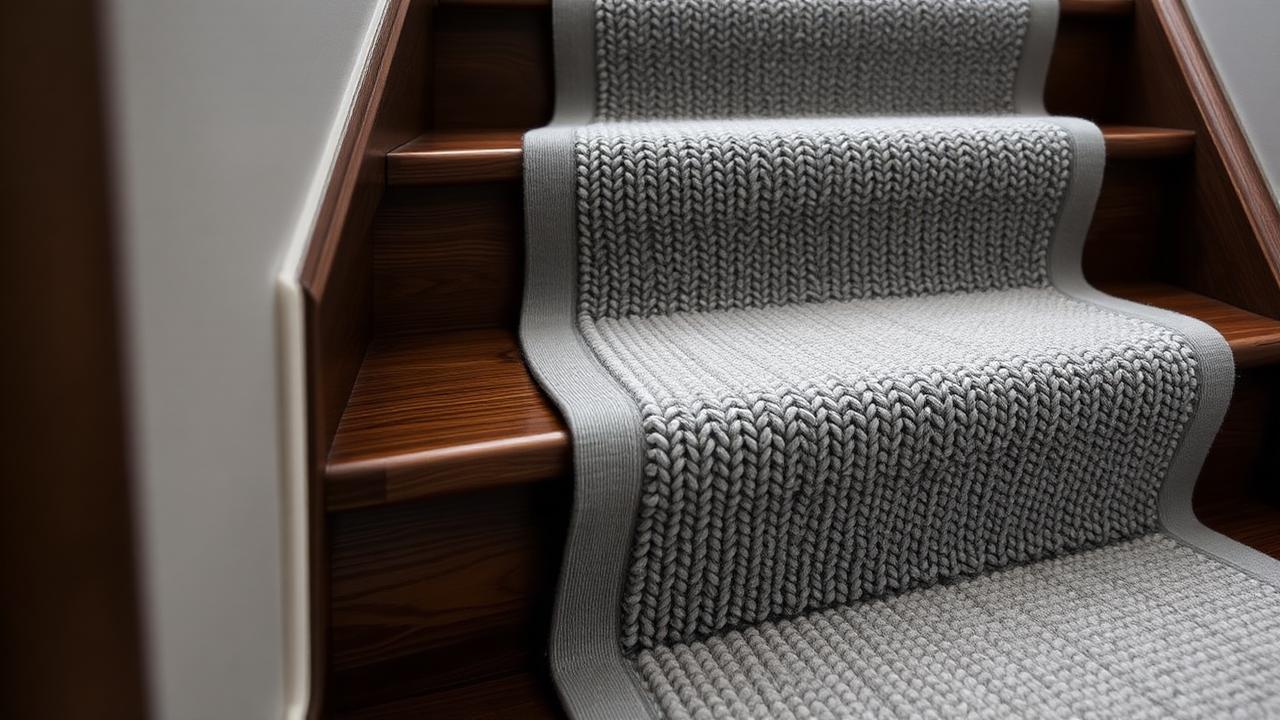
What makes triexta different
Triexta belongs to the polyester family chemically but is manufactured with a process that gives it a built-in stain-resist property baked into the fibre itself, rather than sprayed onto the surface as a separate finish. That's the headline claim behind it and it's genuinely useful on stairs, where a dropped mug of coffee or a child's spilled juice can happen on the very step where you'll see it every single day for years if it stains. Unlike a treated nylon, where the stain-resist coating wears thinner with each cleaning cycle, triexta's resistance comes from the polymer structure itself, so it doesn't fade the same way over repeated hot-water extraction cleans.
It's worth being clear-eyed about the limits though. Triexta softness and resilience sit somewhere between nylon and polyester rather than beating nylon outright on crush resistance, so on the very busiest households I'd still lean toward nylon for the top few steps if pure durability against foot traffic is the main worry, and triexta where stain resistance against spills is the bigger day-to-day concern. Both fibres do the job well; the choice comes down to which risk matters more in your home.
Where triexta suits a stair runner best
Households with young children who eat and drink on the go, homes with a dog that tracks mud in from the garden and up the stairs, and kitchens-adjacent stairs where cooking spills sometimes travel, are exactly the scenarios triexta is built for. It also tends to feel noticeably softer underfoot than a standard polyester, closer to nylon in hand-feel, which matters on a stair you walk barefoot every morning.
Ask for the actual fibre content on the label
Some retailers use 'triexta' loosely to describe any soft synthetic. Ask specifically whether the fibre is genuine triexta (bio-based polytrimethylene terephthalate) versus a standard polyester marketed with similar language, since the stain-resist properties differ.
How much runner do I need?
For a 13-step US flight with a 10 in tread run and 7.5 in riser height, add a 0.75 in nosing wrap per step to get 18.25 in per step. Across 13 steps that's 237.25 in (19.77 ft). Add a 24 in total finishing allowance (12 in each end) for the top tuck and bottom hem, bringing the running length to 261.25 in (21.77 ft). Triexta cuts and handles similarly to nylon, so a 7% waste margin covers a plain weave comfortably, giving an order length of roughly 23.3 ft.

In UK metric terms that's a 25 cm tread, 19 cm riser and 1.9 cm nosing wrap for 45.9 cm per step, or 596.7 cm across 13 steps. Add 60 cm total for finishing, reaching 656.7 cm, and apply a 7% waste margin to land at roughly 7.03 m. If you're choosing a patterned or textured triexta weave, add a further 3-5% to account for repeat matching down the flight.
| Measurement | US (in/ft) | UK (cm/m) |
|---|---|---|
| Tread run | 10 in | 25 cm |
| Riser height | 7.5 in | 19 cm |
| Nosing wrap per step | 0.75 in | 1.9 cm |
| Per-step total | 18.25 in | 45.9 cm |
| 13 steps subtotal | 19.77 ft | 5.97 m |
| Plus finishing allowance | 21.77 ft | 6.57 m |
| With 7% waste margin | 23.3 ft | 7.03 m |
Know your numbers in 30 seconds
Enter your step count, tread depth and riser height — the stair runner calculator gives you the exact length to order, in metres and feet, with waste included.
Open the stair runner calculatorCost and where triexta sits in the market
Triexta generally sits in a similar price band to mid-range nylon, sometimes a touch less, and it's marketed heavily on stain protection rather than luxury feel, so expect typical retail ranges to run comparable to a good nylon runner once fitting and underlay are added. Prices vary a lot by retailer and pile density, so treat any figure as a starting point for comparison rather than a fixed quote, and always ask for a written quote against the actual product code rather than a generic fibre-type estimate.
- Confirm whether the stain-resist claim is fibre-inherent (triexta) or a surface treatment (some polyesters marketed similarly).
- Check pile density on the spec sheet; a denser pile resists matting on stair nosings better regardless of fibre type.
- Ask about warranty terms for stain resistance and wear, and get them in writing.
- Test a sample against your actual tread colour in daylight before ordering the full run.
- Budget for a quality underlay, since underlay affects comfort and longevity as much as the face fibre choice.
Fitting and living with triexta on stairs
On site, triexta behaves much like nylon: it takes a crease cleanly at the tread-to-riser join for a waterfall install, and it tucks into a groove neatly for a cap-and-band or Hollywood installation. Where it noticeably differs is in day-to-day cleaning. Because the stain resistance is built into the fibre, you can be a bit more relaxed about immediate spot-cleaning than you would with an untreated wool runner, though I'd still recommend blotting spills promptly rather than relying on the fibre to do all the work; even the best stain-resist fibre performs better on a fresh spill than one left overnight.
If you're weighing triexta against the wider range of stair runners on the market, it helps to compare it directly against a nylon sample of similar pile height and density rather than judging fibre type alone, since construction quality varies more between manufacturers than the underlying fibre chemistry does in most real-world households.
Whatever you decide, get the numbers first: the stair runner calculator doubles as a stair runner length calculator, adding nosing wrap, landings, winders, pattern repeat and waste so you order the right length the first time.
Frequently asked questions
What is triexta stair runner carpet made of?
Triexta is a synthetic fibre made partly from corn sugar (bio-based polytrimethylene terephthalate) rather than being wholly petroleum-derived like standard nylon or polyester, with stain resistance built into the polymer structure itself.
Is triexta better than nylon for stairs?
Neither is universally better; triexta typically has stronger built-in stain resistance while nylon usually edges it slightly on crush resistance under very heavy foot traffic. The right choice depends on whether spills or wear are the bigger concern in your home.
Does triexta stain resistance wear off over time?
Less than a sprayed-on treatment does, because the resistance comes from the fibre's chemical structure rather than a surface coating. It can still dull slightly after many years of harsh cleaning, but far more slowly than a treated nylon's coating wears off.
Is triexta the same as SmartStrand?
SmartStrand is a well-known branded triexta product from a specific manufacturer. Triexta itself is the generic fibre type, so other manufacturers may sell their own triexta-based ranges under different brand names.
How much does a triexta stair runner typically cost?
It generally sits in a similar price range to mid-range nylon, though exact typical price ranges vary widely by retailer, pile density and width, so always get a written quote against the specific product rather than the fibre name alone.
Is triexta soft to walk on?
Yes, triexta typically feels softer underfoot than standard polyester and is often compared closely to nylon in hand-feel, which makes it comfortable for a stair walked barefoot regularly.
Can triexta stair runners be cleaned with any carpet cleaner?
A pH-neutral carpet cleaner is generally the safest choice for any synthetic fibre including triexta. Very harsh alkaline cleaners can dull the fibre's finish over repeated use even if the built-in stain resistance is more durable than a surface treatment.
Is triexta eco-friendlier than nylon?
It's partly made from a renewable corn-based ingredient rather than being fully petroleum-derived, which some manufacturers market as a lower-impact option, though it's still a synthetic fibre overall and not biodegradable like wool or sisal.
Know your numbers in 30 seconds
Enter your step count, tread depth and riser height — the stair runner calculator gives you the exact length to order, in metres and feet, with waste included.
Get your exact length with the stair runner calculatorReady for real prices?
Get quotes from vetted stair runner suppliers and fitters near you. Free, no account, no obligation.
Every guide is written from hands-on measuring and fitting experience, checked against the calculator’s own maths, and re-reviewed whenever prices or methods change. Read our editorial standards.