

What actually makes a stair runner rug 'best'
A stair runner rug takes far more abuse per square foot than almost any other piece of flooring in a home: every tread nosing gets pivoted and pressed on with every step up and down, and the leading edge of each tread is a wear point that flat carpet on a level floor never experiences. The 'best' stair runner rug for your home is the one that matches your traffic level, household (pets, children, bare stair treads that show either side), budget, and desired look, rather than any single universally superior product. That said, a small number of criteria separate genuinely good stair runner rugs from poor ones regardless of style: dense, tightly woven or tufted construction that resists crushing at the nosing, a stable backing that will not stretch or shift once installed, a pile height low enough to lie flat and not trip over stair edges, and a width and reveal that has actually been measured against your treads rather than guessed.
Material comparison for stair runner rugs
Wool remains the benchmark material for stair runners because of its natural resilience — wool fibre can be compressed and will spring back thousands of times without permanently crushing, which matters enormously at the nosing wear point. Pure wool runners in a tight Wilton or Axminster weave are the premium choice on both sides of the Atlantic, typically running $45-90 per linear foot fitted in the US or £55-110 per linear metre fitted in the UK. Wool-blend runners, usually wool with 10-20% nylon for added abrasion resistance, offer nearly the same look and hand at a lower price, roughly $28-50 per linear foot in the US or £38-65 per linear metre in the UK, and are frequently the best value pick for busy family staircases.
Sisal, seagrass and jute (the natural plant-fibre group) give a textured, casual look and hold up well underfoot, but sisal in particular can be harsh on bare feet and less comfortable for children or pets, and jute is markedly less durable when it gets damp, making it a poor choice near an entrance. These natural fibres run $20-40 per linear foot in the US or £28-50 per linear metre in the UK, and are a strong choice for a natural, textural look in low-to-moderate traffic homes. Synthetic runners, typically polypropylene or nylon, are the budget and pet-friendly choice: stain resistant, often machine-washable in smaller rug formats, and priced from $10-22 per linear foot in the US or £15-30 per linear metre in the UK, though they generally lack the visual depth and hand-feel of wool.
| Material | Best for | US price (fitted, per linear ft) | UK price (fitted, per linear m) |
|---|---|---|---|
| Wool (Wilton/Axminster) | Premium look, high durability | $45-90 | £55-110 |
| Wool-blend | Best all-round value | $28-50 | £38-65 |
| Sisal/seagrass/jute | Natural texture, low-moderate traffic | $20-40 | £28-50 |
| Synthetic (polypropylene/nylon) | Budget, pet and stain resistance | $10-22 | £15-30 |
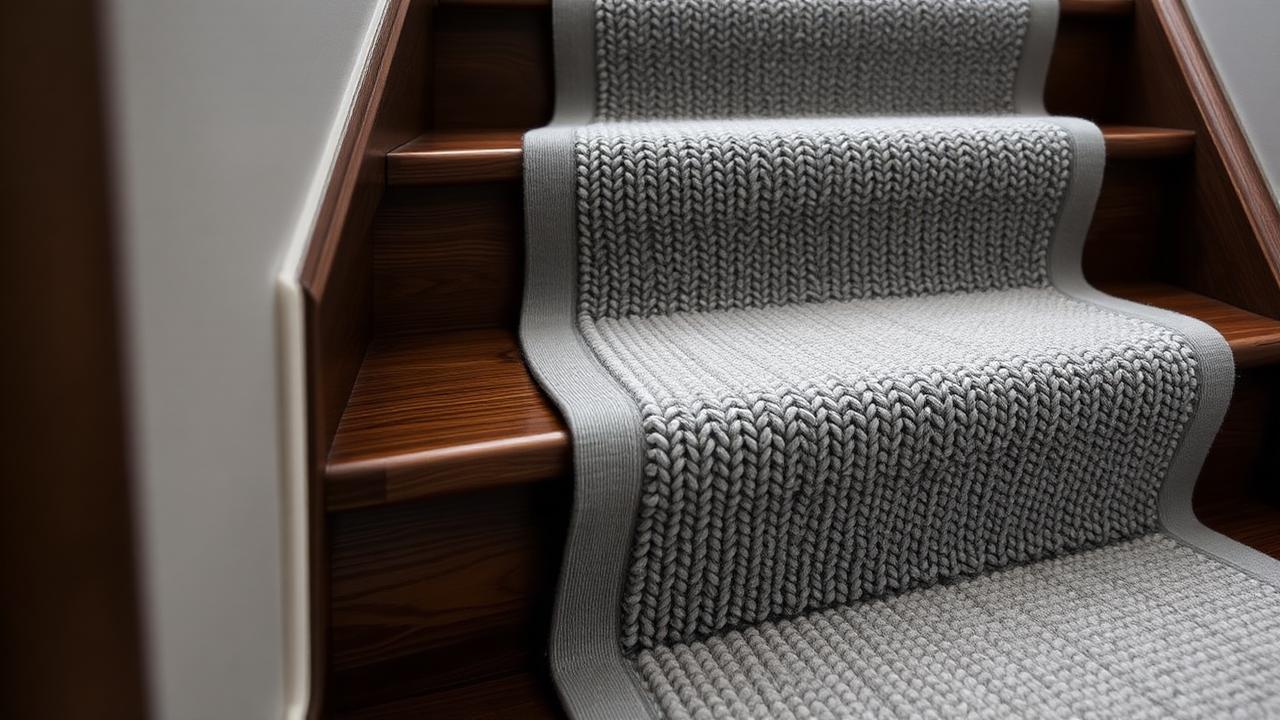
Width and pattern: fitting the rug to the staircase
Even the best-reviewed stair runner rug will look wrong if the width is mismatched to your treads. As a rule of thumb, aim for a reveal (the exposed tread visible on each side) of 3-6 inches (7.5-15cm) on a standard 36in US or similar UK staircase, which typically points to a 24-28in (61-71cm) runner depending on the exact tread width. Bordered and patterned runners, particularly Persian, kilim, herringbone and striped designs, are especially popular as 'stair runner rugs' in the retail sense (sold as pre-finished rug-style products rather than cut-to-order broadloom), and these often come in a narrower range of fixed widths, commonly 26, 27 or 30in, so check the fixed sizes available in a pattern you like before falling in love with a specific design that may not come in your ideal width.
- Solid or subtly textured runners forgive width imperfections better than bold patterns, which show any width mismatch or off-centre fitting immediately.
- Bordered runners need extra length allowance so the border sits correctly at the top and bottom step, not mid-tread.
- Striped runners running across the width (rather than along the length) need careful measuring since the stripe repeat rarely divides evenly into a flight's total rise.
- Dark, dense patterns hide everyday soiling far better than pale solids on a high-traffic staircase.
Rug-style versus cut-to-order runners: fitting methods
Stair runner rugs are sold two distinct ways, and the difference affects installation. True 'runner rugs' are pre-finished at a fixed length and width with bound or fringed ends, designed to be laid over the stairs and secured with rods, brackets, grippers or double-sided tape, without any cutting; these suit renters and anyone wanting a non-permanent, reversible installation. Cut-to-order stair carpet, by contrast, is bought by the linear foot or metre from a broadloom roll and cut, bound and fitted precisely to your flight's exact length and any turns, typically stapled or glued to tackless strip beneath. Pre-finished rug-style runners are usually quicker to install and easier to replace or move, but they rarely fit an odd-length flight perfectly and often need a small offcut or overhang managed at the top or bottom step; cut-to-order runners cost more in labour but fit exactly, including landings and winders.
Match the buying format to your plans
If you expect to move house or reuse the runner elsewhere, choose a pre-finished rug-style stair runner secured with rods or grippers rather than a glued or stapled cut-to-order installation, which is effectively permanent to that specific flight.
How to shortlist and finalise your choice
Start by measuring your staircase properly: tread depth, riser height, total step count, and clear tread width at several points, since this determines both the width you need and the total length, and rules out any rug-style product that simply will not fit your flight length. Order physical samples of your top 2-3 material candidates rather than judging from photos alone — pile density and colour both look different under stair lighting than on a screen or in a showroom. Finally, weigh household factors explicitly: pets and children point toward wool-blend or synthetic for stain resistance and comfort; a formal, low-traffic staircase can justify pure wool or a delicate natural fibre; and a rental or short-term home favours a rug-style runner over a glued-down cut-to-order installation.
Roll widths and width choices behind the best stair runner rugs
Understanding roll widths helps explain why certain stair runner rug widths keep appearing across best-of lists. UK narrow broadloom, from which most cut-to-order runners are made, is conventionally woven at 68cm or 70cm, close to a 26-27in (66-69cm) finished width once bound, while US narrow stock is commonly 27in or 30in. This is not a coincidence: these widths sit near the sweet spot for the standard 36in (91cm) staircase common on both sides of the Atlantic, giving a 4-6in (10-15cm) reveal that most designers consider the most flattering, versatile proportion. Wider options, such as 32in (81cm), require wide-loom broadloom woven up to 12-15ft in the US or 4-5m in UK wide-width wool ranges, which is why the best wide stair runner rugs tend to come from a narrower shortlist of premium ranges than the best standard-width options.
For UK versus US buyers comparing 'best of' lists, it also helps to know that UK 68cm and 70cm rolls do not map onto US 27in (69cm) and 30in (76cm) narrow stock as cleanly as the numbers suggest — 68cm is 26.8in, closer to 27in than to 26in, while 70cm is 27.6in, closer still to 27in. A UK 'best buy' runner quoted at 68cm and a US 'best buy' quoted at 27in are, in practice, extremely close in finished width, even though the marketing language in each market rarely cross-references the other.
Reveal maths for the most commonly recommended widths
Applying reveal maths across the widths most frequently recommended in stair runner rug buying guides makes the trade-offs concrete. A 24in (61cm) runner on the standard 36in (91cm) US stair gives a generous 6in (15cm) reveal, arguably too wide for a classic look on that particular tread. A 26in (66cm) runner on the same 36in stair gives the benchmark 5in (12.7cm) reveal most guides treat as ideal. A 32in (81cm) runner on the same stair tightens the reveal to 2in (5cm), a more contemporary, fuller-coverage look increasingly popular in current interior trends. None of these is objectively 'best' in isolation — the right choice depends on the staircase's actual width and the homeowner's preferred proportion, which is exactly why a single blanket recommendation cannot substitute for measuring your own flight.
| Runner width | Reveal on 36in (91cm) US stair | Look |
|---|---|---|
| 24in (61cm) | 6in (15cm) | Wide margin, narrow runner |
| 26in (66cm) | 5in (12.7cm) | Classic, most-recommended proportion |
| 32in (81cm) | 2in (5cm) | Fuller, contemporary coverage |
How pricing per foot versus per metre affects your shortlist
US pricing is almost always quoted per linear foot fitted, while UK pricing is quoted per linear metre fitted, and the two are not interchangeable without conversion: one linear metre is roughly 3.28 linear feet, so a UK price of £60 per linear metre is broadly comparable to a US price of about $18-19 per linear foot once currency is also converted, though material and labour cost structures differ enough between the two markets that a direct comparison should be treated as a rough guide only, not an exact equivalence. When comparing 'best stair runner rug' shortlists across US and UK sources, always convert to a common unit, ideally cost per linear foot in your own currency, before ranking options, since a headline per-metre price can look deceptively cheap or expensive next to a per-foot figure from the other market.
Convert units before comparing US and UK prices
1 linear metre is approximately 3.28 linear feet. Convert any UK per-metre quote to a per-foot equivalent (or vice versa) before comparing it against a shortlist sourced from the other market, since the raw numbers are not directly comparable without this step.
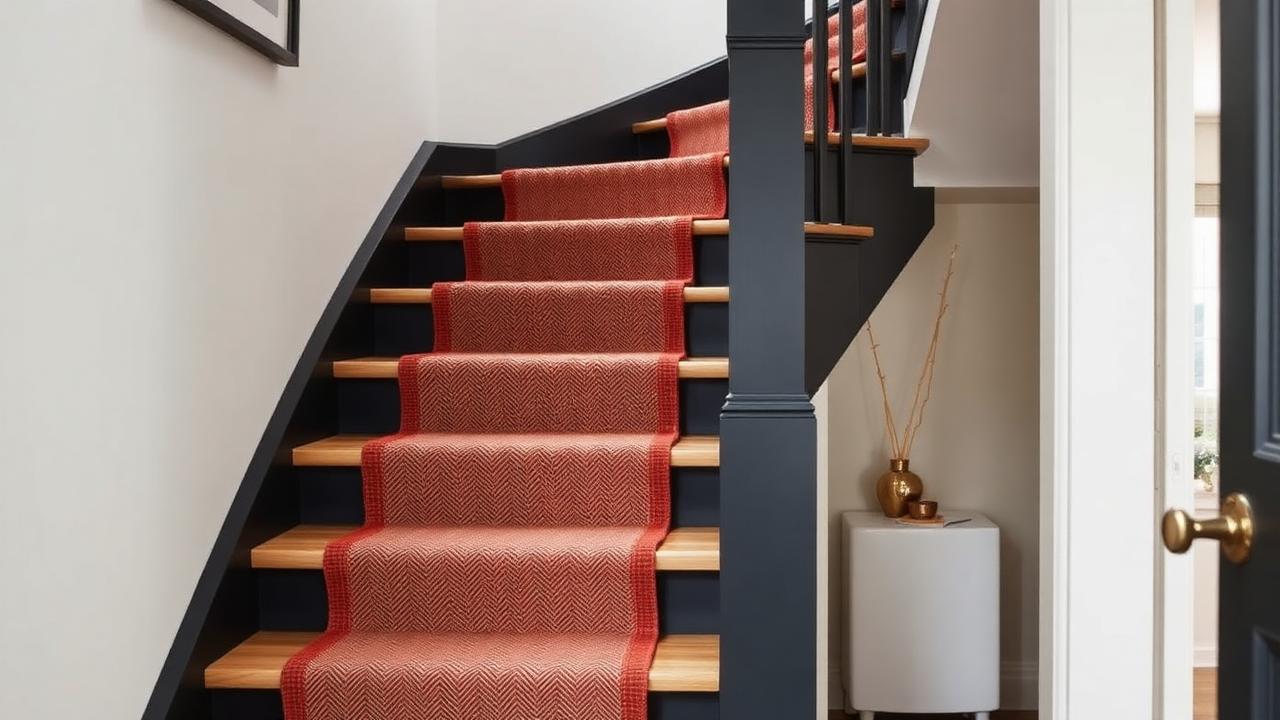
Warranty and durability ratings worth checking before buying
Beyond material and price, the best stair runner rugs are usually backed by a manufacturer warranty that specifically covers wear on a staircase application, not just a general flat-floor warranty, since stairs experience a fundamentally different, more concentrated wear pattern at each nosing than a level room. Look for a stated wear or abrasion rating, often expressed against a recognised test standard, and a warranty period of at least five years for a mid-range wool-blend product or ten years or more for premium wool, since a runner without any stated durability backing is harder to compare fairly against one with a clear, tested rating.
It is also worth checking whether a warranty covers only the carpet itself or also the backing and binding, since binding failure, where the edge tape or serged stitching starts to fray or lift, is one of the most common early failure points on a heavily used stair runner and is sometimes excluded from a material-only warranty. A runner with a strong material warranty but no binding coverage may still need an early repair that the manufacturer will not fund, so ask specifically about binding and backing coverage before treating a headline warranty length as the full picture.
Know your numbers in 30 seconds
Enter your step count, tread depth and riser height — the stair runner calculator gives you the exact length to order, in metres and feet, with waste included.
Open the stair runner calculatorWhatever you decide, get the numbers first: the stair runner calculator doubles as a stair runner length calculator, adding nosing wrap, landings, winders, pattern repeat and waste so you order the right length the first time.
Frequently asked questions
What is the best material for a stair runner rug?
Wool and wool-blend runners are generally considered best overall for durability and appearance, because wool fibre resists crushing at the tread nosing, the highest-wear point on any staircase. Sisal suits a natural look in lower-traffic homes, and synthetic suits budget and pet-friendly needs.
How wide should a stair runner rug be?
Aim for a reveal of 3-6 inches (7.5-15cm) of exposed tread on each side, which typically means a 24-28 inch (61-71cm) runner on a standard 36-inch US staircase. Always measure your actual tread width rather than assuming a standard size will fit.
Are pre-finished stair runner rugs better than cut-to-order carpet?
Neither is universally better; it depends on your needs. Pre-finished rug-style runners install quickly, without cutting, and suit renters or anyone wanting a reversible fit, while cut-to-order carpet fits an exact flight length, including landings and turns, but is effectively a permanent installation.
How much do good stair runner rugs cost?
Budget synthetic options start around $10-22 per linear foot fitted in the US or £15-30 per linear metre in the UK, mid-range wool-blend runs $28-50 per linear foot or £38-65 per linear metre, and premium wool runs $45-90 per linear foot or £55-110 per linear metre.
Do patterned stair runner rugs come in the same widths as plain ones?
Not always. Patterned and bordered rug-style runners are often only available in a narrower set of fixed widths, commonly 26, 27 or 30 inches, so check the sizes available in a specific pattern before committing, rather than assuming any width can be cut to order.
Is sisal a good choice for a stair runner rug?
Sisal is durable and gives a natural, textured look, but it can feel harsh underfoot and is less comfortable for children or bare feet compared with wool or synthetic options. It also handles moisture poorly, so avoid it near an entrance or in humid climates.
How do I know how much stair runner rug to buy?
Measure the going (tread depth) and rise of every step, add them together for each step, sum across the flight, add a landing allowance if there is a turn, and add a waste margin, or use the stair runner length calculator for an instant total.
Can I use the same stair runner rug on curved or winder stairs?
Rug-style pre-finished runners generally do not adapt to curved or winder stairs since they are a fixed shape; cut-to-order carpet is the better choice there, as it can be cut and fitted piece by piece to match each tapered tread precisely.
Know your numbers in 30 seconds
Enter your step count, tread depth and riser height — the stair runner calculator gives you the exact length to order, in metres and feet, with waste included.
Calculate how much stair runner you needReady for real prices?
Get quotes from vetted stair runner suppliers and fitters near you. Free, no account, no obligation.
Every guide is written from hands-on measuring and fitting experience, checked against the calculator’s own maths, and re-reviewed whenever prices or methods change. Read our editorial standards.