

What is a bullnose step?
A bullnose step is a rounded, semi-circular or D-shaped bottom step that extends beyond the line of the rest of the staircase, usually for aesthetic impact or to make the start of a climb feel more grand. It creates a striking architectural detail in an entrance hall, but it also creates a unique challenge for anyone fitting a stair runner. Because the step isn't just a simple rectangle, you can't just run the carpet over it and tack it down—the runner has to curve around that rounded nosing and follow the profile of the tread itself, which means it needs to be carefully tailored, cut, and wrapped to look right.
The bullnose fitting process
When I fit a runner on a bullnose step, I always start by creating a paper template of the step profile. You cannot guess this shape and expect a good result. I lay the paper down, mark the exact arc of the nosing, and cut the paper to match. Then I use that template as a guide to cut the runner. The runner needs to be pleated or darted—small, precise cuts that let the fabric fold over the curve without bunching up or wrinkling. If you just try to pull a straight-weave runner over a curve, it will pucker at the edges, and you’ll have excess fabric where you don't want it.
How much runner do I need?
On a 13-step flight, calculate each straight step as normal—usually 10 in (25 cm) tread depth and 7.5 in (19 cm) riser height plus nosing wrap, totalling around 18.5 in (47 cm) per step. For the bullnose, you need to add the surface area of the rounded part. Generally, this adds 3-4 inches (8-10 cm) to your per-step allowance for that single step. Across the flight, it’s safer to add an extra foot (30 cm) of material just for the bottom bullnose wrap to avoid being short.
| Item | Measurement (Imperial) | Measurement (Metric) |
|---|---|---|
| Straight tread depth | 10 in | 25 cm |
| Straight riser height | 7.5 in | 19 cm |
| Bullnose curve allowance | 3 in | 8 cm |
| Total runner per flight | 22 ft | 6.7 m |
Know your numbers in 30 seconds
Enter your step count, tread depth and riser height — the stair runner calculator gives you the exact length to order, in metres and feet, with waste included.
Open the stair runner calculatorWatch the grain direction
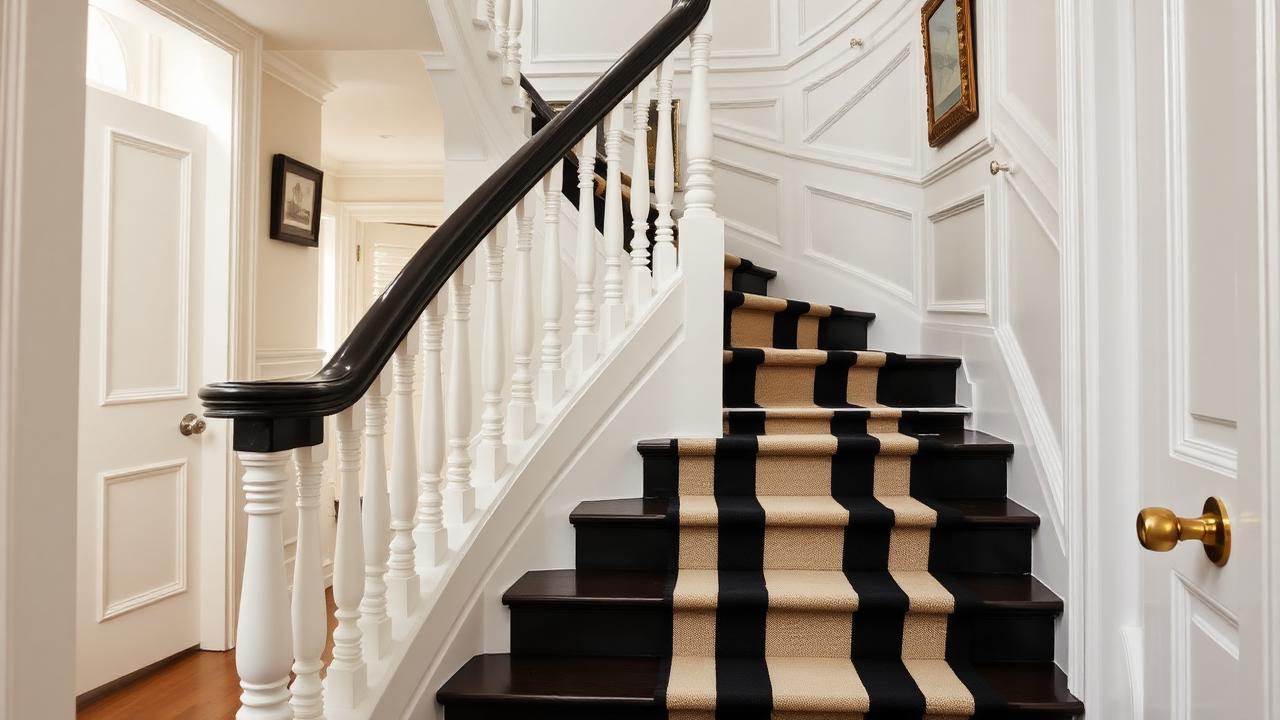
If your runner has a visible pile or texture, the bullnose wrap will change how that grain reflects light. A dark runner might look lighter on the bullnose curve than on the flat steps above it.
To get the most accurate estimate of your runner length, use the stair runner calculator. It helps you account for the bullnose and other nuances of your staircase without the frustration of manual math. If you're looking for new stair runners, make sure you measure twice and order slightly more than the calculator suggests to allow for mistakes or pattern matching.
- Always template the bullnose step shape before cutting the runner.
- Use sharp scissors or a utility knife to create small darts in the runner backing to ease the curve.
- Staple carefully underneath the tread to hide all fixings.
- Consider a contrast binding to accentuate the bullnose shape.
Whatever you decide, get the numbers first: the stair runner calculator doubles as a stair runner length calculator, adding nosing wrap, landings, winders, pattern repeat and waste so you order the right length the first time.
Frequently asked questions
Do I need more runner for a bullnose step?
Yes, you generally need an extra 3-4 inches (8-10 cm) of material to wrap the curved profile of the bullnose step properly.
Can I fit a runner on a bullnose myself?
It's a challenging task for a beginner because it requires precise templating and pleating, but it is possible with patience and practice.
How do I make the runner stay on the curve?
You need to pleat or dart the runner backing and use high-quality staples under the bullnose to hold the shape firmly.
Does the runner grain matter on a bullnose?
Yes, the pile direction will appear to change as it curves, which can create a slight visual difference in colour, particularly in dark or high-pile carpets.
Is a template necessary?
For a professional finish, yes. A paper template ensures you don't cut too much or too little, saving you from an expensive mistake.
Can I use any runner on a bullnose?
Most woven runners can be pleated, but stiff or thick natural fibre runners may be harder to work with than flexible synthetic options.
How do I hide the staples?
Staple underneath the tread or inside the nosing curve so that the staples are completely hidden from view when standing in the hallway.
Is a bullnose step safer with a runner?
A runner adds traction to the rounded edge, but it must be fitted perfectly flat to prevent tripping, especially on the curve.
Know your numbers in 30 seconds
Enter your step count, tread depth and riser height — the stair runner calculator gives you the exact length to order, in metres and feet, with waste included.
Size your bullnose runner with the stair runner calculatorReady for real prices?
Get quotes from vetted stair runner suppliers and fitters near you. Free, no account, no obligation.
Every guide is written from hands-on measuring and fitting experience, checked against the calculator’s own maths, and re-reviewed whenever prices or methods change. Read our editorial standards.