

The flared step difference
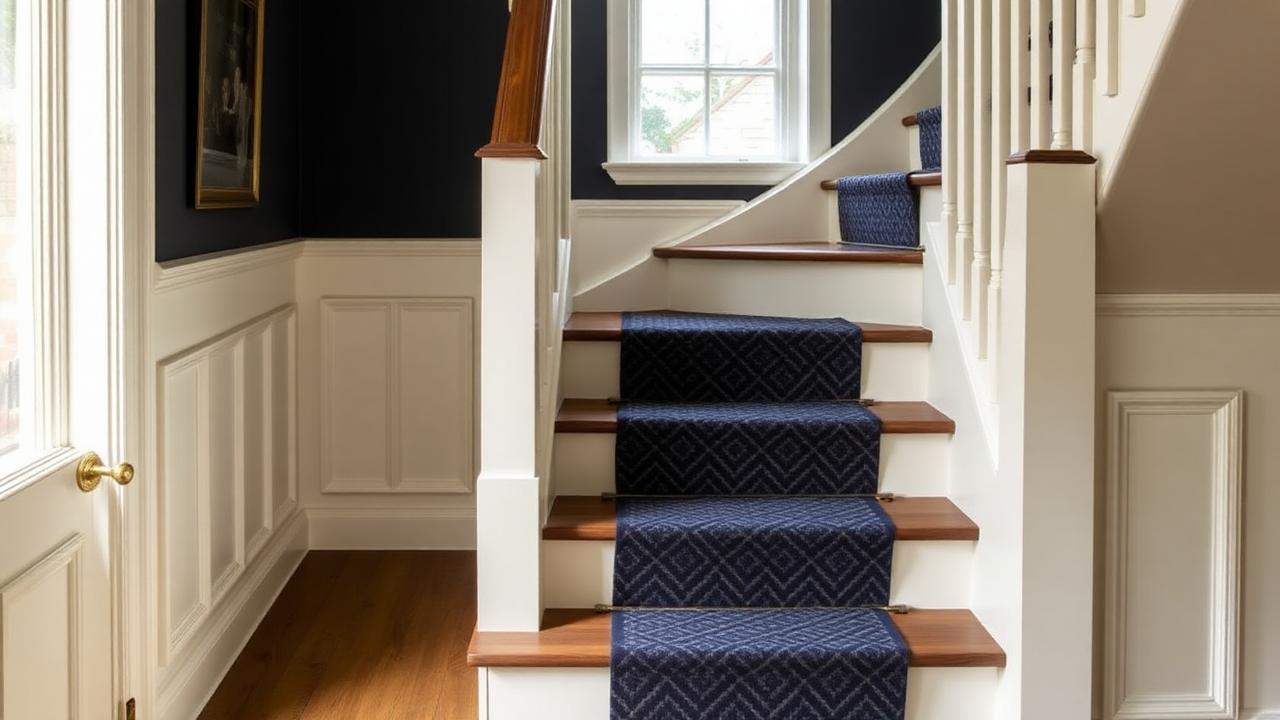
A flared bottom step, where the tread widens out, is a beautiful way to ground a staircase. However, a standard-width stair runner will look lost if it doesn't also flare at the base. The tailoring involved—sometimes called 'fishtailing'—is where the runner is widened or cut and inset to follow the flare of the tread. This creates a balanced, custom look that makes the stair runner feel like it was truly designed for that specific staircase.
Tailoring the runner
You have two main ways to handle a flared step. One is to use a wider piece of runner just for that bottom step and seam it into the main runner, which is best if your runner is a flat weave that can be easily seamed. The second is to use small 'gussets' or inset pieces of matching carpet to fill out the flare, which is more common with heavier or patterned runners. Both methods require patience and practice to get the seam neat.
How much runner do I need?
For a flared step, calculate your total flight and then add at least 1.5-2 ft (0.5-0.6 m) specifically for the flared bottom section. This accounts for the extra width you need to cut and the waste from the tailoring. Use the stair runner calculator, but manually increase your order to accommodate that extra flare section.
| Measurement | Standard Step | Flared Step |
|---|---|---|
| Runner width | 27 in | 36 in |
| Length allowance | 18 in | 36 in |
| Fitting effort | Standard | High |
Know your numbers in 30 seconds
Enter your step count, tread depth and riser height — the stair runner calculator gives you the exact length to order, in metres and feet, with waste included.
Open the stair runner calculatorIf you are ready to start, look for stair runner carpet that complements your interior. Use the stair runner calculator to get the foundation right, then tailor the bottom step to fit. Searching for stair runners can reveal many options for both simple and intricate step designs.
- Template the flare shape accurately.
- Use gussets if seaming a wider piece is not an option.
- Take your time with the seam—it should be invisible.
- Ensure the flare transition is smooth and symmetric.
Whatever you decide, get the numbers first: the stair runner calculator doubles as a stair runner length calculator, adding nosing wrap, landings, winders, pattern repeat and waste so you order the right length the first time.
Frequently asked questions
Can I flare a runner myself?
Yes, but it requires precision and a good eye for seaming carpet.
Is the seam visible?
With careful work, a seam on a flared step can be almost invisible.
How do I measure for a flared step?
Measure the width at the widest point and the tread depth, then add a 50% buffer to your runner length for that step.
Is a fishtail seam common?
Yes, it is a classic technique for widening a runner on a flared tread.
What if my runner is patterned?
Matching patterns on a flared seam is very difficult; simple textures are highly recommended.
How do I stop fraying at the flare seam?
Use high-quality seam tape and seal the edges properly before fitting.
Do I need extra material?
Yes, always order extra to account for the wider pieces needed at the base.
Is professional help needed?
If you have never seamed carpet before, a professional is recommended for a perfect flare.
Know your numbers in 30 seconds
Enter your step count, tread depth and riser height — the stair runner calculator gives you the exact length to order, in metres and feet, with waste included.
Size your flared runner with the stair runner calculatorReady for real prices?
Get quotes from vetted stair runner suppliers and fitters near you. Free, no account, no obligation.
Every guide is written from hands-on measuring and fitting experience, checked against the calculator’s own maths, and re-reviewed whenever prices or methods change. Read our editorial standards.