

Why seagrass behaves differently to sisal and jute
Seagrass grows in flooded paddies and its fibre has a natural silica and wax content that makes the strand impervious to water, unlike sisal or jute which are porous plant fibres. This means spills sit on the surface rather than soaking in, giving a genuine cleaning advantage, but the same waxy surface is smooth and can be dangerously slick, especially when new or when leather-soled shoes are involved.
Spec sheet
| Property | Typical value |
|---|---|
| Fibre origin | Aquatic seagrass, dried and twisted |
| Construction | Flatweave, herringbone |
| Water resistance | Excellent, non-absorbent surface |
| Slip risk | High, smooth surface |
| Roll widths | 66cm, 68cm, some 4m broadloom |
| Price per linear ft (US) | $14–$32 |
Not recommended for main staircases
Most flooring professionals advise against seagrass on stairs specifically, reserving it for flat floor areas. If you want the look, ask about a seagrass-look synthetic or a textured wool alternative with real grip instead.
If you use it anyway
- Choose a herringbone or ribbed weave over the smoothest flat weaves, since texture adds some grip.
- Fit with a firm, high-friction underlay and secure every step, since seagrass can also shift underfoot.
- Avoid it entirely on stairs used by young children, elderly residents, or anyone in socks or leather soles.
- Consider it only for a very low-traffic secondary staircase, and add stair nosing strips for extra grip.
Know your numbers in 30 seconds
Enter your step count, tread depth and riser height — the stair runner calculator gives you the exact length to order, in metres and feet, with waste included.
Open the stair runner calculatorCleaning and wear
Seagrass wipes clean easily thanks to its water resistance, and it does not stain the way sisal or jute do. Wear resistance is moderate; the fibre is stiff but can crack rather than fray under sustained pressure, which shows as a whitish scuff line at the nosing over time.
How seagrass behaves at the nosing over five years
Seagrass has a naturally smooth, slightly waxy fibre surface that resists staining better than jute but is also the stiffest and least forgiving natural fibre when flexed repeatedly at a nosing edge. Over five years, expect the nosing fold to show visible creasing and occasional small fibre snaps well before the flat field of the runner shows any wear at all, because seagrass fibres do not flex and recover the way wool does; they crease permanently instead.
- Year 1: a faint waxy sheen from the natural fibre coating wears off with initial foot traffic.
- Year 2-3: permanent crease lines become visible at every nosing under raking light.
- Year 4-5: on a busy stair, occasional fibre snapping at the crease may require binding repair.
- Seagrass performs far better on flat landings and hallways than on stair nosings for this reason.
Common specification mistakes
The single biggest error with seagrass is specifying it for a full staircase run when it is genuinely better suited to flat areas; many suppliers will sell it for stairs without flagging the creasing issue because it is a legitimate style choice, just one buyers should make with full information.
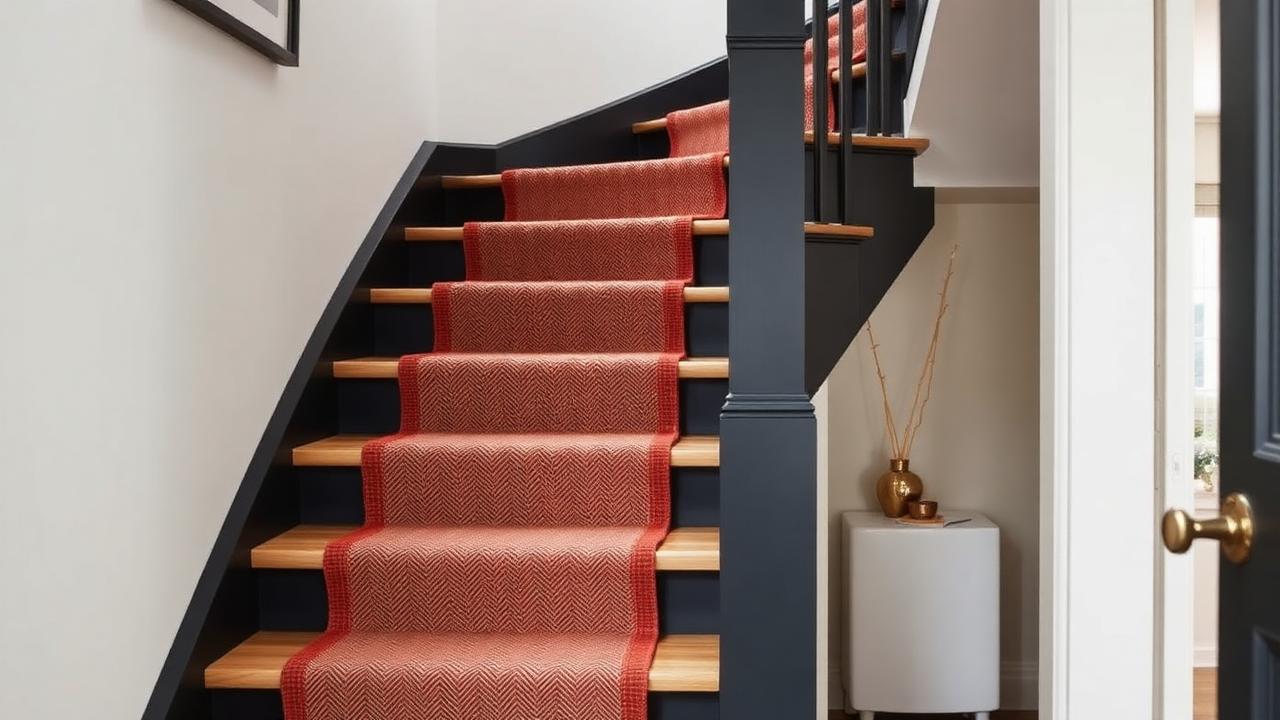
| Mistake | Consequence | Better approach |
|---|---|---|
| Full stair run in seagrass | Nosing creasing within 2-3 years | Use seagrass on landing only, wool or sisal on treads |
| No stain treatment applied | Waxy surface still absorbs oil-based stains | Request a fibre-sealant treatment at install |
| Underlay too soft | Increases flex and accelerates creasing | Use a thin, firm pad rated for flatweave fibres |
Cost versus risk trade-off
Seagrass sits mid-range on price, roughly the same band as sisal, so cost is rarely the deciding factor; the decision is really about accepting a genuine slip and creasing risk in exchange for a smooth, water-resistant surface. Insurers and landlords in some jurisdictions may flag seagrass on stairs during a safety inspection, which is worth checking before specifying it in a rental property.
DIY vs hire for seagrass
Because seagrass creases permanently rather than flexing, fitting mistakes are unforgiving; a fold made in the wrong place cannot be reworked the way a wool loop pile can. Most fitters recommend hiring a professional for any seagrass stair installation specifically for this reason, reserving DIY fitting for flat seagrass landing pieces only.
Seagrass versus coir for slip resistance
Coir is sometimes suggested as a natural alternative to seagrass because both are coarse plant fibres, but coir's rougher, more textured surface actually gives noticeably better grip than seagrass's smooth, waxy weave. If the natural fibre look is important but safety on stairs is a concern, coir or a textured sisal both outperform seagrass for traction, even though neither matches seagrass for water resistance.
| Factor | Seagrass | Coir |
|---|---|---|
| Surface texture | Smooth, waxy | Coarse, textured |
| Slip risk on stairs | High | Low to moderate |
| Water resistance | Excellent | Poor |
| Best stair use | Landings only | Entry areas, full stairs with care |
Building regulations and insurance considerations
In rental properties and some commercial settings, landlords and insurers may specifically flag a smooth natural fibre like seagrass on stairs during a safety inspection, since slip-related staircase injuries are a common liability claim. It is worth checking with a letting agent, insurer or local building code before specifying seagrass on any staircase used by tenants, guests, or anyone unfamiliar with the property's layout.
A safer way to use seagrass on a staircase
Many designers who like the seagrass look but want to avoid stair-nosing risk run seagrass only on the flat landing sections and switch to a textured sisal or wool berber loop on the actual treads, keeping the material transition at a natural break point such as a half-landing so the change does not look arbitrary. This gets most of the visual benefit of seagrass with none of the nosing slip or creasing risk.
Whatever you decide, get the numbers first: the stair runner calculator doubles as a stair runner length calculator, adding nosing wrap, landings, winders, pattern repeat and waste so you order the right length the first time.
Still deciding on material, width or pattern? Our hub on stair runners compares weaves, widths, backings and fitting styles side by side, then hands the numbers straight to the calculator.
Frequently asked questions
Does seagrass meet stair safety regulations?
Requirements vary by jurisdiction and property type, but because seagrass is smooth and can be genuinely slippery, some landlords, insurers and commercial building codes flag it during stair safety inspections. Check local regulations before specifying it for a rental or commercial staircase.
Is coir a safer alternative to seagrass on stairs?
Yes, for grip specifically. Coir's coarse, textured surface provides noticeably better traction than seagrass's smooth, waxy weave, though coir is less water-resistant and stains more easily.
Can seagrass be treated to reduce slip risk?
Some suppliers offer a textured weave or an anti-slip spray treatment, which helps but does not eliminate the risk entirely. A firm high-friction underlay and full nosing coverage remain more effective than any surface treatment on its own.
Is seagrass safe on stairs?
Not ideally. Seagrass has a naturally smooth, waxy surface that is more slippery than sisal, jute or wool, so most fitters recommend it for flat areas rather than a treaded staircase.
Is seagrass more water-resistant than sisal?
Yes, significantly. Seagrass fibre is naturally non-porous, so spills sit on the surface and wipe off rather than soaking in and staining, unlike sisal or jute.
Can seagrass be dyed?
Seagrass takes dye poorly compared with wool or sisal, so it is usually sold in its natural tan-green tones rather than a wide colour range.
What is a safer alternative to seagrass for stairs?
A textured sisal, wool berber loop, or a seagrass-look synthetic weave all offer similar natural aesthetics with far better grip for stair use.
Is seagrass a good choice for stair treads specifically?
It is better suited to landings and hallways than stair treads. Seagrass fibre creases permanently at the nosing fold rather than flexing and recovering, so a full seagrass stair run tends to show visible wear lines faster than sisal or wool on the same staircase.
Know your numbers in 30 seconds
Enter your step count, tread depth and riser height — the stair runner calculator gives you the exact length to order, in metres and feet, with waste included.
Check if seagrass suits my stairsReady for real prices?
Get quotes from vetted stair runner suppliers and fitters near you. Free, no account, no obligation.
Every guide is written from hands-on measuring and fitting experience, checked against the calculator’s own maths, and re-reviewed whenever prices or methods change. Read our editorial standards.