

What a spiral stair calculator actually solves
A spiral staircase is a helix: every tread is a wedge (winder) that rotates around a central pole while climbing a fixed riser height. A spiral stair calculator needs four inputs — total rise, outside diameter, centre pole diameter, and desired number of treads per full 360-degree rotation — and returns the riser height, the tread angle, and the clear walking-line width, which is the dimension that actually matters for comfort and code, not the raw tread depth at the widest point.
The walking line is measured 12in in from the outside edge of the tread (some codes use a fraction of the tread width instead). That is where you check tread depth against the minimum, because the depth right at the pole is far too shallow to ever meet code, and the depth at the outer edge is often generous enough to hide a genuinely cramped stair.
Worked example: 9ft rise, 5ft diameter
Take a floor-to-floor rise of 108in and a 60in (5ft) outside diameter with a 4in centre pole. IRC caps a spiral stair riser at 9.5in (slightly more generous than the 7.75in for a standard stair) and requires a minimum 7.5in tread depth measured at a walking line 12in from the narrow edge, with at least 26in of clear width.
- Divide total rise by the max riser: 108 / 9.5 = 11.4, so round up to 12 risers.
- Riser height = 108 / 12 = 9.0in — under the 9.5in cap, so it passes.
- Radius at the walking line = 30in (outer radius) - 12in = 18in.
- Circumference at the walking line = 2 x pi x 18 = 113.1in.
- If each full rotation uses 12 treads, walking-line tread depth = 113.1 / 12 = 9.4in — comfortably over the 7.5in IRC minimum.
- Tread angle = 360 / 12 = 30 degrees per tread.
UK Approved Document K spiral rules
UK Part K treats spiral (helical) stairs under BS 5395-2, which is stricter about geometry than the IRC. For a private stair it typically caps pitch at 42 degrees, requires a minimum going of 220mm measured at a point 270mm from the narrow end of the tread, and sets a minimum handrail-side clearance so the tread doesn't taper to nothing near the pole. Because BS 5395-2 uses a different measuring point (270mm in vs the IRC's 12in), the same physical staircase can pass one code and fail the other, so always check the code column your calculator is using before trusting a pass result.
Riser height and headroom checks
| Check | IRC (US) | UK Part K |
|---|---|---|
| Max riser height | 9.5in (spiral exception) | 220mm (~8.66in) |
| Min tread depth at walking line | 7.5in | 220mm at 270mm in |
| Min clear width | 26in | 600mm (min), 900mm typical |
| Min headroom | 6ft 6in | 2.0m |
| Max pitch | n/a (riser/tread limited) | 42 degrees |
Spirals are headroom-hungry
Because a spiral stair occupies a fixed floor footprint no matter how tall the rise, headroom is usually the first check that fails, not riser height. Always model headroom at the narrowest point of the walking line, one full rotation up from any given tread.
Fitting a runner to a spiral stair
A spiral stair almost never takes a standard straight runner because every tread is a wedge with a different depth on each side. Instead, fitters cut a custom carpet insert for each wedge tread or use a purpose-cut kit. If you're planning carpet on a spiral flight, start with the stair runner calculator to get the total surface area and yardage, then treat each tread as an individual winder cut rather than a continuous strip — the stair runner length calculator's straight-flight formula (rise + run per step, repeated down the flight) does not apply directly to a helix, since there's no single tread run value.
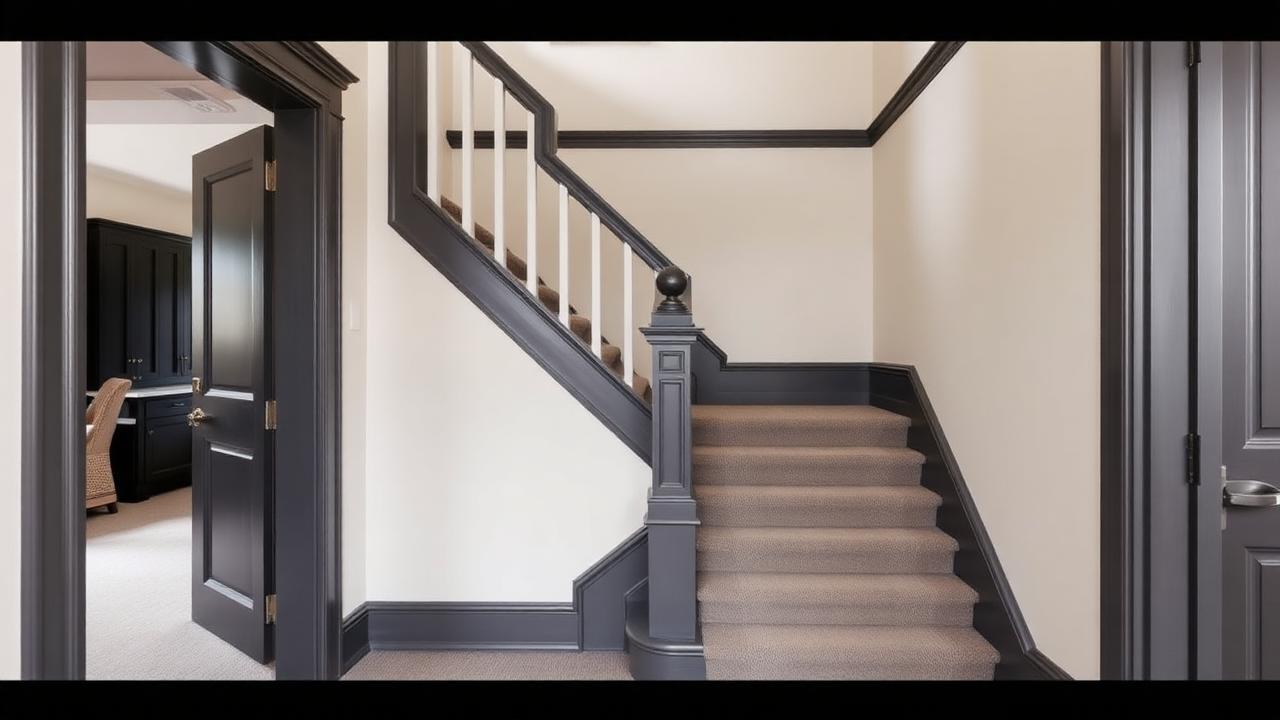
For material estimating, sum the actual tread area (using the trapezoid area of each wedge) rather than a straight-run approximation, because spiral treads waste more offcut than a straight stair — expect 15-20% extra material versus the 10% waste margin typical of a straight run.
Spiral vs winder: which suits a tight floor opening
When floor space is limited, designers often weigh a spiral against a tight winder or dog-leg staircase rather than assuming spiral is automatically the compact choice. A spiral stair needs a fixed circular footprint no larger than its outside diameter, typically 4ft 6in to 6ft, in every direction, while a winder stair can be squeezed into an L-shaped or rectangular footprint that sometimes fits an awkward corner better than a perfect circle. If the available opening is wider in one direction than another, a winder or quarter-turn layout usually makes better use of the space than a spiral.
| Footprint shape available | Better fit | Reason |
|---|---|---|
| Square or circular, all sides similar | Spiral | Uses the full circular footprint efficiently |
| Long, narrow rectangle | Straight flight with winder turn | A spiral wastes the extra length in one direction |
| L-shaped corner nook | Quarter-turn winder | Follows the corner rather than needing a full circle |
Alternating tread and steel kit options
Two common alternatives to a fully custom spiral are prefabricated steel spiral kits, sized in fixed diameter increments (typically 4ft, 4ft 6in, 5ft and 6ft), and alternating-tread devices, which IRC treats as a distinct, more restrictive category permitted only for limited-use areas such as lofts, not as a primary means of egress. A steel kit simplifies the structural calculation because the manufacturer supplies engineering data for each fixed diameter, but it removes the flexibility to fine-tune riser height or tread count that a fully custom spiral allows.
Maintaining a carpeted spiral stair
Because a carpeted spiral uses individually cut wedge inserts rather than one continuous runner, maintenance differs from a straight flight too: a worn or stained tread insert can usually be replaced individually without disturbing the rest of the flight, which is a genuine advantage over a continuous runner where a single worn patch often means replacing or re-fitting a much longer run. Keep an offcut or extra yardage from the original order specifically for this kind of future spot-repair, since matching a discontinued dye lot years later is difficult.
- Vacuum each wedge tread individually, working from the pole outward to the wide edge.
- Check pole-side binding regularly, since that narrow point takes concentrated foot pressure from every user.
- Store a labelled offcut of the original carpet for future single-tread repairs.
- Re-inspect fixings at the pole and outer stringer annually, since a spiral's structure sees more twisting load than a straight flight.
Know your numbers in 30 seconds
Enter your step count, tread depth and riser height — the stair runner calculator gives you the exact length to order, in metres and feet, with waste included.
Open the stair runner calculatorWhatever you decide, get the numbers first: the stair runner calculator doubles as a stair runner length calculator, adding nosing wrap, landings, winders, pattern repeat and waste so you order the right length the first time.
Still deciding on material, width or pattern? Our hub on stair runners compares weaves, widths, backings and fitting styles side by side, then hands the numbers straight to the calculator.
Frequently asked questions
How many steps does a spiral staircase need for a 9ft rise?
At a 9.5in max riser (IRC spiral exception), a 108in rise needs at least 12 risers (108/9.5 = 11.4, rounded up), giving a 9.0in riser height.
What is the minimum tread depth on a spiral staircase?
IRC requires 7.5in minimum tread depth measured at a walking line 12in from the narrow edge of the tread; UK Part K requires 220mm measured 270mm in.
What diameter spiral staircase do I need?
5ft (60in) diameter is the common minimum for a comfortable, code-compliant spiral in most US homes; 4ft 6in is the smallest IRC generally allows and feels tight.
Can I put a stair runner on a spiral staircase?
Yes, but it needs a custom cut per wedge tread rather than one continuous strip, because tread depth varies from the pole to the outer edge.
What angle does each spiral stair tread sweep?
Divide 360 by the number of treads per full rotation — 12 treads per rotation gives 30 degrees per tread.
Does a spiral stair need more headroom than a straight stair?
Yes, in practice — because the same floor opening is reused every rotation, headroom is usually the first check to fail, so verify at least 6ft 6in (IRC) or 2.0m (UK) at the narrowest walking-line point.
Know your numbers in 30 seconds
Enter your step count, tread depth and riser height — the stair runner calculator gives you the exact length to order, in metres and feet, with waste included.
Open the stair calculatorReady for real prices?
Get quotes from vetted stair runner suppliers and fitters near you. Free, no account, no obligation.
Every guide is written from hands-on measuring and fitting experience, checked against the calculator’s own maths, and re-reviewed whenever prices or methods change. Read our editorial standards.