

Why a winder stair calculator uses the walking line, not the tread edge
A winder tread is wider on the outside of the turn than on the inside, tapering to almost nothing at the inner corner. Both IRC R311.7.5.2.1 and UK Approved Document K judge winder tread depth at a walking line, not at the narrow point: IRC measures 12in in from the narrow edge of the tread (the same walking line used for spiral stairs), and requires that depth to be at least 10in, matching the minimum for a straight tread. Anything measured at the inner point would always fail, since it tapers toward zero, so the walking-line convention is what makes a winder codeable at all.
Laying out a 90-degree turn with three winders
The standard configuration for a 90-degree turn is three winder treads, each sweeping 30 degrees, replacing what would otherwise be a small landing plus a change in direction. Assume an outside stringer radius of 42in (a 36in-wide stair with the pivot point near the inside wall) and the standard IRC 12in walking line measured from the narrow (inside) edge.
- Inside walking-line radius = pivot radius + 12in. If the inside corner sits 6in off the true pivot, radius = 18in.
- Arc length per 30-degree winder at that radius = 2 x pi x 18 x (30/360) = 9.42in.
- 9.42in clears the 10in IRC minimum only marginally — in practice, most detailers push the pivot point out or widen the stair to guarantee at least 10in with margin.
- Riser height carries straight through from the rest of the flight (e.g. 7.5in) — winders do not change riser height, only tread shape.
| Turn angle | Typical winder count | Sweep per winder |
|---|---|---|
| 90 degrees | 3 | 30 degrees |
| 90 degrees (wide stair) | 2 | 45 degrees |
| 180 degrees | 6 | 30 degrees |
| 180 degrees | 7 | ~25.7 degrees |
UK Part K winder rules
UK Part K allows tapered (winder) treads on private stairs provided the going, measured 270mm in from the narrower end, is at least 220mm — the same minimum as a straight private stair — and the going at the narrow end is never less than 50mm. Because 270mm is further in than IRC's 12in (about 305mm), a UK-compliant winder generally needs a slightly larger radius or fewer degrees swept per tread than a US-compliant one at the same outer dimensions.
Kite winders vs standard winders
A 'kite' winder is the single, larger central tread in some layouts, shaped like a kite rather than a simple pie wedge. It usually has more usable walking-line depth than the winders either side of it, so it's often the safest tread on the turn rather than the most dangerous.
Carpeting winder treads
Winder treads break the assumption behind a simple straight-run stair runner calculator, because tread run and riser combine at an angle rather than a straight repeat. Most installers either cut a continuous runner with pleats folded into the inside corner of each winder (traditional method) or cut individual custom pieces per winder (cleaner, more modern look, more waste). Either way, measure each winder's tread and riser separately and add them to your total rather than assuming a uniform per-step allowance — the stair runner length calculator's flat-run assumption undercounts material on a winder section by roughly 15-25%.
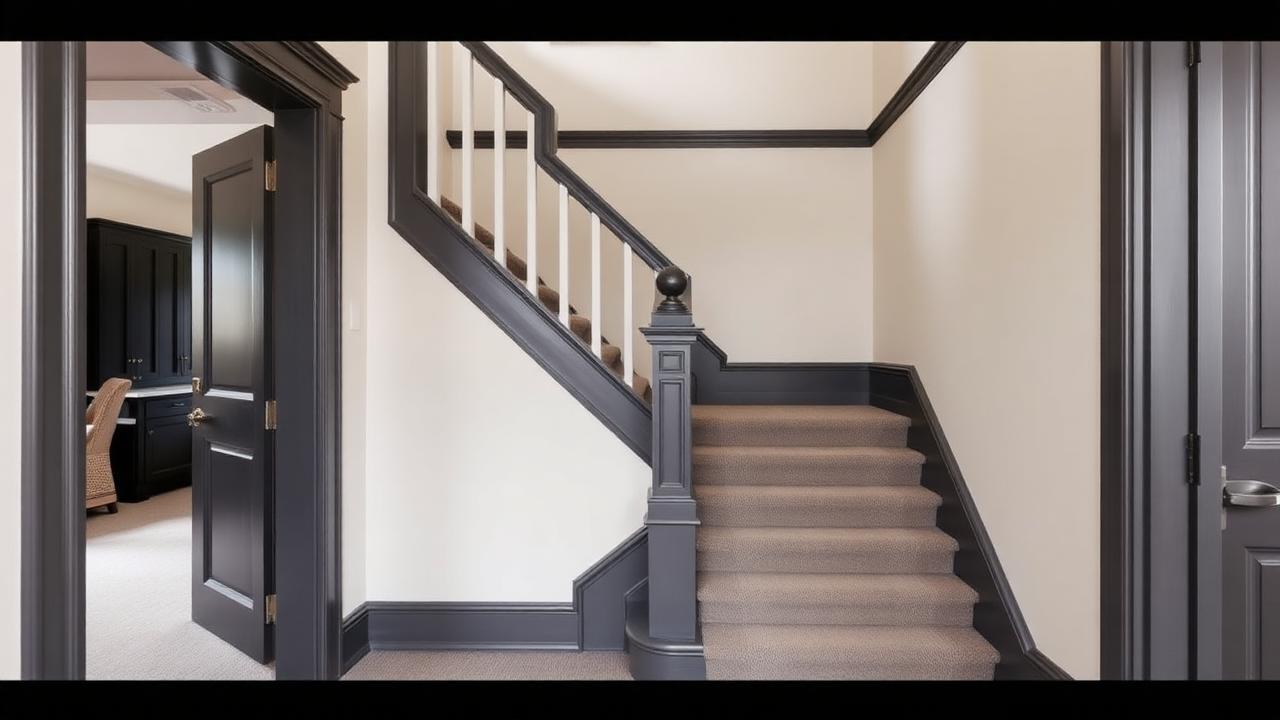
- Measure winder tread depth at the widest (outside) edge for the pleat method.
- Add 2-3in extra length per winder for the pleat fold at the inside corner.
- Budget 20% waste on the winder section versus 10% on straight flights.
- Check every winder individually — inconsistent pivot points are common in older houses.
Common winder layout mistakes
The most frequent winder-sizing error is calculating tread depth from the raw pivot point rather than the true walking line, which overstates depth and produces a layout that fails inspection once correctly measured. A second common mistake is assuming all winders in a turn are identical wedges; in many real staircases the pivot point shifts slightly between winders because of wall framing or an offset newel post, so each winder needs its own walking-line check rather than one calculation applied uniformly across the turn.
Quarter-turn vs half-turn configurations
A quarter-turn (90-degree) winder section is far more common in residential work than a half-turn (180-degree) section, because a half-turn winder section needs roughly double the sweep and generally a larger overall footprint to keep every tread above the walking-line minimum. Where a 180-degree change of direction is required in a tight space, most designers prefer two separate quarter-turn winder sections joined by a short straight run, or a flat landing, over one continuous half-turn winder block, since it distributes the geometry more forgivingly.
| Configuration | Typical footprint impact | Walking-line risk |
|---|---|---|
| Quarter-turn, 3 winders | Moderate — fits most stair widths | Low if pivot point is set correctly |
| Half-turn, 6-7 winders | Larger footprint or narrower stair needed | Higher — more treads to check individually |
| Two quarter-turns plus short landing | Similar footprint to one half-turn block | Lower — each section is independently simpler to verify |
Laying winders out on site
Framing carpenters typically lay out a winder turn full-size on the subfloor before cutting any stringer, using a chalk line for the true pivot point and a compass or trammel arm to strike the walking-line arc at the code-required distance. This on-site check catches pivot-point discrepancies that a purely on-paper calculation can miss, especially in older or irregular framing.
- Mark the true pivot point on the subfloor, accounting for any wall or newel offset.
- Strike the walking-line arc at 12in (IRC) or 270mm (UK) from the intended tread edge.
- Lay out each winder's tread line along that arc before cutting stringers.
- Measure the walking-line depth of every individual winder, not just the first one in the sequence.
- Confirm the total sweep across all winders in the turn adds up to the intended 90 or 180 degrees.
Know your numbers in 30 seconds
Enter your step count, tread depth and riser height — the stair runner calculator gives you the exact length to order, in metres and feet, with waste included.
Open the stair runner calculatorWhatever you decide, get the numbers first: the stair runner calculator doubles as a stair runner length calculator, adding nosing wrap, landings, winders, pattern repeat and waste so you order the right length the first time.
Still deciding on material, width or pattern? Our hub on stair runners compares weaves, widths, backings and fitting styles side by side, then hands the numbers straight to the calculator.
Frequently asked questions
How many winder treads are in a 90-degree turn?
Typically three winders of 30 degrees each, though a wider stair can use two winders of 45 degrees.
What is the minimum winder tread depth under IRC?
10in, measured on a walking line 12in in from the narrow edge of the tread — the same minimum as a straight tread.
How is winder depth measured under UK Part K?
220mm, measured 270mm in from the narrow end of the tread, with the narrow end itself never below 50mm.
Do winder stairs need a different riser height?
No — riser height stays consistent with the rest of the flight (per IRC, within 3/8in variation); only the tread shape changes on a winder.
How much extra stair runner do I need for winders?
Budget roughly 15-25% more material than a straight-run estimate to cover pleats or custom cuts at each winder.
What's the difference between a kite winder and a standard winder?
A kite winder is the larger, central tapered tread in some layouts and usually has more walking-line depth than the winders flanking it.
Know your numbers in 30 seconds
Enter your step count, tread depth and riser height — the stair runner calculator gives you the exact length to order, in metres and feet, with waste included.
Open the stair layout calculatorReady for real prices?
Get quotes from vetted stair runner suppliers and fitters near you. Free, no account, no obligation.
Every guide is written from hands-on measuring and fitting experience, checked against the calculator’s own maths, and re-reviewed whenever prices or methods change. Read our editorial standards.