

What Exactly is a Tog Rating?
In the flooring trade, the tog rating is a term borrowed from the duvet industry to describe thermal insulation. Specifically, it represents the ability of a material to resist the flow of heat. A higher tog rating means the material is a better insulator, while a lower rating allows heat to pass through more easily. When it comes to stair runners, the tog rating is determined by the density and thickness of the pile, as well as the type of backing material used. Natural fibres like wool generally have higher tog ratings because they trap air within their structure, whereas synthetic fibres like polypropylene tend to be lower.
Why does this matter for your stairs? In many older UK and US homes, the staircase sits above a cold crawl space or a drafty cellar. A high-tog runner acts as a thermal barrier, preventing cold air from seeping up through the floorboards and keeping the hallway noticeably warmer. However, there is a catch: insulation usually comes with thickness. If you choose a runner with an exceptionally high tog rating, it might be too bulky to wrap tightly around the stair nosings, which can lead to a 'spongy' feel and, in the worst cases, a tripping hazard. As a fitter, my job is to help you find that sweet spot between a warm house and a safe stairwell.
The Combined Tog: Runner plus Underlay
One of the most common mistakes homeowners make is looking only at the tog rating of the runner itself. In reality, you have to consider the 'combined tog' of both the runner and the underlay. If you have underfloor heating on your landing (a growing trend in modern renovations), this becomes critical. Most manufacturers recommend a maximum combined tog of 2.5 for underfloor heating to work efficiently. If your stair runner carpet has a tog of 1.5 and your underlay has a tog of 1.5, you’ve exceeded the limit, and your heating system will struggle to warm the space.
For stairs without underfloor heating, you have more flexibility, but I still advise against going overboard. A very high-tog wool runner (around 2.0 tog) paired with a thick crumb-rubber underlay (around 1.0 tog) creates a 3.0 tog barrier. While this will make the stairs feel incredibly soft and warm, it makes the fitting process much more difficult. The thicker the assembly, the more likely the runner is to shift underfoot over time. I usually recommend a combined tog of around 1.5 to 2.2 for most residential staircases to ensure a crisp, tight finish that won't budge.
How much runner do I need?
Whether you are choosing a high-tog wool or a low-tog synthetic, getting the length right is the foundation of the job. Let’s look at a standard 13-step flight. In the US, a typical step has a 10 in tread and a 7.5 in riser. You must also include the nosing wrap—the part where the carpet curves over the edge—which is usually 0.75 in. This totals 18.25 in per step. For 13 steps, that is 237.25 in, or 19.77 ft. You then add 12 inches for the top landing tuck and 12 inches for the bottom floor finish, bringing you to 21.77 ft.
Always add a waste margin to account for cuts, crooked steps, or the occasional fitting error. An 8% margin is the industry standard for plain runners, resulting in a final order of approximately 23.5 ft. If your runner has a high tog rating and is particularly thick, you might even want to add an extra 2% to that margin, as bulky materials don't 'give' as much during the tucking process, and you can lose a few inches across a full flight just in the thickness of the folds.
In the UK, we use metric measurements. A 25 cm tread and a 19 cm riser, plus a 1.9 cm nosing wrap, equals 45.9 cm per step. Over 13 steps, this is 596.7 cm. Adding a 60 cm finishing allowance (30 cm at each end) gives 656.7 cm. With an 8% waste margin, the final requirement is 7.09 m, which we would usually round up to 7.2 m for safety. Using a stair runner calculator ensures these numbers are double-checked before you place a non-refundable order for expensive material.
| Feature | US Units (in/ft) | UK Units (cm/m) |
|---|---|---|
| Tread + Riser + Wrap | 18.25 in | 45.9 cm |
| 13 Steps Subtotal | 19.77 ft | 5.97 m |
| Finishing Allowance | 2.0 ft | 0.6 m |
| Subtotal | 21.77 ft | 6.57 m |
| Total with 8% Waste | 23.5 ft | 7.1 m |
Know your numbers in 30 seconds
Enter your step count, tread depth and riser height — the stair runner calculator gives you the exact length to order, in metres and feet, with waste included.
Open the stair runner calculatorHow Tog Ratings Affect Different Materials
Different fibres have inherently different thermal properties. Wool is the king of insulation. A high-quality Axminster or Wilton wool runner will typically have a tog rating between 1.2 and 2.0. This is because wool fibres have a natural crimp that creates millions of tiny air pockets. These pockets trap heat and make the runner feel warm even in the depths of winter. If you are fitting a runner in a draughty Victorian terrace, a wool runner is almost always the best choice for comfort.
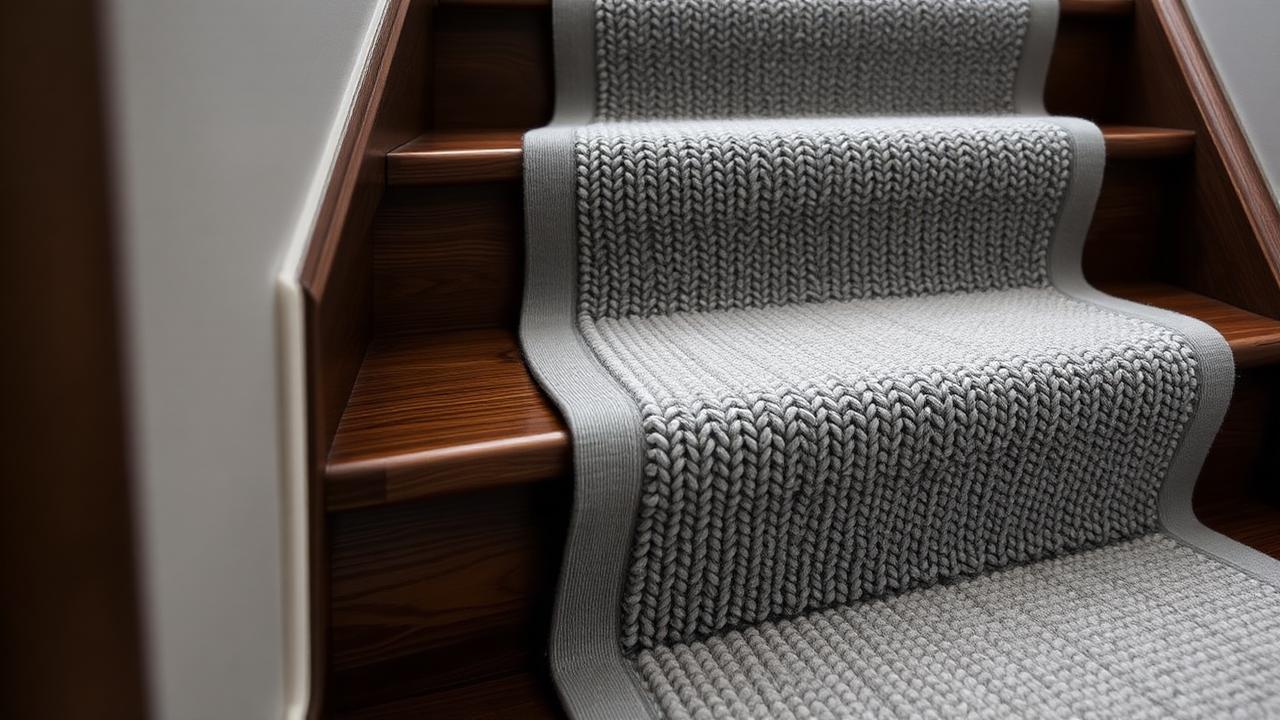
Synthetics like nylon and polypropylene generally sit lower on the scale, often between 0.7 and 1.2 tog. Because these fibres are extruded plastic, they are smoother and denser, with fewer air pockets. This makes them less effective at insulating but often easier to clean and more resistant to moisture. If your stairs are in a modern, well-insulated home, the lower tog rating of a synthetic runner won't be a disadvantage, and you might prefer the sleeker profile it allows on the stairs.
The 'Cold Foot' Test
If you currently have bare wooden stairs and find them uncomfortably cold in the morning, aim for a runner with a tog rating of at least 1.0. Even a relatively thin runner will make a massive difference to the perceived temperature of your hallway.
Selecting the Right Underlay for Your Tog Target
The underlay is just as important as the runner when it comes to heat flow. On stairs, I almost always recommend a high-density rubber underlay rather than a thick, airy foam. Rubber underlays typically have a lower tog rating (around 0.8 to 1.1) but provide the firm support needed for safety. A thick foam underlay might have a higher tog rating (1.5+), but it will compress too much on the stair nosings, causing the runner to stretch and eventually become loose.
If your main goal is insulation, look for a 'felt and rubber' combo underlay. These provide the thermal benefits of felt (which has a high tog rating) with the stability of a rubber base. This combination is particularly effective at dampening sound, which is another form of 'insulation' that homeowners often value. When fitting, I ensure the underlay is cut slightly short of the gripper rods to allow the runner to be tucked neatly into the crease of the stair, maintaining a clean look regardless of the tog rating.
- Check both the runner and underlay tog ratings before buying.
- Aim for a combined tog under 2.5 if you have underfloor heating.
- Avoid underlays thicker than 10mm for stairs to ensure stability.
- Wool offers the best natural thermal insulation for cold hallways.
- Remember that higher tog usually means a thicker product that requires more effort to fit.
Maintaining Your Runner's Thermal Properties
Over time, dust and dirt can settle into the pile of your stair runner, compressing the fibres and reducing the number of air pockets. This actually lowers the effective tog rating of the carpet. Regular vacuuming is essential not just for appearance and durability, but for maintaining the insulation benefits. Using a vacuum with a good brush bar will lift the fibres and restore the air gaps that provide the warmth you paid for.
Professional cleaning every 12 to 18 months is also a good idea. Steam cleaning can help 'revive' wool fibres that have been flattened by years of foot traffic, restoring some of the runner's original loft and thermal resistance. However, be careful not to over-saturate the runner, as excessive moisture can damage the backing and the underlay, potentially leading to mould growth in the very air pockets that are supposed to keep you warm. By taking care of the pile, you ensure your staircase remains a warm and inviting part of your home for decades.
In summary, while tog ratings might seem like a technical detail, they play a huge role in how your home feels and functions. By understanding how to balance insulation with fitting safety, and by using a stair runner length calculator to plan your project, you can achieve a result that is as practical as it is beautiful. Whether you go for a high-tog wool luxury or a sleek, modern synthetic, the right preparation makes all the difference.
Frequently asked questions
What is a good tog rating for a stair runner?
For most homes, a tog rating between 1.0 and 1.8 for the runner itself is ideal. This provides good insulation without being so thick that it becomes difficult to fit safely on the stairs.
Can a stair runner be too thick because of a high tog?
Yes. If the combined tog of the runner and underlay is very high, the material may be too bulky to wrap tightly around the nosings, creating a trip hazard or causing the carpet to shift.
Does a higher tog rating mean the runner is more durable?
Not necessarily. Tog measures heat resistance, not wear resistance. However, high-tog runners are often denser, which can contribute to better long-term durability if the fibre quality is high.
What is the best underlay for a high-tog runner?
I recommend a high-density rubber or a felt-rubber combination underlay. Avoid very thick foam underlays on stairs, as they lack the stability needed for a safe, long-lasting installation.
How does tog rating affect underfloor heating on landings?
If you have underfloor heating, the combined tog of your runner and underlay should not exceed 2.5. Any higher, and the heat won't be able to pass through the carpet efficiently.
Are wool runners always higher in tog than synthetics?
Generally, yes. Wool is a natural insulator with a complex fibre structure that traps air, whereas synthetic fibres like polypropylene are smoother and less effective at resisting heat flow.
Will a high-tog runner help reduce noise?
Yes. The same properties that trap heat also help to absorb sound. A dense, high-tog wool runner is excellent at dampening the sound of footsteps on a wooden staircase.
Do I need a high-tog runner in a modern house?
In a well-insulated modern home, a high-tog runner is less of a thermal necessity and more of a luxury choice for underfoot comfort and sound dampening.
Know your numbers in 30 seconds
Enter your step count, tread depth and riser height — the stair runner calculator gives you the exact length to order, in metres and feet, with waste included.
Calculate your runner length accuratelyReady for real prices?
Get quotes from vetted stair runner suppliers and fitters near you. Free, no account, no obligation.
Every guide is written from hands-on measuring and fitting experience, checked against the calculator’s own maths, and re-reviewed whenever prices or methods change. Read our editorial standards.