
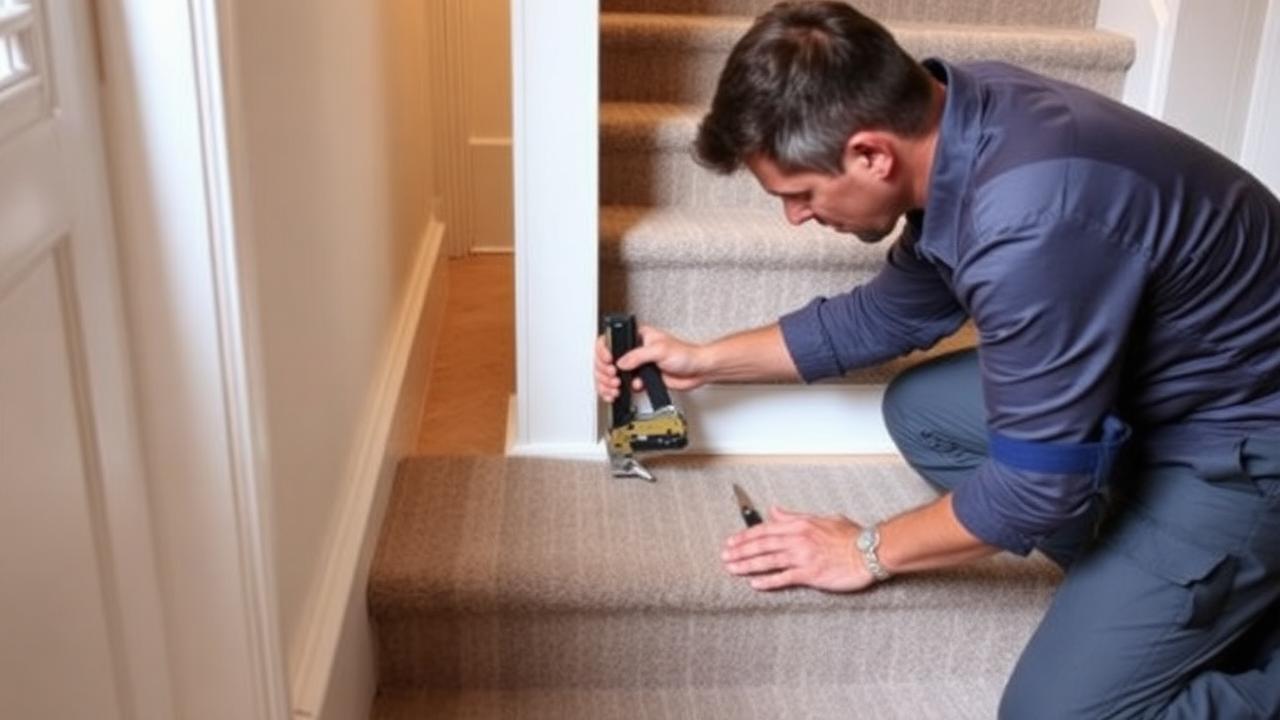
The science of tog and thickness on stairs
When you are choosing underlay for a stair runner, two numbers usually stand out: the tog rating and the thickness in millimetres. While these are important for bedroom carpets, their role on a staircase is slightly different and, in my opinion, even more critical for safety. Tog is a measure of thermal resistance; the higher the number, the better the underlay is at trapping heat. In a drafty hallway, a high tog rating can make the space feel much warmer. However, on stairs, the most important physical characteristic is not warmth but density. A high tog rating often comes from thick, air-filled foam, which can actually be a disadvantage on a staircase if it lacks the necessary density to support your weight on the edge of the steps.
Thickness is the other key factor. It is a common misconception that a thicker underlay is automatically 'better' or more luxurious. On a flat floor, an 11mm or 12mm underlay feels wonderful, but on a staircase, that same thickness can be dangerous. As a fitter, I always recommend keeping stair underlay between 7mm and 9mm. The reason is simple: stability. A thick underlay creates a rounded, squishy edge on the stair nosing. When you step on this rounded edge, your foot is more likely to slip forward. By using a thinner, denser underlay, you maintain the sharp, flat profile of the stair tread, providing a much more secure footing for everyone in the household. When you use a stair runner calculator to plan your installation, you’ll find that a consistent, appropriate thickness also makes the final length more predictable.
The relationship between tog and density is also vital for those with underfloor heating. If your hallway has heating pipes or mats under the floor, you need an underlay with a low tog rating (usually below 1.0) to allow the heat to rise into the room. If you fit a high-tog foam underlay over underfloor heating, you are essentially putting a thermal blanket over your heater, which reduces efficiency and can even cause the heating system to overheat. In these cases, a thin crumb rubber underlay is almost always the best choice, as it provides the density needed for stairs while allowing heat to pass through freely. Balancing these technical specs is a key part of choosing the right stair runners for your home.
How much runner do I need?
Accurate measurement is the foundation of a great stair installation. Let's look at a typical US example: a 13-step flight with a 10 in tread and a 7.5 in riser. If you add a 0.75 in nosing wrap for each step, you get 18.25 in per step. Multiplying by 13 gives 237.25 in. Add 12 in at the top and 12 in at the bottom for turning under (24 in total), and you reach 261.25 in, which is 21.77 ft. I always add an 8% waste margin for plain runners, bringing the total order to approximately 23.5 ft.
In the UK, the metric equivalent for a 25 cm tread and a 19 cm riser with a 1.9 cm wrap is 45.9 cm per step. Over 13 steps, that’s 596.7 cm. Add a 60 cm finishing allowance, and you get 656.7 cm. Including an 8% waste margin, the final requirement is 7.09 metres. Using a stair runner length calculator helps you double-check these figures and ensures you don't run short on the day of installation, which is a costly and frustrating mistake.
| Measurement | US (in/ft) | UK (cm/m) |
|---|---|---|
| Tread run | 10 in | 25 cm |
| Riser height | 7.5 in | 19 cm |
| Nosing wrap | 0.75 in | 1.9 cm |
| Per-step total | 18.25 in | 45.9 cm |
| 13 steps | 19.77 ft | 5.97 m |
| Finishing | 21.77 ft | 6.57 m |
| Total (8% waste) | 23.5 ft | 7.09 m |
Know your numbers in 30 seconds
Enter your step count, tread depth and riser height — the stair runner calculator gives you the exact length to order, in metres and feet, with waste included.
Open the stair runner calculatorWhy density is the secret to a long-lasting runner
If thickness is about safety, density is about durability. Density refers to how much material is packed into each cubic metre of underlay. A high-density underlay (like crumb rubber or high-grade PU foam) will not collapse under pressure. This is essential for stair runners because the nosing of each step receives concentrated weight every time someone walks down the stairs. If the underlay is low density, it will squash flat, leaving the carpet backing to rub against the wood. This friction will cause the carpet to wear through much faster than it should. When I fit a runner, I always look for underlay that feels firm to the touch, not something that I can easily squash between my thumb and forefinger.

High-density underlay also helps to keep the runner taut. A soft, low-density underlay allows for more 'flex' in the carpet. Over time, this flex leads to stretching, which creates ripples and loose areas that are both unsightly and dangerous. By providing a firm base, a high-density underlay ensures that the tension applied by the fitter remains constant for years. This is why you will often see professionals using 8mm high-density foam instead of 11mm low-density foam on stairs. It might feel slightly less 'cloud-like' underfoot, but it will keep your stairs looking better for a decade longer.
Sound insulation is also linked to both density and thickness. While a thicker underlay generally provides better sound absorption, a dense underlay is more effective at stopping the 'thud' of impact noise. If your stairs are in a busy part of the house, choosing a dense 9mm crumb rubber underlay will provide much better noise reduction than a soft 12mm foam. It’s all about absorbing the energy of the footfall rather than just providing a soft cushion. This is a crucial consideration when you are planning your stair runner carpet installation for a quiet, peaceful home.
Fitter's Golden Rule
Never use an underlay thicker than 10mm on stairs. It creates a rounded nosing that is a primary cause of slips and falls. Stick to 7mm-9mm high-density options for the best balance of safety and comfort.
- Density is more important than thickness for stairs.
- Keep thickness between 7mm and 9mm for safety.
- Lower tog ratings are better for underfloor heating.
- High-density underlay prevents carpet stretching.
- Dense underlay provides superior impact noise reduction.
- Tog ratings measure thermal insulation properties.
- Avoid using 'leftover' lounge underlay on stairs.
- Always check the density rating (kg/m³) of foam underlay.
Thermal properties and comfort
While safety and density come first, comfort is still a factor. The tog rating tells you how much warmth the underlay will provide. In a typical UK or US home, a tog rating of around 2.0 to 2.5 is standard for PU foam underlay, providing a nice balance of warmth and stability. If your hallway is particularly cold, you might be tempted to go higher, but remember the thickness rule. A high-quality 9mm high-density foam will often have a better tog rating than a 7mm rubber, giving you that extra bit of warmth without sacrificing safety on the stair nosings.
Finally, consider the feel underfoot. Some people prefer the firm, solid feel of felt or rubber, which feels more traditional and secure. Others love the slight 'bounce' that PU foam provides. As long as you choose a high-density version, both can be excellent choices for stair runners. The key is to avoid the extremes – don't go too soft, and don't go too thick. By finding the 'sweet spot' in both tog and thickness, you ensure a staircase that is warm, comfortable, and, most importantly, safe for everyone to use. Taking the time to research these technical specs before you buy your stair runner carpet will pay off in the long run.
Frequently asked questions
What is a good tog rating for stair underlay?
For most homes, a tog rating between 1.5 and 2.5 is ideal. It provides sufficient warmth without requiring excessive thickness that could make the stairs unsafe.
Can I use 11mm underlay on my stairs?
I strongly advise against it. 11mm is too thick for stairs and creates a rounded, unstable edge on the nosing that increases the risk of slipping.
Does a higher tog mean the underlay is thicker?
Not necessarily, but there is a correlation. Some high-tech materials can provide high tog ratings at lower thicknesses, but generally, thicker foams have higher tog.
Why is density important for stair underlay?
Density ensures the underlay doesn't squash flat under footfall. This protects the carpet backing from wear and prevents the runner from stretching and rippling.
What thickness do professional fitters recommend for stairs?
Most pros recommend a thickness between 7mm and 9mm, specifically in a high-density grade for maximum stability and safety.
Is a low tog underlay better for underfloor heating?
Yes, you need a tog rating below 1.0 (ideally as low as possible) to allow heat to pass through efficiently without damaging the system.
Will thick underlay make my stairs quieter?
To a point, yes, but density is more effective at reducing impact noise (the 'thump' of footsteps) than sheer thickness alone.
Can I use lounge underlay on my stairs?
Only if it is specifically rated for high-traffic or 'Contract' use and meets the thickness requirements. Standard lounge underlay is often too soft and thick for stairs.
Know your numbers in 30 seconds
Enter your step count, tread depth and riser height — the stair runner calculator gives you the exact length to order, in metres and feet, with waste included.
Size your runner with the stair runner calculatorReady for real prices?
Get quotes from vetted stair runner suppliers and fitters near you. Free, no account, no obligation.
Every guide is written from hands-on measuring and fitting experience, checked against the calculator’s own maths, and re-reviewed whenever prices or methods change. Read our editorial standards.