
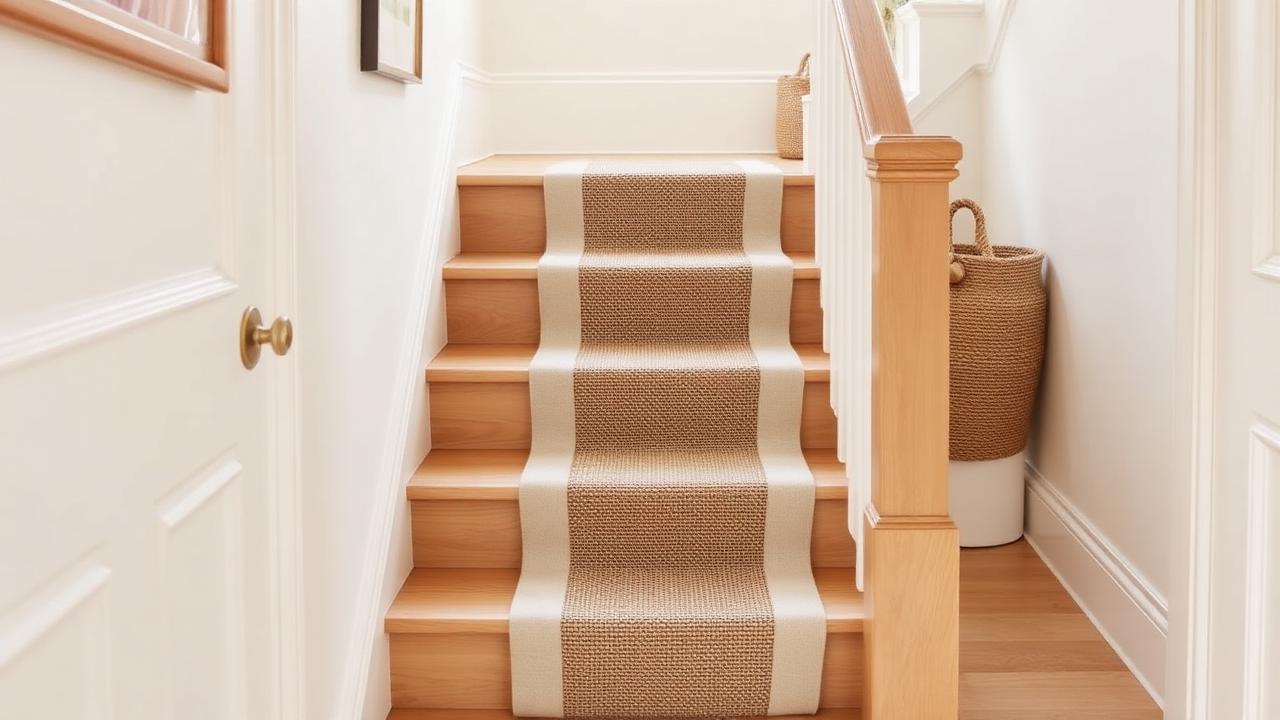
What is a Cut Pile Construction?
Cut pile carpet starts its life much like a loop pile, with the yarn tufted into the backing. However, during the manufacturing process, the loops are cut, leaving individual yarn tufts standing upright. This results in a softer, denser surface that is more comfortable for bare feet. Depending on how the yarn is twisted and treated, cut pile can be further categorized into several distinct styles, including velvet (very smooth and formal), twist (durable and textured), and Saxony (long, plush fibres). Each offers a different look and level of performance on stairs.
For staircases, the 'twist' pile is generally the best-selling cut pile option. The yarn is tightly twisted before being cut, which gives it a slightly granular texture that is excellent at hiding footprints and vacuum tracks. A 'velvet' or 'plush' cut pile, by contrast, has very little twist, resulting in a perfectly smooth surface that looks incredibly luxurious but will show 'shading'—darker and lighter patches where the pile has been walked on or vacuumed. In my experience, families with young children often prefer the practicality of a twist, while those in formal townhouses might opt for the elegance of a velvet.
Why cut pile is great for homes with pets
If you have a cat, you probably already know the nightmare of loop-pile carpets. One good scratch and you have a foot-long run that's impossible to fix. Cut pile solves this problem entirely. Because there are no loops to catch a claw, your pet can run up and down the stairs without causing any damage. This durability against 'pulls' makes cut pile the default recommendation I give to any pet owner. It's also generally easier to remove pet hair from a cut pile than it is to dig it out of the tight crevices of a loop pile weave.
However, cut pile does have one downside: it matts over time. On the very edge of a stair nosing, the weight of your body is concentrated on a tiny area. Over years of use, those upright fibres will eventually be crushed down. While high-quality wool or nylon cut piles have excellent 'bounce-back' (resilience), they will eventually show more wear in high-traffic zones than a dense loop pile would. This is why choosing a high pile weight is so important for cut-pile runners.
How much runner do I need?
Calculating the length for a cut pile runner is a standard process, but you must ensure you have enough to properly 'tuck' the pile into the joints for a seamless look. Let's look at a 13-step flight using US dimensions (10 in tread, 7.5 in riser, 0.75 in wrap). This gives you 18.25 in per step. For 13 steps, that is 237.25 in (19.77 ft). Add 24 in for the top and bottom finishing allowances, giving a subtotal of 261.25 in (21.77 ft). With a 7% waste margin, you should order at least 23.5 ft.
In the UK, the same flight (25 cm tread, 19 cm riser, 1.9 cm wrap) gives 45.9 cm per step. Over 13 steps, that's 596.7 cm. Add your 60 cm for finishing, and you're at 656.7 cm. A 7% waste margin brings you to roughly 7 meters. If you are choosing a cut pile with a printed pattern, make sure to use a stair runner calculator to account for the pattern repeat, as you'll likely need an extra foot or two to keep everything symmetrical.
| Feature | Twist Pile | Velvet / Plush Pile |
|---|---|---|
| Texture | Grainy, resilient | Smooth, soft |
| Footprints | Hardly visible | Very visible (shading) |
| Durability | Excellent for high traffic | Better for low-medium traffic |
| Feel | Firm and supportive | Luxurious and soft |
| Best For | Family homes / Main stairs | Bedrooms / Formal stairs |
Know your numbers in 30 seconds
Enter your step count, tread depth and riser height — the stair runner calculator gives you the exact length to order, in metres and feet, with waste included.
Open the stair runner calculatorStyles of Cut Pile for Stairs
As a fitter, I see a lot of different cut pile styles, and not all are created equal when it comes to stairs. A 'twist' pile is my top recommendation for durability. The yarn is twisted so tightly that it stands up to heavy footfall without flattening easily. A 'Saxony' pile is much longer and softer, but I often advise against it for main stairs because the long fibres can be a tripping hazard and they matt down very quickly on the nosings. A 'Frieze' pile is similar to a twist but even more heavily textured, almost like a very short shag, which is incredible at hiding dirt and wear but might look a bit too casual for some hallways.

Then there is the 'cut and loop' style, which combines both types of pile to create patterns like chevrons or geometric shapes. This is a great middle-ground option that gives you the visual interest of a loop pile with the snag-resistance of a cut pile in the majority of the surface area. When choosing your style, think about the overall aesthetic of your home—a crisp twist pile looks great in a modern house, while a soft velvet is the perfect partner for a period property with traditional wood panelling.
Fitting Tips for Cut Pile Runners
Cut pile is generally easier to fit than woven or loop carpets because it is more flexible. You can stretch it quite effectively to get a perfectly tight fit over the nosings. However, you have to be careful about 'pile direction.' If you fit one piece of the runner with the pile facing up and another with it facing down, they will look like two completely different colours because of the way light hits the fibres. I always make sure the pile 'runs down' the stairs, which is the most durable way to fit it.
- Always check the pile direction before you start cutting; the pile should point toward the bottom of the stairs.
- Use a good quality 9mm or 10mm underlay; too thick and the runner will feel 'spongy,' too thin and you'll feel the wood through the pile.
- When stapling a cut pile, you can be quite aggressive as the pile will easily hide the staple heads.
- For a Hollywood fit, ensure the tuck under the nosing is very tight to highlight the soft curve of the pile.
- Seal the edges if you are doing a DIY fit to prevent the tufts from shedding at the sides.
The 'Shading' Effect
Don't be alarmed if your new velvet cut pile runner looks 'patchy' after you walk on it. This is a natural characteristic of the material and is often considered a sign of high quality.
Maintenance and Cleaning
Maintenance for a cut pile is straightforward: vacuum regularly with a brush bar to lift the pile and remove grit that can cut the fibres at the base. If you have a twist pile, you can be quite vigorous. If you have a velvet pile, be a bit gentler to avoid 'blooming' (where the tufts untwist and look fuzzy). For spills, cut pile is generally forgiving if you act fast. Blot the spill with a clean, dry cloth and use a carpet cleaner recommended for your specific fibre (wool vs. synthetic).
In summary, a cut pile stair runner is a versatile, comfortable, and pet-friendly choice for any home. By using a stair runner calculator to ensure a perfect fit and choosing a high-quality twist or velvet, you can create a beautiful entrance that stands the test of time. Just remember to pay attention to pile direction and underlay quality, and your stairs will look fantastic for years to come.
Whatever you decide, get the numbers first: the stair runner calculator doubles as a stair runner length calculator, adding nosing wrap, landings, winders, pattern repeat and waste so you order the right length the first time.
Still deciding on material, width or pattern? Our hub on stair runners compares weaves, widths, backings and fitting styles side by side, then hands the numbers straight to the calculator.
Frequently asked questions
Is cut pile better for stairs than loop pile?
It depends on your needs. Cut pile is much better if you have pets (no snags) and offers a softer feel, while loop pile is often better at resisting matting and showing footprints.
Do cut pile runners show footprints?
Velvet and plush cut piles show footprints and vacuum marks clearly (shading), while twist and frieze cut piles are very good at hiding them.
What is a 'twist' pile?
A twist pile is a type of cut pile where the yarn is tightly twisted before being cut. This makes it very durable and resistant to flattening, making it the top choice for stairs.
Can I use a vacuum with a beater bar on cut pile?
Yes, in fact, it is recommended for twist piles as it helps to lift the fibres and remove deep-seated dirt. For very delicate velvet piles, use a gentler setting.
How long does a cut pile runner last?
A high-quality wool or nylon twist runner can last 10–15 years on a busy staircase. Cheaper synthetics may show wear sooner, around 5–7 years.
Is cut pile more expensive?
Not necessarily. Cut pile is available at every price point, from budget polypropylene to ultra-premium wool and silk blends.
Does cut pile shed?
Wool cut pile runners will shed a little when new. This is normal and will stop after a few weeks of regular vacuuming.
How do I measure for a cut pile runner?
Use a stair runner calculator to get the total length based on your tread and riser measurements, and add a 7% waste margin for a plain runner.
Know your numbers in 30 seconds
Enter your step count, tread depth and riser height — the stair runner calculator gives you the exact length to order, in metres and feet, with waste included.
Size your cut pile runner with the stair runner calculatorReady for real prices?
Get quotes from vetted stair runner suppliers and fitters near you. Free, no account, no obligation.
Every guide is written from hands-on measuring and fitting experience, checked against the calculator’s own maths, and re-reviewed whenever prices or methods change. Read our editorial standards.