
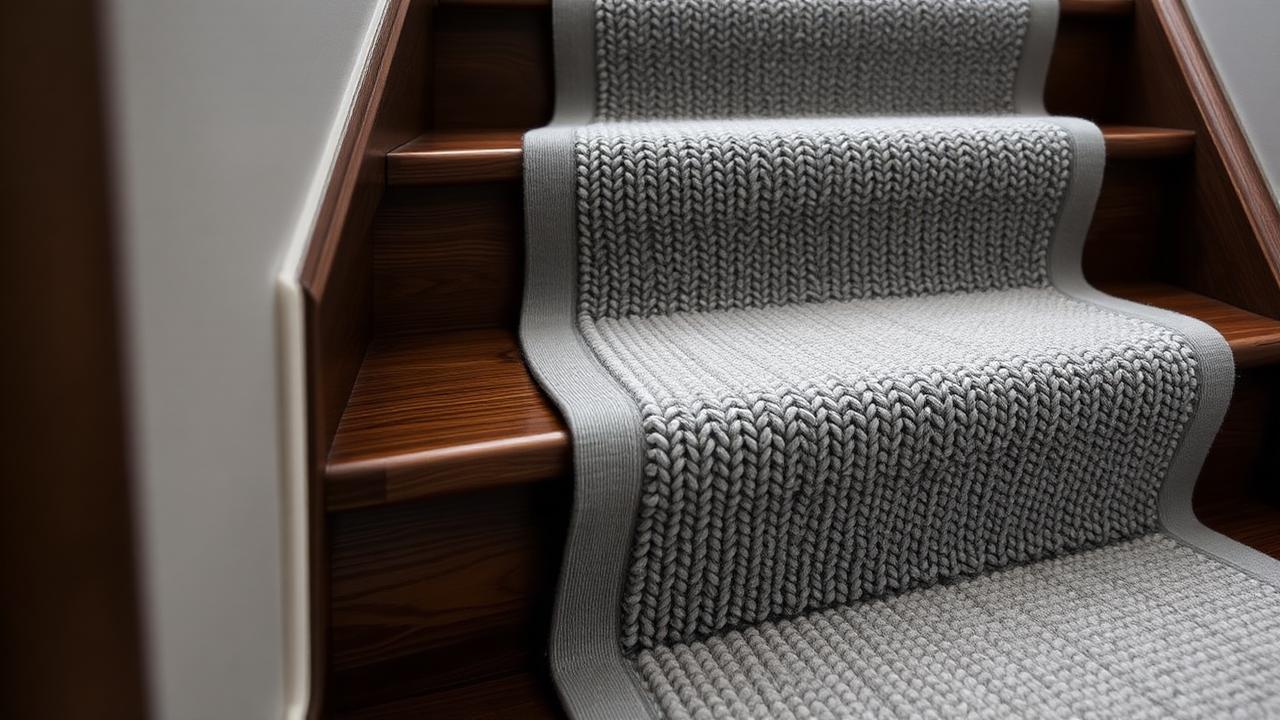
What people mean by a 'plastic stair runner'
The phrase covers two distinct products that get confused constantly. The first is a clear vinyl carpet protector: a roll of transparent or lightly frosted PVC, sometimes with a grid texture, that unrolls over an existing carpeted staircase and is taped or clipped at the edges. Its job is purely defensive — it stops paint drips, plaster dust, muddy boots and furniture scuffs from reaching the carpet underneath during a renovation or a move, then it comes up again afterwards. The second is a ribbed rubber-backed vinyl stair tread or runner, sometimes called a corrugated or non-slip stair mat, which is a genuine permanent floor covering in its own right, more common in commercial stairwells, garages, basements and rental units than in a finished family living room.
Neither product is a like-for-like swap for a textile stair runner in a main hallway. Clear protector film is explicitly temporary and looks utilitarian; ribbed vinyl tread is durable and easy to clean but has none of the acoustic softening, warmth or visual warmth of a woven or tufted runner, and most homeowners would not choose it for a principal staircase on looks alone.
Clear vinyl protectors: moving day and renovation use
Clear vinyl runner protector is sold by the roll, typically 27-36in wide (68-91cm) to suit standard staircases, in lengths from 15ft to 30ft (4.5-9m), and is priced at £1.50-£4 per linear foot in the UK or $2-$5 per linear foot in the US, so a full flight usually costs £30-£100 ($40-$130) to cover. It is taped down at the top and bottom, sometimes with double-sided tape at intervals up the flight to stop it sliding, and it lifts off cleanly afterwards leaving no residue on wool or synthetic pile if removed within a few weeks.
| Use case | Best product | Typical duration | Cost (GBP / USD) |
|---|---|---|---|
| Protecting a carpeted stair during a house move | Clear vinyl film, taped | 1-7 days | £30-£100 / $40-$130 |
| Protecting stairs during a full renovation | Heavier vinyl or corrugated card + tape | Weeks to months | £50-£150 / $65-$190 |
| Permanent basement or utility staircase | Ribbed rubber-backed vinyl tread | Years | £15-£35 per tread / $20-$45 per tread |
| Permanent main staircase | Textile runner (wool, wool-blend, synthetic) | 10-15 years (wool) | £35-£90 per metre / $45-$110 per yard |
Do not leave clear vinyl down for months
Vinyl film traps moisture and heat against the pile underneath. Left in place for more than a few weeks, particularly in a heated house, it can cause matting, discolouration or mould in wool and wool-blend runners. Treat it strictly as a short-term protector and remove it as soon as the job that required it is finished.
Ribbed vinyl stair tread: a permanent but utilitarian option
Ribbed or studded rubber-backed vinyl tread is a genuinely durable stair covering, commonly used in rental flats, basements, workshops, boat and caravan steps, and commercial stairwells where cost, water resistance and ease of cleaning outrank comfort and appearance. It is sold as pre-cut tread-and-riser sets or as a continuous roll cut to width, and it is fixed with contact adhesive or double-sided stair tape rather than gripper strip, since there is no pile for gripper pins to bite into.
Its main practical advantages are that it is completely waterproof, wipes clean in seconds, resists cigarette burns and most solvents, and typically lasts 8-12 years even in heavy commercial use. Its disadvantages for a domestic main staircase are equally clear: it offers none of the sound-deadening or thermal insulation of a textile pile, it can feel cold and hard underfoot, and unless a specifically embossed decorative range is chosen, it reads as functional rather than finished, which is why it rarely appears on a principal flight in a family home.
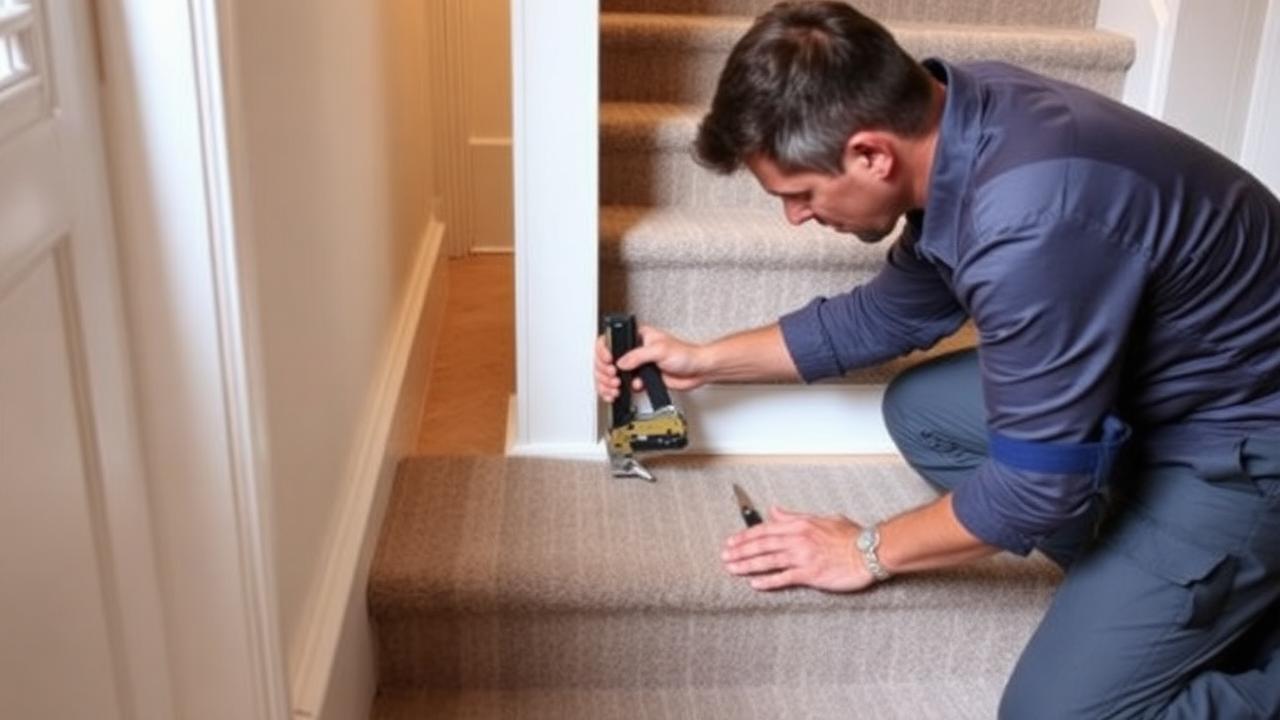
Slip risk and safety
This is the point at which plastic stair coverings need the most caution. Clear vinyl film laid over an existing carpet is reasonably safe because the carpet pile underneath still provides grip; the vinyl mainly adds a slightly harder, smoother top surface. But clear vinyl or smooth PVC sheet laid directly onto bare painted or varnished timber treads is genuinely dangerous — smooth plastic on smooth wood has a very low coefficient of friction, especially with socks or smooth-soled shoes, and it is a common cause of falls when used incorrectly during moves and renovations.
Ribbed and studded vinyl tread is designed with texture specifically to counter this risk and, when correctly rated and fitted, meets slip-resistance standards used in UK and US building guidance for stairs (referenced under UK Building Regulations Part K / Approved Document K and the general stair safety provisions of US IRC R311.7). Always check a product carries a stated slip-resistance rating before fitting it to any staircase, and never substitute smooth, unribbed sheet vinyl for a genuine anti-slip tread product on bare stairs.
- Only lay smooth clear vinyl over an existing carpet or runner, never directly onto bare timber, tile or painted treads.
- Tape every edge and every intermediate join firmly; a lifted corner is a trip hazard on the very next descent.
- Choose a ribbed or studded finish for anything intended as a permanent covering rather than temporary protection.
- Check for a stated slip-resistance rating on any product marketed as a permanent stair tread.
- Remove temporary film within a few weeks to avoid trapping moisture against the covering underneath.
Better alternatives for a permanent covering
If the goal is a hard-wearing, easy-clean staircase rather than a temporary protective layer, several textile and hybrid options outperform plastic while remaining practical. A tight-twist synthetic loop pile handles moisture and heavy traffic almost as well as vinyl while looking and feeling far more like a finished home. Wool-sisal blends and dense wool Wilton or Axminster runners are considerably more durable under normal footfall than most people expect, and are covered in detail in the durability guide linked below, including fibre-by-fibre wear ratings.
For a basement, utility or rental staircase where budget and waterproofing genuinely are the top priority, ribbed vinyl tread remains a sensible, honest choice. For every other staircase, work out the length you need with the stair runner calculator and price a proper textile runner instead — the material cost difference over the life of the product is smaller than it first appears once you account for how much sooner a plastic covering needs replacing on a busy family stair.
Know your numbers in 30 seconds
Enter your step count, tread depth and riser height — the stair runner calculator gives you the exact length to order, in metres and feet, with waste included.
Open the stair runner calculatorWhatever you decide, get the numbers first: the stair runner calculator doubles as a stair runner length calculator, adding nosing wrap, landings, winders, pattern repeat and waste so you order the right length the first time.
Still deciding on material, width or pattern? Our hub on stair runners compares weaves, widths, backings and fitting styles side by side, then hands the numbers straight to the calculator.
Frequently asked questions
Is a plastic stair runner safe on bare wooden stairs?
Smooth clear vinyl on bare, painted or varnished timber is genuinely slippery and not recommended as a permanent solution. Ribbed or studded vinyl tread specifically designed and rated for stairs is far safer and can be used permanently, but check for a stated slip-resistance rating before fitting.
How long can you leave plastic film on a stair carpet?
A few days to a few weeks is safe for most house moves and short renovation jobs. Leaving vinyl film down for months traps moisture and heat against the pile, which can cause matting, discolouration or mould in wool and wool-blend runners underneath.
Does a plastic stair runner damage the carpet underneath?
Not if it is removed within a reasonable timeframe and the adhesive tape used is a low-tack type designed for carpet. Extended use, aggressive tape, or trapped moisture are what cause damage, not the vinyl itself, so choose gentle tape and take the film up promptly once the job is done.
Can you use vinyl stair tread on a main staircase instead of carpet?
You can, and it will be extremely durable and easy to clean, but it looks utilitarian compared with a textile runner and offers none of the sound-deadening or warmth of a wool or synthetic pile. It suits basements, rentals and utility stairs better than a principal family staircase.
What is the difference between clear vinyl and ribbed vinyl stair coverings?
Clear vinyl is a smooth, transparent temporary protector meant to sit over an existing carpet during moves or building work. Ribbed vinyl is a textured, rubber-backed permanent flooring product with a genuine slip-resistant surface, fixed directly to the stair rather than laid over another covering.
Is plastic stair tread cheaper than a carpet runner?
Per linear metre or yard, yes: ribbed vinyl tread typically costs £15-£35 ($20-$45) per tread against £35-£90 ($45-$110) per metre for a mid-range wool runner. It usually needs replacing sooner, around 8-12 years against 10-15 years for wool, and lacks the comfort and appearance of a textile covering.
Know your numbers in 30 seconds
Enter your step count, tread depth and riser height — the stair runner calculator gives you the exact length to order, in metres and feet, with waste included.
Work out my runner lengthReady for real prices?
Get quotes from vetted stair runner suppliers and fitters near you. Free, no account, no obligation.
Every guide is written from hands-on measuring and fitting experience, checked against the calculator’s own maths, and re-reviewed whenever prices or methods change. Read our editorial standards.